Threadloop Alternatives: 5 Sewing Apps Compared (2026)
Threadloop is free and genuinely good. Here is what to use when you need embroidery, smocking, machines or a sewing library that it does not cover.
First, the awkward part: Threadloop is free and good
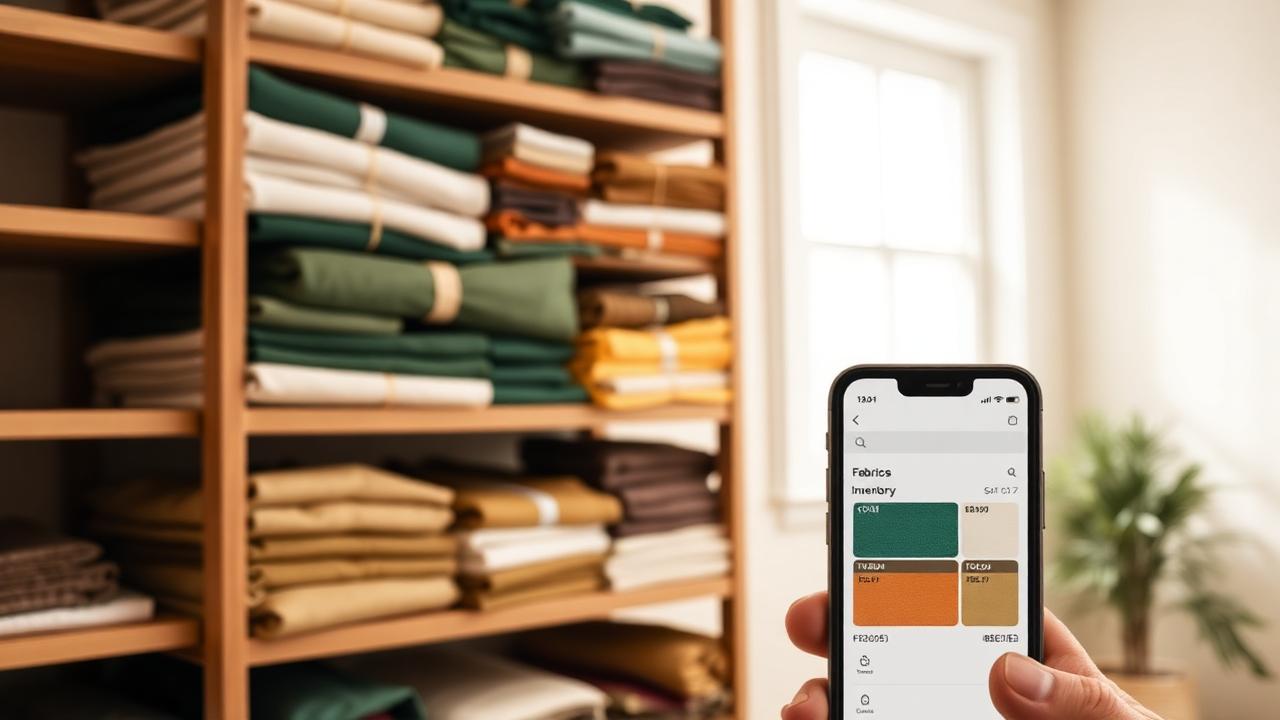
Most "alternatives to X" articles exist because X is expensive or bad. Threadloop is neither. It is free with no limit on how many fabrics, patterns or projects you add, it has barcode scanning for bolt ends, yardage tracking, search by fiber and color and weight, and a community-built pattern database that has passed 113,000 entries. There is an optional Plus tier if you want to support it and get extra stats.
So this is not a takedown. It is a straight answer to a specific question: what do you use when Threadloop does not cover what is in your sewing room?
In practice, sewists leave or supplement Threadloop for four reasons:
- They do machine embroidery and have hundreds of PES or DST files with nowhere to go
- They do smocking or heirloom sewing and want plates and stitch reference alongside their stash
- They own sewing books and magazines and need to search what is inside them
- They want a native iPhone or Android app rather than a browser
Quick comparison
| Threadloop | Sewist Studio | Stash Hub | Cora | |
|---|---|---|---|---|
| Price | Free, Plus optional | Free + Pro | ~£3.49/mo | ~$6.99 one-time |
| Platforms | Web | Web (mobile-first) | iOS, Android, web | iOS only |
| Fabric stash | Yes | Yes | Yes | Yes |
| Yardage tracking | Yes | Yes | Yes | Yes |
| Barcode scanning | Yes | No | No | No |
| Community pattern database | Yes (~113k) | No | No | No |
| Community feed & sharing | Yes | No | Challenges | No |
| Threads & notions | Partial | Yes | Yes | No |
| Machines | No | Yes | No | No |
| Embroidery designs (PES/DST) | No | Yes | No | No |
| Smocking & heirloom reference | No | Yes | No | No |
| Books & magazines library | No | Yes, contents search | No | No |
| AI pattern scanning | No | Yes | No | No |
| Import from shop URL | No | No | Yes | No |
Accurate as of August 2026; all of these apps ship changes regularly.
1. Sewist Studio — when your studio is bigger than fabric and patterns
Sewist Studio is the alternative that covers the most ground. It does the core things Threadloop does — fabric with yardage, patterns, projects, measurements — and then models the rest of a real sewing room:
- Embroidery designs with a dedicated workspace, including PES and DST files
- A smocking and heirloom encyclopedia — plates, stitch library, pleater guides, symbol reference
- Threads, notions and machines as first-class records, not notes
- Your sewing library: books, magazines and catalogs with an indexed contents search, so "which of my books has a raglan sleeve draft?" is a search, not an afternoon
- AI tools — photo-scan a pattern envelope to catalog it, semantic search across everything you own, and a stash planner that suggests projects from fabric you already have
The honest trade: Threadloop's barcode scanning and its shared pattern database are real advantages that Sewist Studio does not match. If those are how you work, you will miss them.
Choose it if: you embroider, smock, do heirloom work, own reference books, or want AI cataloging instead of typing.
2. Stash Hub — when you want a native app
Stash Hub runs natively on iOS and Android as well as the web, and its Magic Input feature builds a fabric or pattern record from a pasted shop URL — the fastest data entry in this category. Magic Mockup previews a pattern in your own fabric.
The trade: it is subscription-only, around £3.49 a month or £34.99 a year, with no permanent free tier.
Choose it if: you want a real phone app and you buy most of your fabric online.
3. Cora — when you only want a fabric list
Cora is iOS-only, roughly $6.99 as a one-time purchase after a five-fabric trial, and focused on fabric. It exports to CSV and PDF, which is genuinely useful. It does not sync between devices — your stash lives on one device.
Choose it if: you want the cheapest possible iPhone fabric inventory and nothing else.
4. Sewbench — when you catalog offline
Free and offline-first. If you add fabric while standing in a shop with one bar of signal, that design choice matters more than any feature list.
5. Notion or a spreadsheet — when you want total control
Still a legitimate answer. You get complete customization and zero cost, and you pay for it in manual data entry forever. Most DIY sewing databases are abandoned within three months, not because the tool failed but because nobody wants to type a fabric record by hand at 11pm.
Can you use two?
Yes, and plenty of people do. A common split is Threadloop for the community and pattern-database side, and a dedicated studio app for the things Threadloop does not model — embroidery files, machines, books, smocking reference.
Nothing stops you. Just pick one to be the source of truth for fabric yardage, or you will end up trusting neither.
Which to pick
- Stay on Threadloop if free, barcode entry and a community pattern database are what you value most.
- Sewist Studio if your studio includes embroidery, smocking, machines or books — it is free to start, no credit card.
- Stash Hub if you want native mobile apps and shop-URL import.
- Cora if you want a cheap, offline iPhone fabric list.