The Best Way to Track Body Measurements for Sewing Projects
You sewed a tailored blazer using measurements from two years ago. It doesn't fit. Here's how to track sewing measurements so this doesn't happen again.
TL;DR. Most sewists rely on pattern envelope numbers that mean nothing (Big 4 sizing is from the 1970s) and on memory of measurements from "last year sometime." The fix is a measurement profile per person with a date stamp, including high bust (not just full bust), updated every 6 months. Sewist Studio's Measurement Profiles handles this for you, your kids, and your clients.
The tailored blazer that didn't fit
You spent 20 hours on a blazer. Cut the size based on measurements you took two summers ago. The shoulders pull, the waist gaps, the sleeves bind across the bicep. Twenty hours of work and a $40 piece of wool fabric, all because the measurements weren't current.
The fix isn't measuring better. The fix is measuring on a schedule and storing the numbers somewhere you can actually find them.
The lie of pattern sizing
The first thing every new sewist learns the hard way: your ready-to-wear size has no relationship to your sewing pattern size. A "size 14" Simplicity pattern fits a smaller body than a "size 14" dress from a contemporary store, often by two RTW sizes.
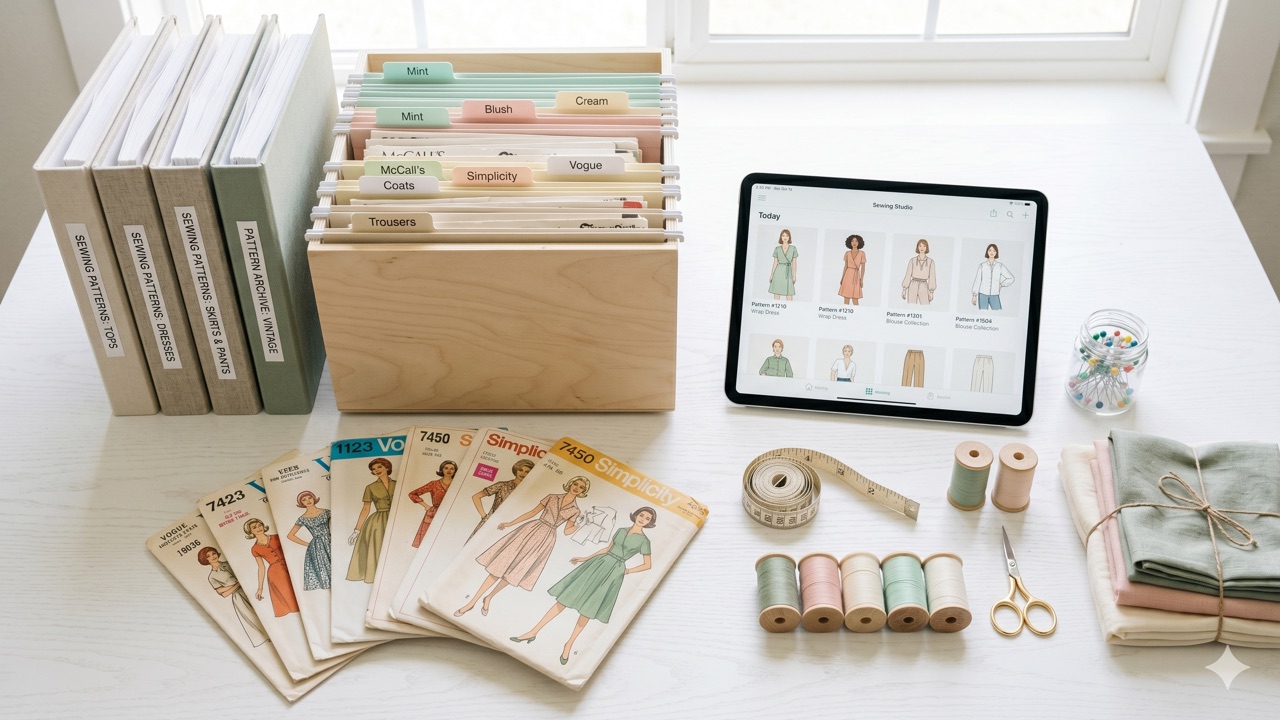
This is because the Big 4 pattern companies (Simplicity, McCall's, Butterick, Vogue) calibrated their sizing in the 1970s and never recalibrated, while RTW has steadily inflated sizes. The number on the pattern envelope is meaningless. The body measurements printed next to it are what matters.
Indie pattern companies are better — most publish a measurement chart in the listing and grade for modern bodies — but they each have their own sizing too. A True Bias size 12, a Closet Core size 12, and a Cashmerette size 12 are not the same garment. Always check the measurement chart.
High bust vs. full bust: the critical distinction
Most patterns instruct you to choose your size by full bust, the largest measurement around your chest. For anyone with a B cup or smaller, this works. For a C cup and above, it produces a too-large bodice (because the pattern company assumes the body proportions of a B cup).
The fix is to choose your size by high bust — measured above the full bust, just under the arms, around the rib cage. High bust reflects your frame size. Then do a Full Bust Adjustment (FBA) to add the cup difference.
```text
High bust 36" → size 12 frame
Full bust 40" → need 4" of FBA
(each cup size = 1" of bust circumference)
```
A bodice cut to your frame with FBA fits dramatically better than a bodice cut to the larger full-bust number.
What to track
The minimum for garment sewing:
| Measurement | Where | Used for |
|---|---|---|
| High bust | Above full bust, under arms | Choosing pattern size |
| Full bust | Around fullest part | FBA calculation |
| Waist | Smallest part of torso | Dresses, skirts, pants |
| Hip | Fullest part below waist | Skirts, pants, fitted dresses |
| Back waist length | Nape of neck to natural waist | Bodice length adjustments |
| Inseam | Crotch to ankle bone | Pants, jumpsuits |
| Thigh | Fullest part of upper leg | Fitted pants, leggings |
For fitted garments add upper arm, bicep, shoulder width, and shoulder slope. For pants add front and back rise.
Track changing bodies
This is the section most posts skip. Bodies change. Kids grow visibly month-to-month. Adult bodies shift with age, fitness, pregnancy, postpartum, hormonal changes, and ordinary weight fluctuations. A measurement from 18 months ago is not your current measurement.
Recommended cadence:
- Kids under 10 — every 3 months. Growth is fast and uneven.
- Teens and adults — every 6 months minimum, plus whenever a finished garment doesn't fit as expected.
- During pregnancy / postpartum — monthly.
- Clients — every appointment, with a date stamp.
If you sew for family members or clients, this is a per-person problem times the number of bodies, which is why a phone-accessible profile system beats a paper notebook by mile zero.
The Sewist Studio measurement profiles
Sewist Studio's Measurements is built around the multi-body, multi-update problem:
- One profile per person. Yourself, partner, each kid, each client. Profiles are private to your account.
- Date-stamped updates. Every measurement entry records when you took it. Old entries stay visible so you can see how someone's measurements have trended.
- Custom measurements. Add the unusual ones (shoulder slope, sleeve cap height, biceps relaxed vs. flexed) per profile — fitted garments need them.
- Compare against pattern charts. Pull up an indie pattern's size chart side-by-side with the profile you're sewing for and the right size jumps out.
- Private and secure. Measurement data is sensitive. See account security — profiles are stored under your authenticated account with row-level security.
If you sew for multiple people (kids who grow, clients who book seasons apart), see the family and clients workflow for the multi-profile tips.
A starter routine
1. Create your free Sewist Studio account.
2. Grab a tape measure and a friend (or a mirror, but a friend gives more accurate horizontal measurements).
3. Measure all 7 minimum points for yourself. Log them with today's date.
4. Add a profile for each person you sew for. Measure on a single appointment if possible.
5. Set a calendar reminder for 6 months from now: "re-measure for sewing."
Next time you sew a fitted garment, the right size choice takes 30 seconds, not 20 hours of regret.
Frequently asked questions
What measurements do I need for sewing patterns?
Minimum: high bust, full bust, waist, hip, back waist length. Add inseam/thigh/rise for pants.
Why is high bust important?
It's the true frame size. Choosing by full bust over-sizes the bodice for C+ cups.
Do sewing pattern sizes match ready-to-wear?
No. Always go by the body measurements on the envelope, not the size number.
How often should I update my measurements?
Every 6 months, more often for kids and during body changes.
How does Sewist Studio's measurement tracker work?
Multi-profile, date-stamped, with custom measurement support for fitted garments.