How to Declutter Your Fabric Stash Without Regret
If your fabric stash has stopped feeling like a resource and started feeling like a burden, here's the framework that actually works.
When a fabric stash stops being a resource
Every sewist remembers the moment their stash crossed a line. The shelf that used to inspire you starts to weigh on you. The bin you used to dig through with anticipation becomes the bin you avoid. You stop seeing the fabric — you just see fabric.
That's the signal to declutter. Not because owning fabric is wrong, but because a stash you can't see, sort, or sew is no longer a resource — it's storage.
This is the framework I use, and that I recommend to every Sewist Studio user who tells me they're overwhelmed. No guilt, no minimalism dogma — just a practical way to get back to a stash that feels like a creative resource again.
Step 1: Pull everything out
You cannot declutter what you can't see. Block off two to four hours and physically take every piece of fabric out of every drawer, bin, basket, and "I'll deal with that later" pile. Pile it on the floor or a big table.
This step is uncomfortable. It's supposed to be. The discomfort of seeing the full pile is what stops you from re-buying the same navy ponte for the fourth time.
Step 2: The 4-pile method
As you pick up each piece, it goes into exactly one of four piles. No "maybe" pile — that's how stashes are born in the first place.
Pile 1: Sew now (next 90 days)
A piece earns this pile if you can name the pattern you'd cut from it within ten seconds. Not vibes — a specific pattern. If you can't, it's not Pile 1.
Pile 2: Sew later (the love list)
Fabric you genuinely love and will use, but don't have a project for yet. Limit: roughly what you'll realistically sew in a year. If your honest output is 12 garments a year, Pile 2 caps at 12 cuts. Past that, you're not collecting — you're hoarding.
Pile 3: Destash (sell or swap)
Fabric that's perfectly nice, just not for you. Wrong color, wrong drape, wrong era of taste. Someone else will love it.
Pile 4: Donate or recycle
Fabric that's damaged, too small for any project, ugly even to you, or fully synthetic in a way that won't sell. School theater departments, costume shops, animal shelters (for bedding), and upholstery scrap recycling programs all take fabric. In some cities, H&M and other retailers will recycle textile waste.
Step 3: The hard part — emotional permission
The reason most decluttering attempts fail isn't logistical. It's emotional. So before you go further, three permissions:
> You are allowed to let go of fabric you spent money on. The money is already spent. Keeping the fabric doesn't recover it. Sewing from guilt doesn't recover it. Letting it become someone else's joy does recover something — a clear shelf, a calmer studio, momentum.
> You are allowed to let go of fabric a loved one gave you. Keep one or two pieces that genuinely carry meaning. The rest can go. Your grandmother gave you the fabric because she wanted you to enjoy sewing — not to enjoy storing.
> You are allowed to let go of fabric you "almost" love. A stash full of almost slowly trains your eye to settle. A stash of yes trains it to make beautiful things.
If a piece is hard, ask yourself: would I buy this today, at full price, for a specific project? If the answer is anything other than yes, it goes.
Step 4: Where to send your destash pile
You don't have to throw fabric away. There's a whole ecosystem ready to receive it:
- Host a fabric swap. The single best option. Invite five to ten sewing friends, everyone brings a box, everyone leaves with the same volume they brought — but love every piece. The community version of this exists in most cities; check Meetup and local sewing guilds.
- Sell on Instagram. A weekend destash sale (good photos, flat-lay against neutral background, weight and dimensions in caption) usually clears 80% of a pile.
- Etsy or eBay for higher-end fabrics (Liberty, Merchant & Mills, deadstock designer).
- Local fabric collectives and quilt guilds. Most have a swap shelf.
- School theater and costume departments. They will take almost anything.
- Animal shelters. Will take soft non-stringy scraps for bedding.
- Curtain liners and pet beds. A practical home for ugly upholstery yardage.
Step 5: Catalog what survives
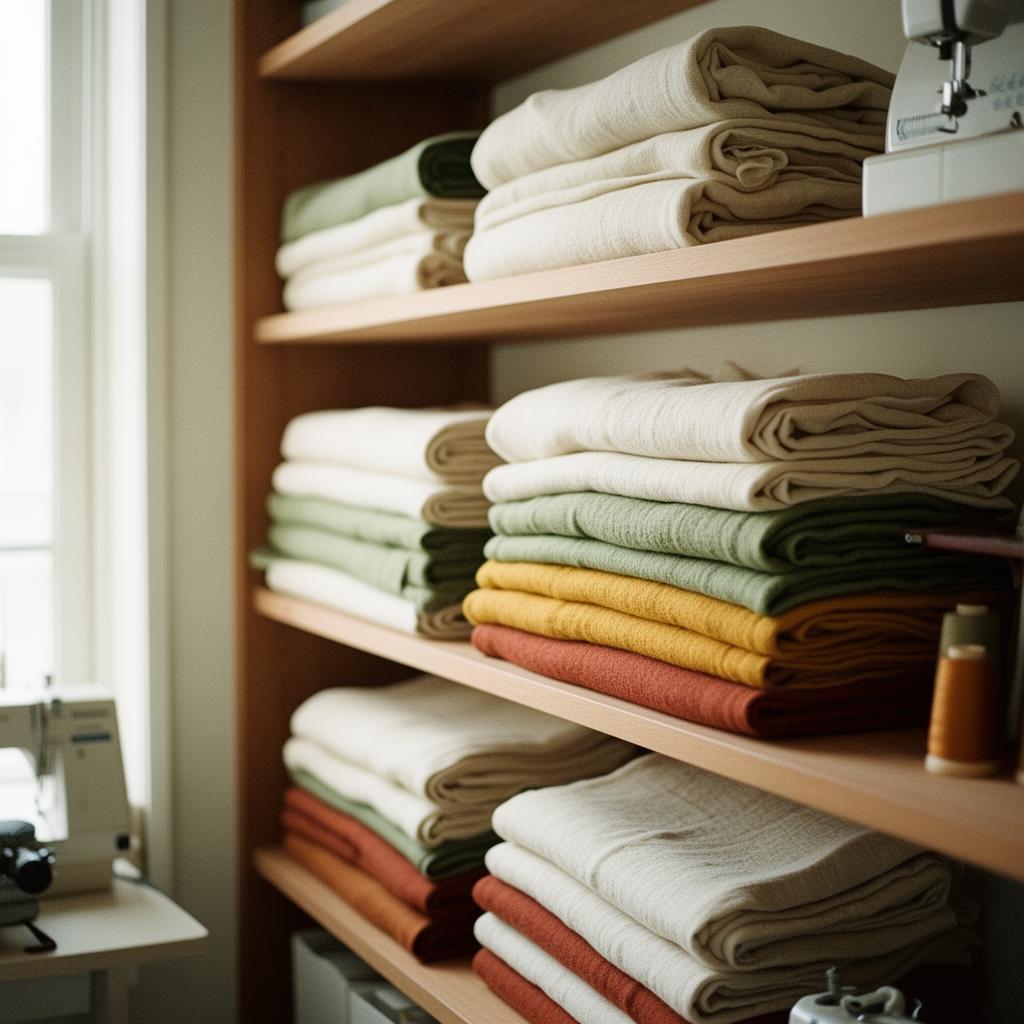
The single biggest predictor of whether a freshly-decluttered stash stays decluttered is whether it gets cataloged during the same session. The momentum of decluttering carries you through the cataloging step; the next day, it won't.
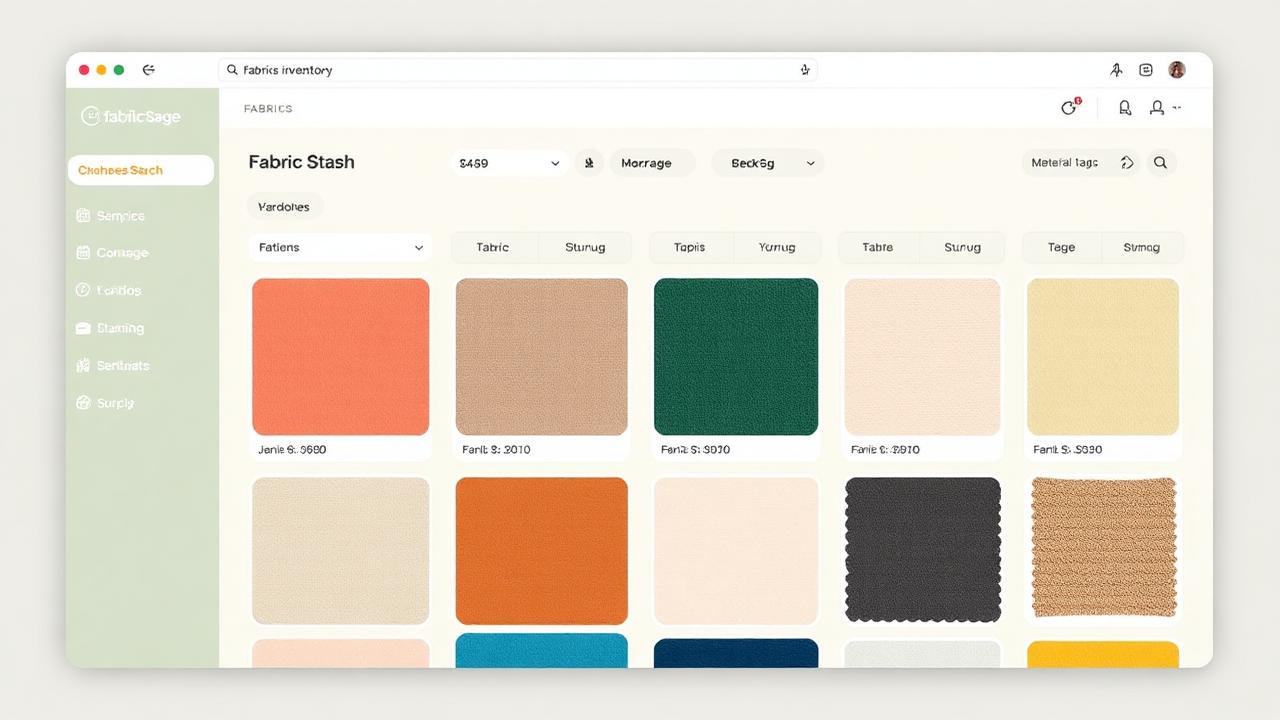
Sewist Studio's fabric importer lets you snap a photo, enter dimensions (length × width), tag fiber content, and tag intended use. It takes about thirty seconds per cut. By the end of an afternoon, your survivors are a real searchable inventory — not a "vibes-based" pile.
A cataloged stash unlocks the most useful feature of the app: stash-aware project ideas that only suggest projects when you own the fabric to sew them.
What to do about scraps
Scraps deserve their own conversation. A few rules that have served me well:
- Anything under 4" × 4" goes into a scrap bin for stuffing pincushions, dog beds, or quilt foundations.
- Anything 4"–18" goes into a "patchwork" bin with a hard cap — when the bin is full, no more in until something leaves.
- Anything 18"+ is normal stash, cataloged with the rest.
The reason most sewists drown in scraps is that there's no rule about when scraps stop being scraps and start being trash. Without a rule, every 2" strip looks like it might be useful for "something". Set the rule. Honor it.
How to never have to declutter again
A decluttered stash stays decluttered when you stop buying faster than you sew. Two habits make that automatic:
1. The 1-in-2-out rule. Every new piece you bring home, two leave. Aggressive — but it works.
2. Shop your stash first. Before any fabric purchase, search your cataloged stash for what you're about to buy. A digital library makes this a 5-second check, not a 20-minute shelf dig.
That second habit is the entire reason Sewist Studio exists. Once your stash is searchable, shopping it first becomes the default — and the stash quietly stays the size you actually want.
You will not regret this
The fear before decluttering is always what if I need that fabric later? The reality after is almost always I can finally see what I have. Sewists who go through this process don't end up sewing less — they sew more, because the stash they kept is the stash they actually love.
Ready to make the surviving stash actually work for you? Start a free Sewist Studio account and catalog your post-declutter shelf. The AI will start suggesting projects from what's left, and the cycle of guilt buying ends here.