Choosing Smocking Thread and Floss: DMC, Anchor, and Silk Explained
Floss choice makes or breaks a smocked panel. Here's how to pick thread that shows every stitch clearly without overpowering the fabric.
Why floss matters more than you'd think
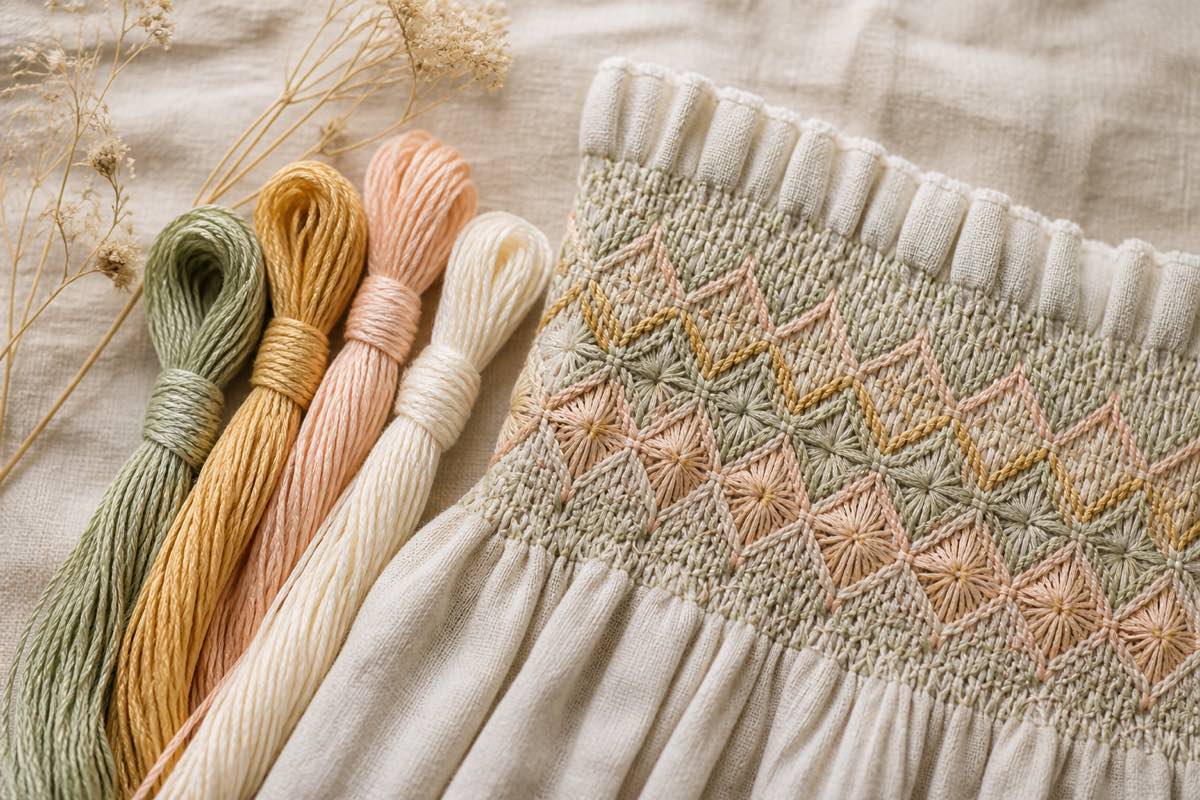
Smocking is close-up embroidery. Every stitch sits on top of a pleat where it's fully visible, so the thread's weight, luster, and colorfastness shape how the finished panel reads. The right floss makes cables look tidy and picture-smocked roses look lifelike.
Cotton floss: the standard
DMC 6-strand cotton is the workhorse floss for smocking worldwide. It's colorfast, comes in over 500 colors, and separates cleanly into individual strands so you can use 2, 3, or 4 depending on your fabric.
Anchor 6-strand cotton is the European equivalent, similar quality with a slightly different color palette. Many heirloom patterns list both DMC and Anchor numbers.
How many strands?
| Fabric | Strands |
|---|---|
| Swiss batiste | 3 |
| Cotton lawn | 3 |
| Imperial broadcloth | 3 (sometimes 4 for bold rows) |
| Medium cotton, fine gingham | 3–4 |
| Heavier cotton (rare) | 4 |
Use fewer strands for a delicate look, more for bold, high-contrast rows.
Silk floss for heirlooms
Silk floss (Au Ver à Soie, Soie d'Alger) has a sheen cotton can't match. Use it for:
- Heirloom baptism gowns
- Wedding-related smocking
- Christening bonnets
- Any project where sheen is the point
Silk is more expensive and less colorfast in sunlight, so stick to cotton for everyday garments.
Coton à broder for picture smocking
Coton à broder no. 25 is a single-strand mercerized cotton that's slightly thicker than one strand of DMC. It gives satin-stitched picture motifs (rosebuds, hearts, sailboats) extra crispness and sheen without the fussiness of silk.
Choosing colors
Two color rules save every project:
1. Tonal harmony beats contrast. Pick a fabric first, then choose flosses one or two shades darker or lighter in the same color family. High contrast reads as loud and dates quickly.
2. Three colors max on beginner plates. A dominant, a secondary, and an accent. More than that and cables start fighting each other for attention.
Care and colorfastness
Even reputable cotton floss can bleed on white batiste. Before starting a plate:
- Test each floss on a scrap of the same fabric
- Wet the scrap and press with a white cloth
- Any transfer means either soaking the floss in vinegar water first, or picking a different color
Silk floss should be dry-cleaned or hand-washed cold. Never machine-wash a silk-embroidered piece.
Track floss inventory in your studio
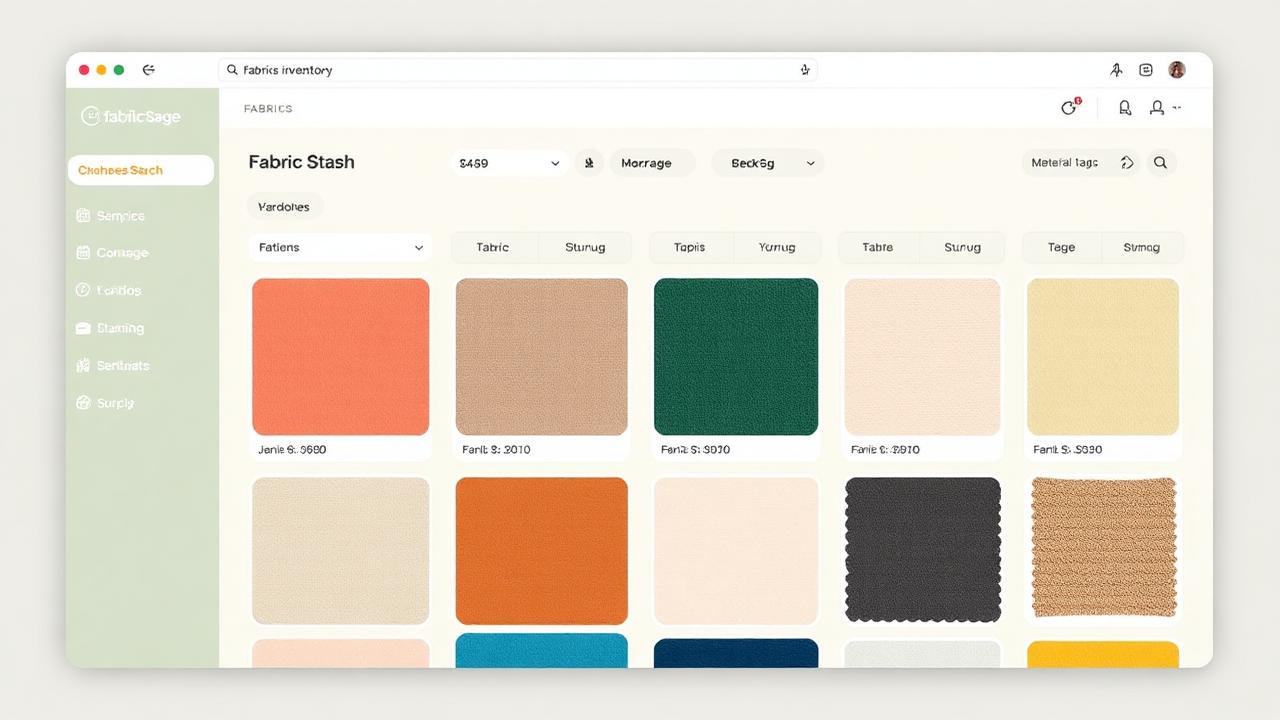
Floss quietly takes over a sewing room. Half-used skeins pile up, duplicates get bought, and specific plate colors disappear right when you need them. The digital stash tracks each skein by brand, color number, and remaining length alongside your fabric, and camera cataloging snaps a photo of a whole floss box in one pass.
Add your floss collection to Sewist Studio and stop buying DMC 800 for the third time.