How to Smock Without a Pleater: Dot Transfers, Gingham and Hand Gathering
A pleater is the fast way to gather fabric for smocking, not the only way. Here's how to pleat by hand with dot transfers, gingham or a marked grid.
What a pleater actually does
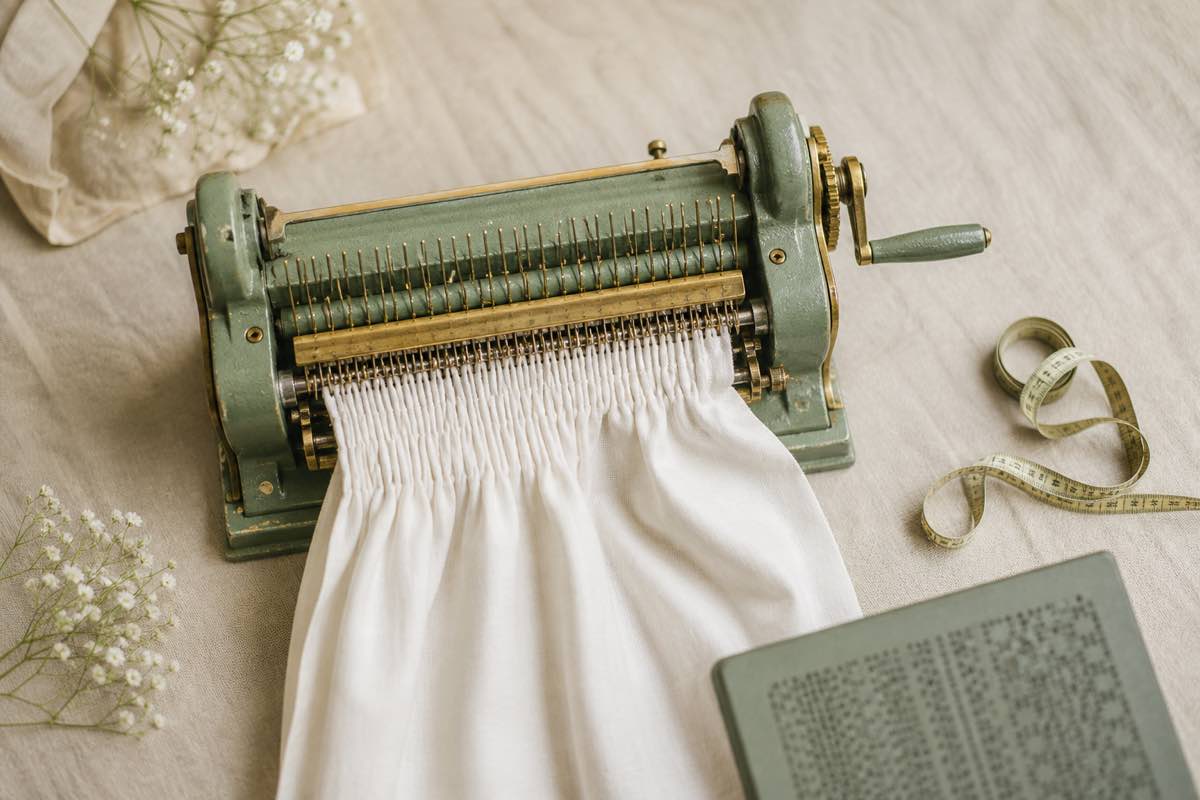
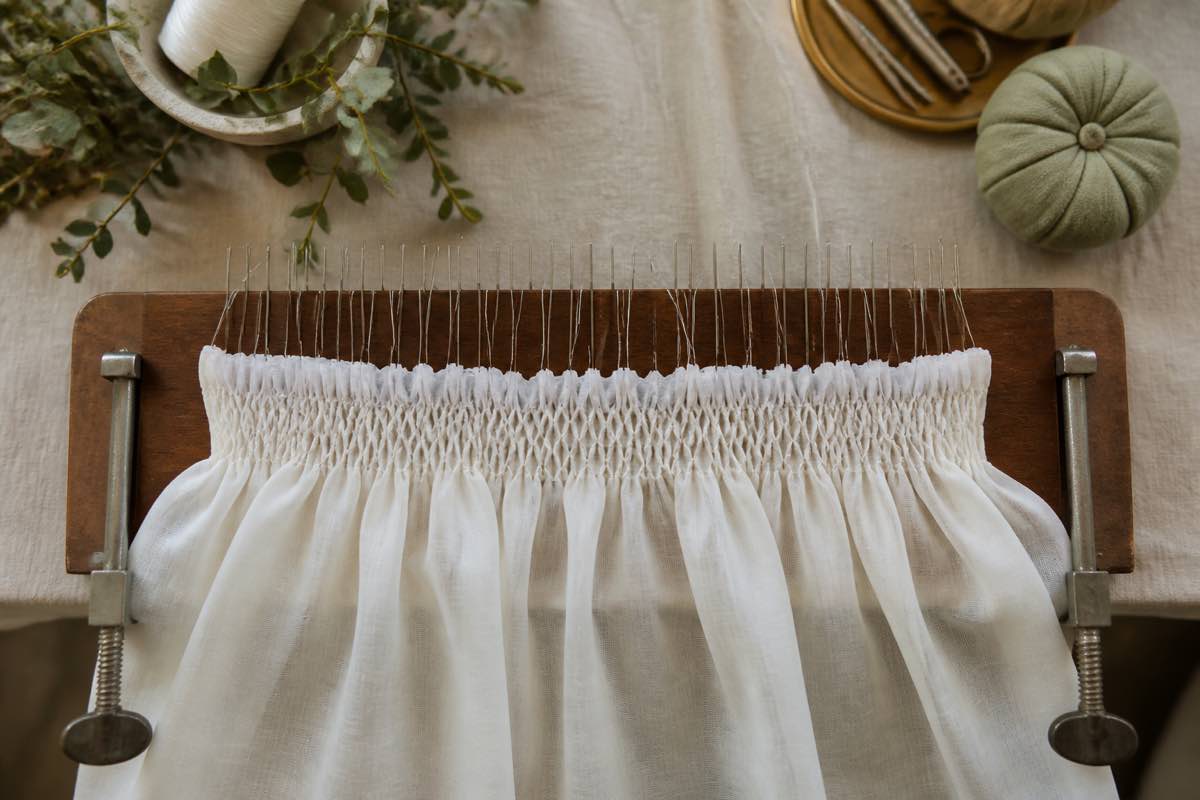
English smocking is embroidery worked on top of tiny, even pleats. A smocking pleater makes those pleats by feeding fabric through rollers onto rows of curved needles, leaving a gathering thread in every row. You then pull the threads up, tie them off and smock across the pleat tips.
Nothing about the stitches needs the machine. All you need is fabric gathered onto parallel rows of thread, with the gathers lined up from row to row. That's what the three methods below do by hand.
Method 1: iron-on smocking dot transfers
Smocking dot transfers are sheets printed with a grid of dots in heat-transfer ink. The dots mark where each gathering stitch goes, so every row picks up the same pleat.
- Cut the fabric on grain and press it. The rows of dots must run exactly along the crosswise grain or the pleats will twist.
- Iron the transfer onto the wrong side. Follow the sheet's heat setting, and test on a scrap first: some inks show through very fine batiste.
- Thread a long, strong gathering thread for each row. Quilting thread or button thread is less likely to snap than all-purpose thread. Use a contrasting color so you can see it later.
- Pick up a small bite at each dot, going in just before the dot and out just after, all the way across the row. Leave a long tail at both ends.
- Repeat for every row, always starting from the same side.
- Pull all the rows up together until the panel is close to the width you need, then even out the pleats with a needle tip and tie the threads off in pairs.
Work one more row than your plate uses, at the top and bottom. These holding rows keep the pleats straight while you smock and aren't stitched over.
Method 2: gingham as a built-in grid
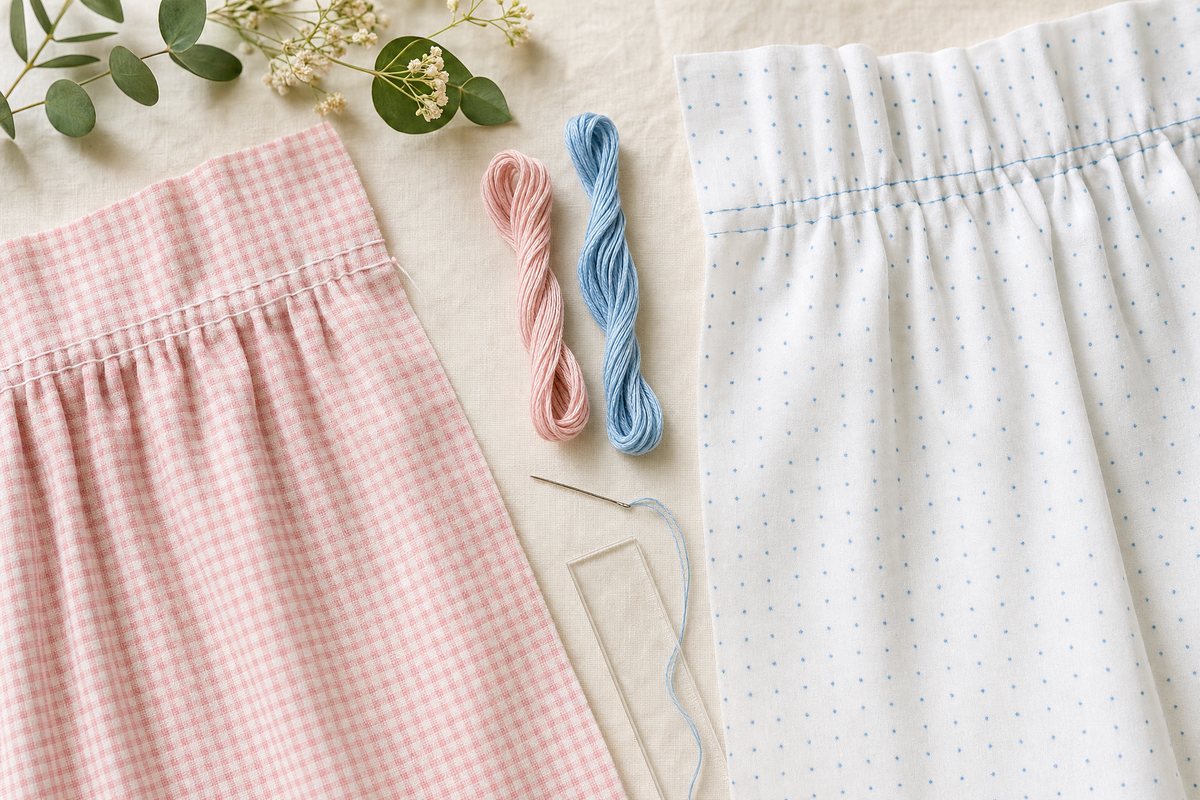
Gingham's checks are already a grid, so you can skip the transfer. Fine gingham with 1/8 inch checks is the classic choice for beginners; larger checks make bigger, puffier pleats.
- Pick up the fabric at the same point of every check, for example at each corner where a colored check meets a white one.
- Run each gathering row along a line of checks. The lines keep the rows parallel without any marking.
- Pull up and tie off exactly as you would with dots.
Gingham also hides small spacing mistakes, which is why so many first smocking projects are gingham bishops and sundresses. Pick a woven gingham rather than a printed one: the checks of a woven gingham follow the grain, and a print can be applied slightly crooked.
Method 3: a marked grid
If you want smocking on a solid fabric and have no transfer, mark your own grid.
- Use a water-soluble marking pen and a clear quilting ruler. Mark dots about 1/4 inch apart along each row and keep the rows 1/4 to 3/8 inch apart. Test the pen on a scrap and wash the scrap, because some marks set with heat.
- Mark on the wrong side and line every dot up with the dots in the row above.
- Gather exactly like the dot-transfer method.
Marking is slower than a transfer, but it lets you match any spacing a plate calls for.
How much fabric to gather
Hand gathering uses the same ratio as a pleater: for fine cotton batiste or broadcloth, cut roughly three times the finished smocked width. Heavier cottons need less; very fine fabrics can take a little more. The pleater calculator works out the cut width from the finished width and ratio, and the smocking yardage calculator covers whole panels.
Pro tip: gather a 6 inch test strip from the same fabric before you cut the real panel. Pull it up, measure it and check the ratio. Ten minutes of testing saves a panel that blocks out too narrow.
No-gather alternative: lattice smocking
Lattice smocking (also called Canadian or North American smocking) isn't English smocking at all. You stitch points of a grid together on flat fabric, and the fabric folds itself into puffs, diamonds or braids. It needs no gathering threads and no pleater, so it's popular for cushions and bag panels. It doesn't follow a smocking plate, and it won't give you the stretchy pleated bands of a bishop dress.
When a pleater is worth buying
Hand gathering is perfect for a practice sampler, a small insert or a single sundress bodice. A pleater earns its place when:
- You smock regularly. Gathering a 45 inch panel with 12 rows by hand can take an evening; a pleater does it in minutes.
- You want bishop dresses. A bishop pleats the whole neckline through the sleeves, which is a lot of hand gathering.
- Your fabric is very fine. Pleaters make more consistent pleats on batiste than most hands can.
If you're deciding which to buy, the Read vs Amanda Jane comparison covers the two most common models.
Start with a plate
Once your fabric is gathered, choose a simple geometric plate with cable and wave rows. The free smocking plate library has beginner plates with thread paths, and the smocking for beginners guide walks through your first rows.