Do You Need a Serger to Sew Clothes? (Honest Answer for Beginners)
Every beginner eventually asks: do I need a serger? The honest answer is no — here's how to get clean, professional seams on a regular machine, and when an overlocker is actually worth it.
The question every beginner asks
Spend any time in a sewing community and you'll see it constantly: do I need a serger? The marketing certainly implies you do. The honest answer is no — you absolutely do not need a serger to sew clothes. Plenty of beautiful, durable, professional-looking garments are made on a single regular machine.
A serger is an upgrade. Let's separate what it genuinely adds from what's just nice-to-have, so you can spend your money where it matters.
What a serger actually does
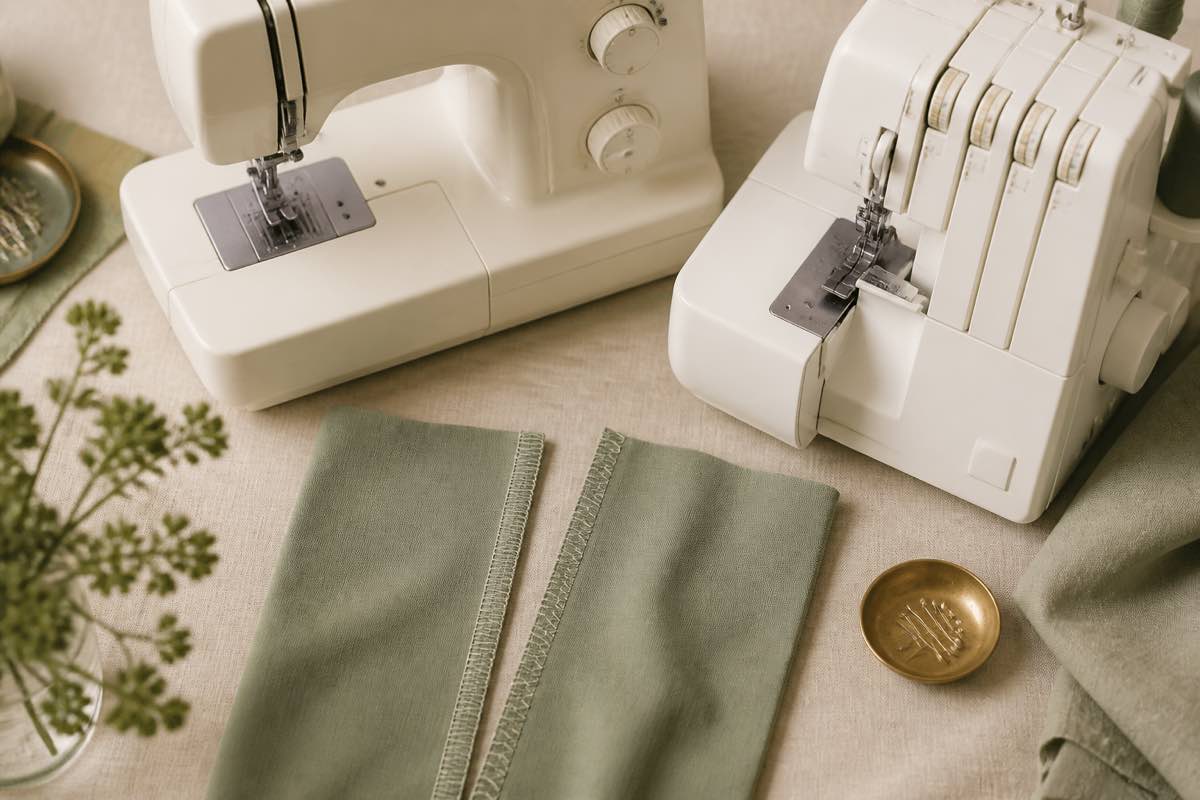
A serger (called an overlocker outside North America) does three things in one pass: it trims the seam allowance, sews the seam, and wraps the raw edge in thread — usually with 3 or 4 threads at once. That's the stretchy, clean, finished edge you see inside ready-to-wear clothing.
Its real strengths:
- Speed — one pass instead of sew-then-finish.
- Knits — the thread wrap stretches, so seams don't pop.
- A professional interior finish.
What it is not: a replacement for your regular machine. A serger can't do topstitching, buttonholes, or most construction details. It's a complement.
How to finish seams beautifully without one
A raw seam allowance frays in the wash — so the only thing you truly need is a way to finish edges. Your regular machine has several:
- Zigzag stitch along the raw edge — the classic no-serger finish.
- Faux overlock stitch — many machines have an overcast stitch that mimics a serged edge.
- French seams — sew the seam twice to enclose the raw edges completely inside. Gorgeous on lightweight wovens.
- Flat-felled seams — the strong, folded, double-stitched seam you see on jeans. Sturdy and clean.
- Pinking shears — zigzag-cut edges fray less; fine for stable wovens.
These aren't compromises — French and flat-felled seams are higher-end finishes than a plain serged edge.
Yes, you can sew knits without a serger
The biggest "but I need a serger" myth is knits. You don't:
- Use a ballpoint or stretch needle (see which needle for which fabric).
- Use a stitch with give — a narrow zigzag or a lightning-bolt stretch stitch for seams.
- Use a twin needle for stretchy, professional-looking hems.
A serger is faster and tidier for knits, but a regular machine sews them perfectly well with the right needle and stitch.
When a serger is actually worth it
Consider one once you're past the beginner stage and:
- You sew a lot, and the time savings add up.
- You sew knits often and want that ready-to-wear finish.
- You specifically want the professional interior on every garment.
If you sew occasionally, or mostly wovens, your money is better spent on fabric and a good pair of shears. A serger is a "someday upgrade," not an entry ticket.
Track what works, serger or not
Whichever you use, the settings that gave you a clean seam on a particular fabric are worth remembering. Log machine (and serger) settings the first time you sew a new fabric in your project journal, tied to that fabric in your stash — then reuse the entry next time instead of re-dialing tension and stitch settings from scratch.
2. Start on your regular machine — finish seams with zigzag or enclosed seams.
3. Sew knits with a ballpoint/stretch needle and a stretch stitch.
4. Log the settings that worked, per fabric.
5. Consider a serger later, only once you sew enough to justify it.
Frequently asked questions
Do you need a serger to sew clothes?
No. A regular machine finishes seams with zigzag, faux overlock, or enclosed seams like French and flat-felled.
What does a serger do?
Trims, sews, and wraps a seam edge in one pass with 3–4 threads — fast, and great for knits.
How do I finish seams without one?
Zigzag, faux overlock, French seams, flat-felled seams, or pinking shears.
Can I sew knits without a serger?
Yes — ballpoint/stretch needle plus a zigzag or stretch stitch; twin needle for hems.
When is a serger worth it?
Once you sew a lot (especially knits) or want a ready-to-wear interior. It's an upgrade, not a requirement.