French Hand Sewing: Entredeux, Rolled Hems, and Lace Insertion
French hand sewing is the connective tissue of heirloom garments. Here are the core techniques and where they belong.
Why French hand sewing exists
Heirloom garments are made of transparent or nearly transparent fabric, so every seam allowance shows through. French hand sewing techniques hide raw edges by rolling them, encasing them, or replacing them with a decorative trim like entredeux.
Entredeux
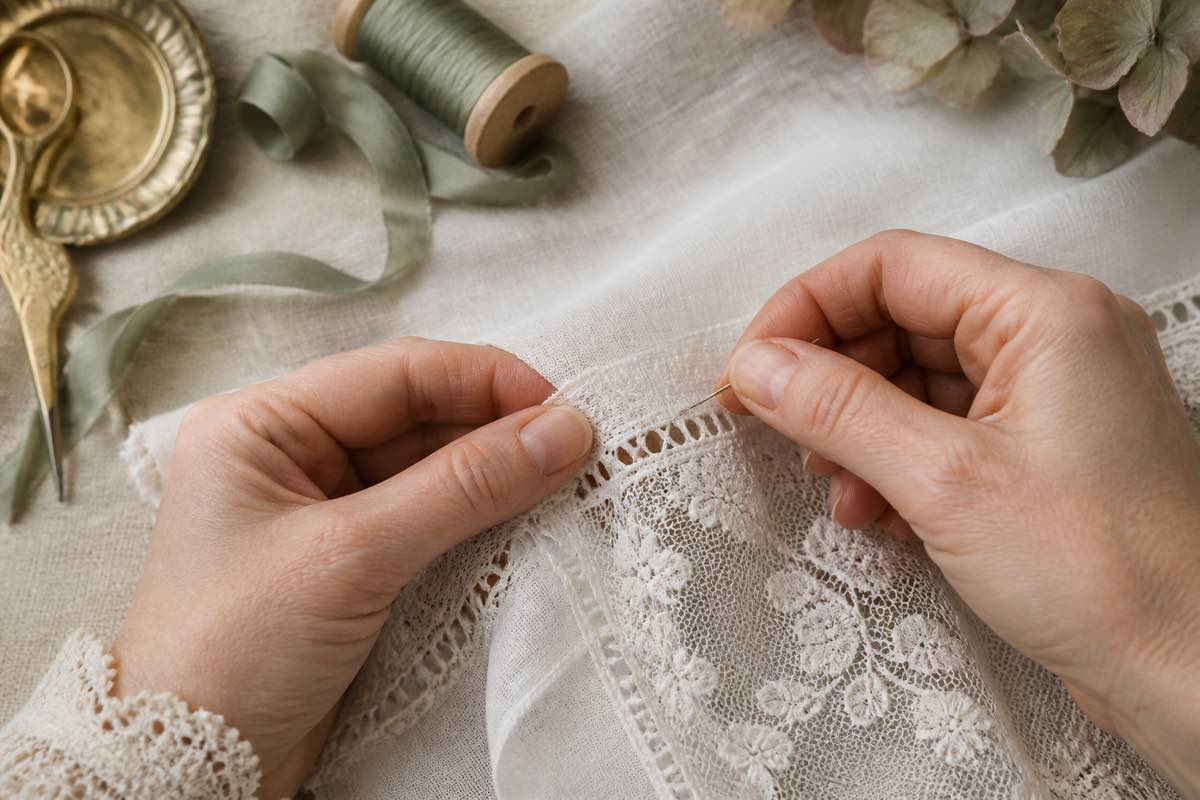
Entredeux (French for "between two") is a narrow strip of woven trim with a row of holes down the middle and plain fabric on either side. You cut off one plain edge, whip-stitch the trim to the fabric, and end up with a decorative ladder between two panels.
Use it to:
- Join lace to fabric with a clean transition
- Set in a smocked insert
- Frame a yoke or collar
Machine equivalent: a wing needle with a hemstitch produces a close approximation, though real entredeux still looks slightly finer.
Rolled and whipped hem
The traditional heirloom hem is not turned twice — it's rolled between the fingers and whip-stitched with fine thread. The result is a soft, almost invisible edge on batiste and organdy.
Practice on scraps until the roll sits evenly. Rushed rolled hems ripple.
Lace-to-lace and lace-to-fabric joins
Two lace edgings can be joined into a wider insertion by butting the headings and whipping through both. Lace joined to fabric follows the same idea: roll the fabric edge, then whip through the lace heading. No zigzag, no serged edge.
Puffing
Puffing is a gathered strip of batiste set between two rows of lace or entredeux, creating a soft, ruffled band. Common on yokes and skirt hems.
To puff:
1. Cut a strip 1.5–2× the finished length.
2. Run two rows of gathering stitches along each long edge.
3. Draw up evenly and pin between lace strips.
4. Whip or entredeux-join both sides.
Machine vs hand
Modern French machine sewing uses a wing needle, 80-weight cotton thread, and a hemstitch pattern to reproduce most of these effects. It's faster and appropriate for garments meant to be worn hard (daygowns for a grandchild). Save true hand French sewing for pieces where the process is the point — christening gowns, wedding accessories, guild samples.
Track laces and trims
French techniques burn through specialty trims: metered lengths of Val lace, Cluny insertion, entredeux, wide edgings. The digital stash tracks meters remaining per trim with photos, so you know whether the christening gown insertion is already covered before ordering more. When you plan a garment, add it as a project kanban card and pull trims straight from your stash.
Log your heirloom trim stash in Sewist Studio and stop over-ordering French lace.