Heirloom Sewing: The Complete Beginner's Guide to Getting Started
Heirloom sewing is the fine-craft tradition of French hand sewing, lace insertion, smocking, and embroidery. Here's how to start.
What heirloom sewing is (and isn't)
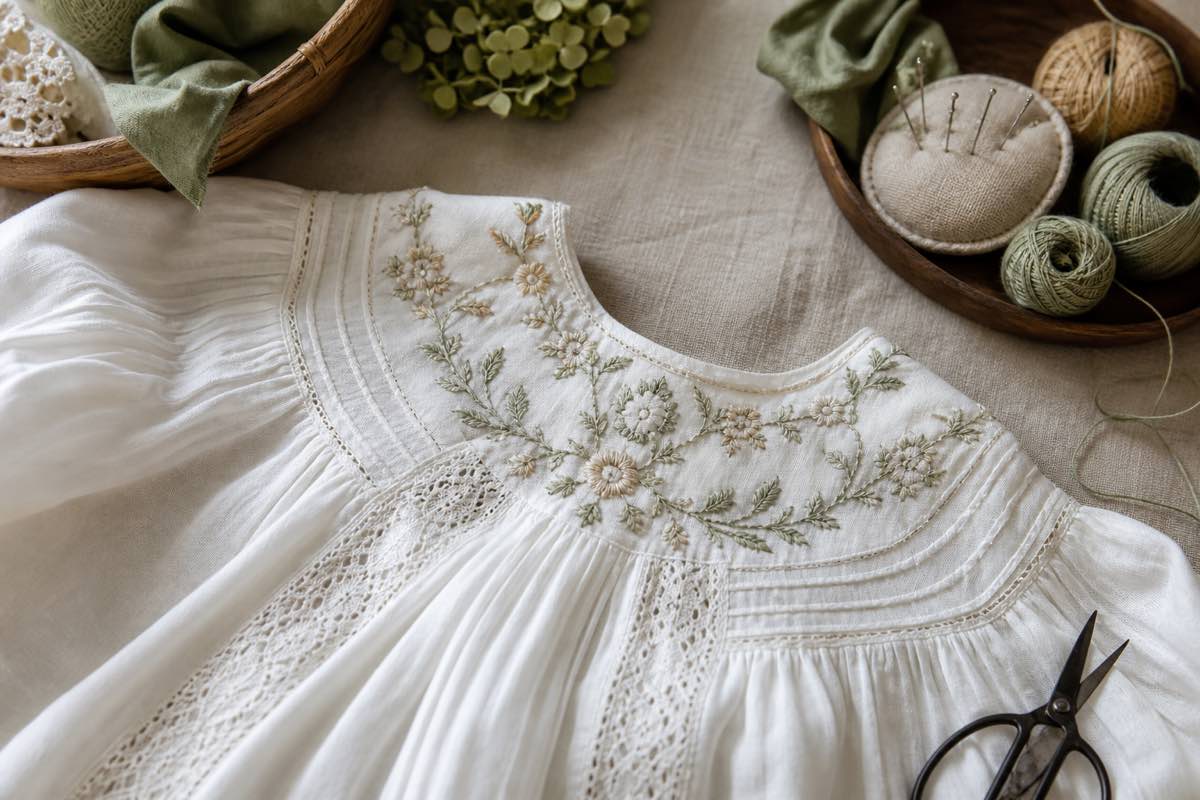
Heirloom sewing is a family of fine-craft techniques — lace insertion, entredeux, pintucks, French seams, hand embroidery, and smocking — historically used on christening gowns, bishop dresses, and christening bonnets. Modern heirloom sewing uses many of the same techniques on quilts, blouses, home decor, and children's clothes.
It is not: fussy, unattainable, or something you have to be a master to try. Every technique starts with a small sampler.
The essential heirloom toolkit
- Fabric: Swiss cotton batiste, cotton lawn, or fine broadcloth (60-100 count)
- Thread: 60-weight or 80-weight cotton (DMC 50 or Mettler 60)
- Machine needles: Size 60/8 or 70/10 sharp
- Hand needles: Size 10 or 12 sharps and size 26 tapestry for pulled-thread
- Laces: Cotton French Val lace, insertion + edging in matching widths
- Entredeux: The ladder-stitch trim used to join lace to fabric
Catalog these in your Sewist Studio notions inventory so you don't over-buy at the next quilt show.
Foundation techniques to learn first
1. French seams
The workhorse heirloom seam — invisible from both sides, encloses raw edges. Sew wrong sides together at 1/4", press open, fold right sides together, sew at 3/8". Practice on 4"x4" scraps before your first project.
2. Lace insertion (three methods)
- Butted lace-to-lace — zigzag two lace edges together.
- Lace to fabric — pin lace on top of fabric, zigzag along the heading, trim fabric under lace.
- Lace to entredeux to fabric — the classic French approach; most beautiful, most fiddly.
3. Pintucks
Straight parallel folds stitched close to the fold edge. Use a pintuck foot and twin needle for speed, or single needle by hand-marked lines for precision.
4. Rolled hems
Hand-rolled or machine-rolled. Hand-rolled on a straight edge takes practice but produces the finest finish.
Your first heirloom project: a linen guest towel
Choose a plain linen or fine cotton towel blank. Add:
- Two rows of pintucks near the hem
- A band of French Val insertion lace between them
- Edging lace attached with entredeux
This project teaches insertion, entredeux, and pintucks in a low-stakes format. When it works, tackle a bishop yoke or Christening bonnet.
Machine settings that matter
- Stitch length: 1.5-1.8mm for most heirloom work
- Tension: Slightly reduced from cotton-piecing default
- Foot pressure: Reduce if fabric puckers
- Bobbin: Same 60-weight thread as top
Test every stitch on a scrap of your project fabric before touching the real piece.
Smocking + embroidery add-ons
Once basics feel comfortable, add smocking and heirloom embroidery stitches. A smocked yoke on a hand-sewn bishop dress is the pinnacle of heirloom childrenswear.
Cataloging your heirloom stash
Heirloom fabrics and laces are expensive and easy to forget. Photo-catalog every yard and lace card in Sewist Studio with fiber content, count/weight, and color notes. Next time you plan a project you'll shop your stash first.
Where to go next
Heirloom sewing rewards patience and cataloging. Start small, catalog what you buy, and you'll build a lifetime skill and stash worth passing down.