Knit Stretch Percentage Calculator: How to Measure Any Knit Before You Cut
"Does this fabric have enough stretch?" is the question that ruins more knit projects than any other. Here's the 30-second test that answers it for certain.
The question every knit pattern asks — and most sewists guess at
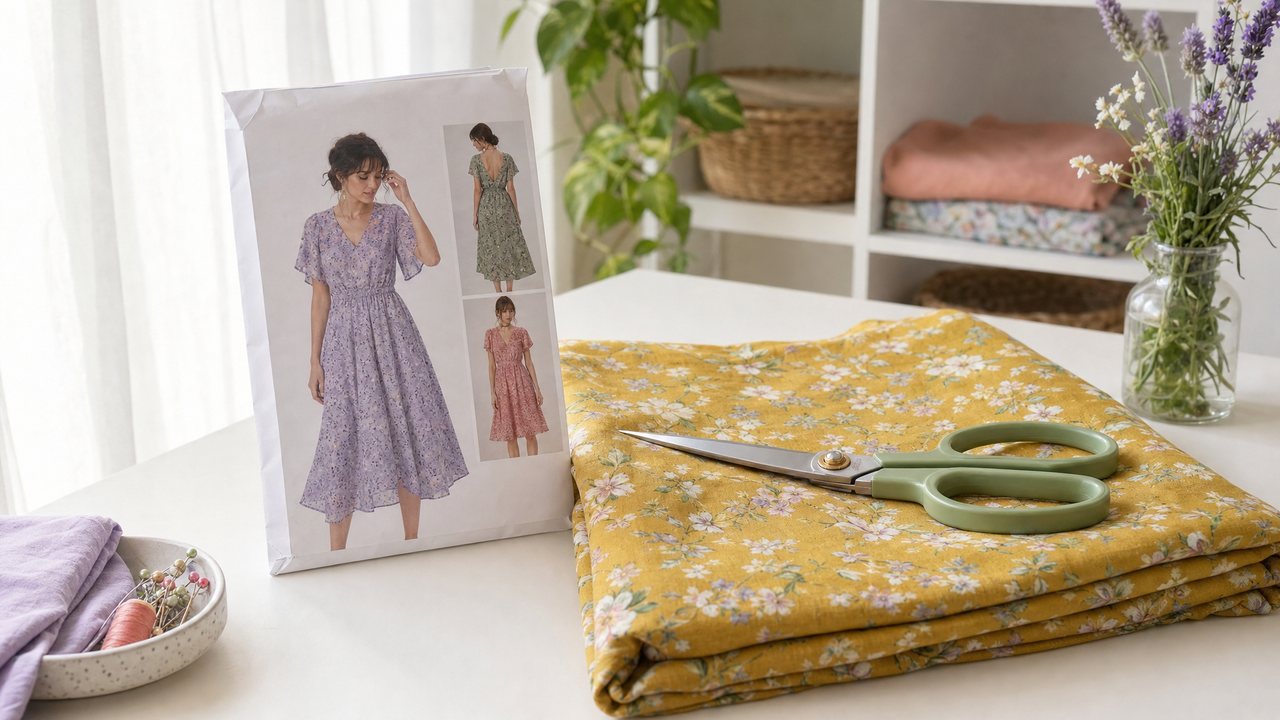
Flip over almost any knit sewing pattern envelope and you'll find a small printed stretch gauge: a ruler-like graphic that says "stretch fabric to here" with a note like "requires 50% stretch." Most sewists eyeball this against their fabric, pull it to roughly the right spot, and hope. It's a guess — and it's the single biggest reason knit garments come out too tight, too loose, or refuse to recover their shape.
The actual test takes under a minute and turns that guess into an exact number.
How to measure stretch percentage
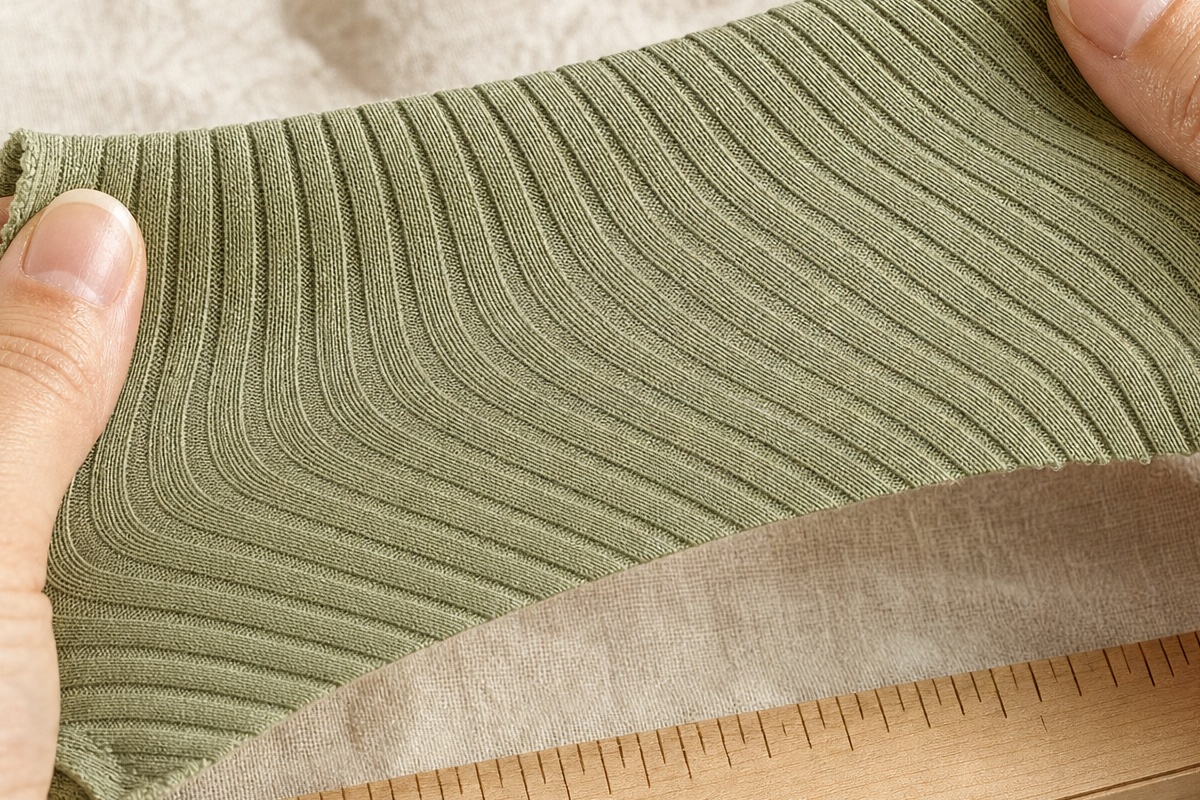
1. Mark a section. Fold or measure a clean 4-inch (or 10 cm) segment along the crossgrain of your fabric — the direction that typically stretches most, usually perpendicular to the selvage.
2. Anchor one end. Hold that end against a ruler at the 0 mark.
3. Stretch gently. Pull the other end until the fabric resists (not until it's straining or distorting) and read the new length.
4. Calculate. Stretch percentage = ((stretched length − relaxed length) ÷ relaxed length) × 100.
So a 4-inch section that stretches to 6 inches: (6 − 4) ÷ 4 × 100 = 50% stretch.
What the percentage actually means for your project
| Stretch % | Category | Typical uses |
|---|---|---|
| ~25% | Stable / low stretch | Ponte, scuba, structured knit dresses, blazers |
| ~50% | Moderate stretch | T-shirts, jersey tops, interlock, casual dresses |
| ~75% | High stretch | Leggings, fitted dresses, dancewear |
| 100%+ | Super stretch | Swimwear, activewear, compression garments |
Patterns are drafted with negative ease that assumes a specific stretch percentage. Cut a 25%-stretch ponte pattern from a 75%-stretch swim knit and the garment will be loose and poorly supported; cut a swimwear pattern from a 25%-stretch ponte and you likely won't get it on.
2-way vs. 4-way stretch
Stretch percentage alone doesn't tell the whole story — direction matters too.
- 2-way stretch fabric only stretches across the grain (side to side). Most woven-look knits and many jerseys are 2-way.
- 4-way stretch fabric stretches both across the grain and along its length. This is required for leggings, swimwear, and dancewear, where the garment needs to move with the body in every direction.
Test both directions if you're not sure which you have — measure a crossgrain section and a lengthwise section separately, since they can have meaningfully different percentages on the same fabric.
Why "it feels stretchy" isn't reliable
Stretch feel is affected by fabric weight and hand, which can trick your sense of how much a fabric actually elongates. A heavy, dense ponte can feel firm but still hit 25–30% stretch; a lightweight, silky jersey can feel delicate but barely stretch at all if it's a more tightly-knit variety. Measuring removes the guesswork that "feel" introduces.
Check your fabric against the pattern instantly
The free Knit Stretch Percentage Calculator takes your relaxed and stretched measurements and instantly tells you the percentage, what category it falls into, and whether it meets a specific pattern's printed requirement — so you know before cutting, not after the garment doesn't fit.
Frequently asked questions
Does the length of the measured section matter? No, as long as you're consistent — 4 inches and 10 cm are standards because they're easy to mark and read, but the percentage math works the same at any starting length.
What if my pattern doesn't print a stretch requirement? Most indie and vintage patterns omit this. A safe default is to match the stretch category the pattern's style suggests: fitted knit dresses usually assume 50%, leggings assume 75%+, and loose tops are often forgiving down to 25%.
Can I test stretch recovery too, or just the percentage? This calculator measures maximum stretch, not recovery (how well the fabric snaps back). Recovery matters for garments that need to hold shape — test it separately by stretching the fabric fully for 30 seconds and seeing how close it returns to its original length.
Is stretch percentage the same as "spandex content"? No. A fabric's fiber content (like 5% spandex) influences its stretch but doesn't determine the percentage directly — knit structure matters just as much. Always measure the actual fabric rather than inferring stretch from the fiber label.
Keep your fabric notes with the fabric
Once you've tested a knit, log the stretch percentage in your digital fabric stash alongside the yardage and fiber content. The next time Sewist Studio's AI planner suggests a project from your stash, it can match patterns to fabrics that actually have the stretch they need — no re-testing required.