How to Measure Fabric Yardage for Any Sewing Project
Whether you're buying fabric for a dress, a curtain panel, or a quilt back, here's the simple math that gets you to the right yardage every time.
The two numbers that matter
Every fabric measurement boils down to two numbers:
- Length (how many yards, measured along the lengthwise grain)
- Width (the fabric width — usually 44" / 45" for quilting cotton, 54" / 60" for apparel knits and wovens, 108" for quilt backings)
Almost every yardage mistake happens because someone wrote down one number and forgot the other. A "2 yard" cut at 44" wide and a "2 yard" cut at 60" wide are very different amounts of fabric — about a third more in the wider one.
Always record both. Always.
How to measure yardage you already own
For fabric in your stash, you're translating a folded pile into a usable number.
1. Find a flat surface at least as long as your cut — a cutting mat, a dining table, the floor.
2. Unfold the fabric fully along the lengthwise direction (the longer dimension).
3. Measure the length in inches, then divide by 36 to get yards.
- 54 inches ÷ 36 = 1.5 yards.
- Round down to the nearest quarter yard — never up. Better to be honest than to start a project a quarter yard short.
4. Measure the width at the narrowest point (sometimes selvage trim or angled cuts shrink usable width).
5. Record both numbers. "1.5 yd × 54 in" tells you the whole story.
For long pieces, measure twice and stop folding fabric back over itself — overlap inches sneak in and lie to you.
How to figure out how much fabric to buy for a pattern
If you're buying for a specific pattern, the envelope yardage chart is the answer:
1. Find your size on the size chart.
2. Find your fabric width across the top of the yardage chart (typically two columns — narrow ~45" and wide ~60").
3. Trace down to your size's row in the right view (View A, B, C — they each need different yardage).
4. Add 10% for safety if the fabric has a one-way nap, large directional print, or plaid you'll want to match.
If you can't read a pattern envelope yet, our beginner's guide to reading a sewing pattern walks through every section in plain English.
Quick formulas when you don't have a pattern
These cover the most common "I have no pattern but need a fabric estimate" situations. For garments, our free fabric yardage calculator does the math for you — pick the project, your size, and the fabric width and it returns yards and meters with a shrinkage buffer already built in.
Curtains
- Length: window height + 4" header + 6" hem = total drop. Round up to the nearest quarter yard.
- Width per panel: window width × 2 (for gathered fullness). Buy enough fabric to piece each panel if your fabric is narrower than that.
- Quick rule: for a standard 36" × 48" window with 84" floor-length curtains, buy ~5–6 yards of 54" fabric for a pair of panels.
Pillow covers
- Knife-edge pillow: pillow size + 1" seam allowance, on both length and width. A 20" pillow needs a 21" × 21" piece for the front and the same for the back — about ½ yard of 54" fabric.
- Envelope back: add 6" extra to the back width and cut into two overlapping panels.
Tablecloth
- Length: table length + 2 × desired drop + 2" hem.
- Width: table width + 2 × desired drop + 2" hem.
- Typical 6-seater rectangular table → ~3 yards of 60" fabric.
Quilt backing
- Width and length each = quilt top dimension + 4" on each side for longarm allowance.
- If your quilt is wider than your fabric (almost always), buy 2 × length and piece the back with a center seam.
Basic A-line skirt
- Length: desired skirt length + 4" for waist casing and hem.
- 1.5–2 yards of 54" fabric covers most adult sizes.
Tote bag
- Most lined totes (15" × 16" with handles) need ½ yard of fabric for the shell and ½ yard for the lining.
Common yardage mistakes (and how to avoid them)
- Forgetting fabric width. A pattern that calls for 2 yards at 60" needs more like 2.5 yards at 45". Always check.
- Buying exactly what the envelope says. Pre-wash shrinks 3–8%. Add a few inches.
- Ignoring nap and directional prints. "With nap" yardage on the envelope is the safer number for velvet, corduroy, faux fur, and any print where stripes or motifs run one way.
- Not pre-shrinking before measuring stash. Cataloging a piece pre-wash and then washing it later means your stash record is wrong. Pre-wash first, then measure for the catalog.
- Storing fabric without dimensions. "About a yard" is not a measurement. You will second-guess it later.
How to never re-measure your stash again
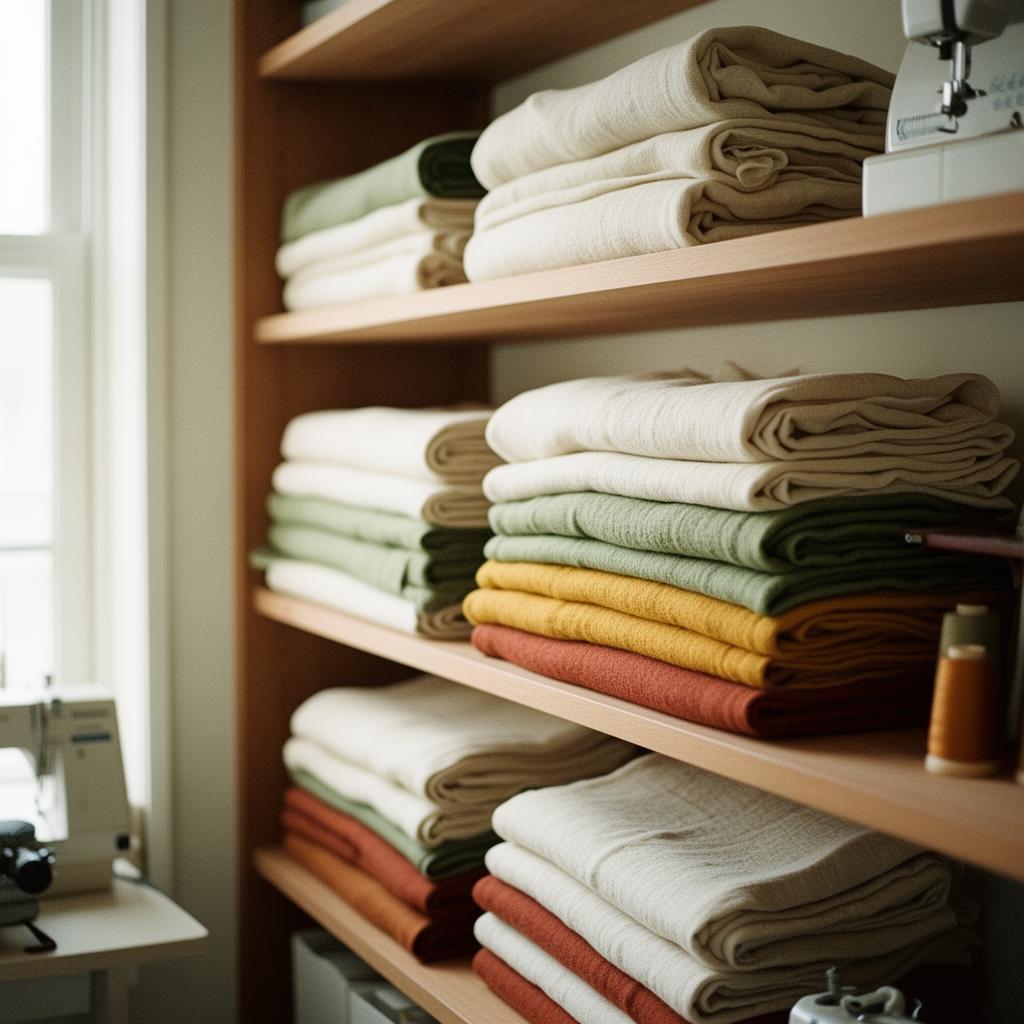
The single biggest waste of sewing time isn't seam-ripping — it's re-measuring fabric you already measured a month ago. The cure is a stash catalog with length × width on every entry.
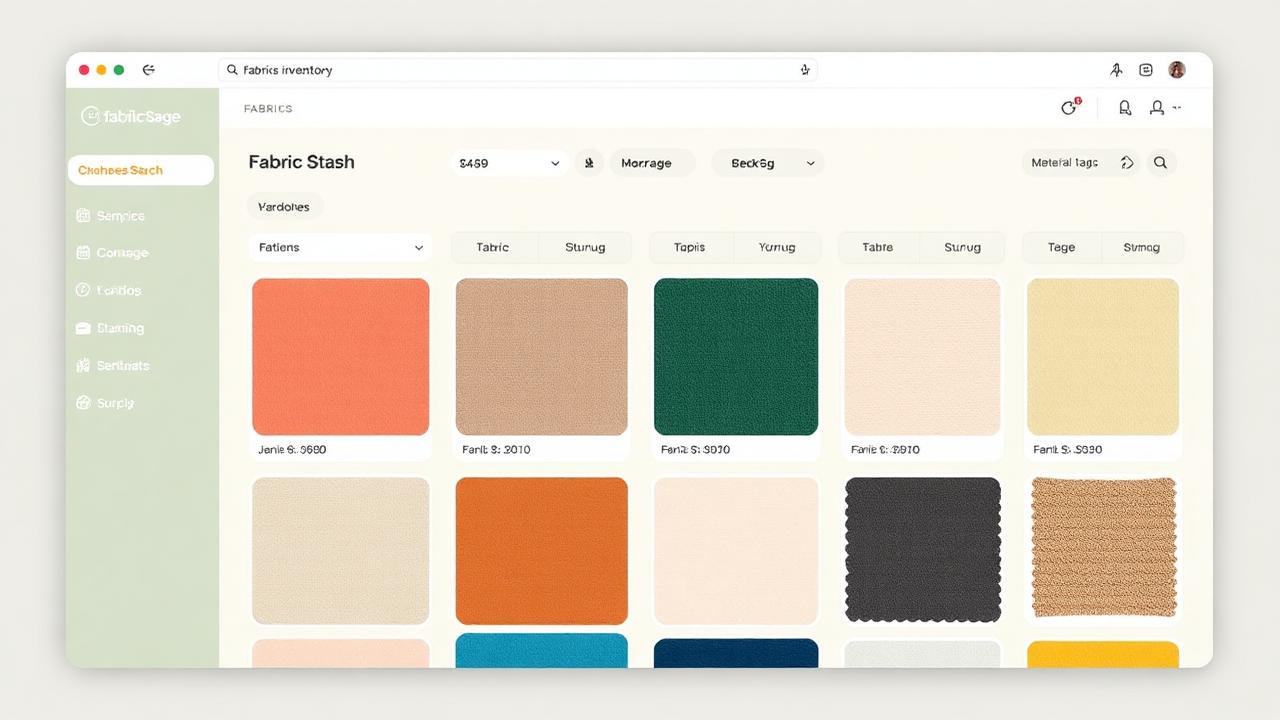
Sewist Studio's fabric stash organizer records both dimensions for every cut. Snap a photo, enter length and width, tag the fiber and intended use. Once a cut is logged, you never have to drag the tape measure across it again.
Let the planner check yardage for you
When your stash has real measurements on every piece, the stash-aware project planner can answer the most useful question in sewing: do I already own enough fabric to make this? It checks pattern yardage against what you've got and only suggests projects you can actually cut today.
Yardage math stops being a chore once it only has to happen once. Catalog with both dimensions, and the answer to "do I have enough?" becomes a tap, not a tape-measure session on the floor.
Ready to stop guessing at yardage forever? Start a free Sewist Studio account, log a few cuts with length and width, and let the AI plan from what you actually own.