Sewing UFOs: How to Manage Multiple Sewing Projects Without Getting Overwhelmed
Every sewist has UFOs — Unfinished Objects. Here's why we abandon projects, how a Kanban board fixes it, and how to set one up in 15 minutes.
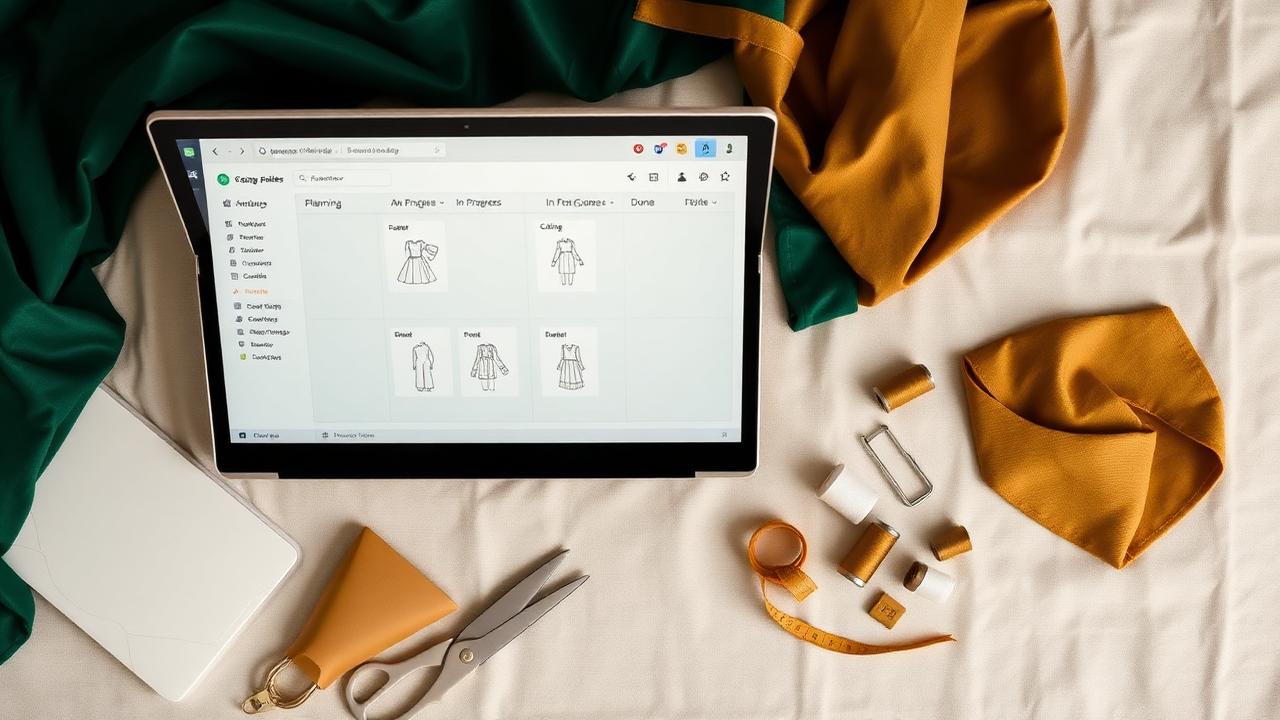
TL;DR. Sewing UFOs (Unfinished Objects) pile up because sewists juggle projects mentally instead of visually. A simple Kanban board for sewing — Planning → Cutting → In Progress → Finishing → Done — gives each project a visible home and a clear next step. Sewist Studio's project tracker does this with cards that link to your actual patterns and fabric.
What's a sewing UFO?
A UFO ("UnFinished Object") is any sewing project you've started and stopped. The classic versions:
- A garment cut out and pinned, sitting in a project bag for nine months.
- A muslin you finished but never moved past because the bust adjustment scared you.
- A jacket that's done except for the buttonholes and lining, because you ran out of interfacing.
- The "I'll get back to this when I'm in the mood" pile that grows faster than it shrinks.
UFOs aren't a moral failing. They're a systems problem. You started the project when you were excited, hit a friction point, and the next time you opened your sewing room there were five other tempting things to start instead. The unfinished one quietly slid into the corner.
Why we abandon projects mid-way
Talk to 50 sewists and the reasons for stalled projects cluster into four buckets:
1. Fitting frustration — a muslin that fits weirdly and you don't want to debug.
2. Decision fatigue — running out of one notion, missing one fabric color, can't pick a button.
3. Lost momentum — you put it down for a week and now the instructions feel foreign.
4. Shiny new project — a new pattern arrives and pulls focus.
A visual project tracker addresses three of those four directly. (Fitting frustration is its own problem.) When projects are visible — when you can see all six of them on one board — you stop secretly hoping the bag in the corner goes away on its own.
The psychology of the Kanban board
Kanban was invented by Toyota to manage factory work. Software teams adopted it. Sewists are slowly getting there. The core idea is dead simple: every piece of work is a card, and there are columns representing the stages it moves through. You drag cards left to right as they progress.
For sewing, a useful column layout looks like:
| Column | What lives here | Typical time |
|---|---|---|
| **Planning** | Patterns + fabric chosen, not cut yet | Days to weeks |
| **Cutting** | Pattern traced, ready to cut or being cut | A session or two |
| **In Progress** | Actively sewing | 1-4 sessions |
| **Finishing** | Hem, buttons, hand-sewing, pressing | 1-2 sessions |
| **Done** | Photographed, worn, logged | Forever |
The magic isn't the columns. The magic is the physical act of moving the card. Every time you move a card you get a small dopamine hit, and every time you look at the board you see at a glance which projects are real and which are wishful thinking.
The hard constraint that makes Kanban actually work: cap In Progress at 2-3 cards. If you can only have three projects "in progress" at once, you have to finish one before you can start another. UFOs evaporate.
How to triage your existing UFO pile
Before you set up a new system, deal with the old pile. Go through every stalled project and assign one of three labels:
- Finish. Still love the fabric, pattern still fits the wardrobe. Move to In Progress.
- Frog. Cut it apart, reclaim the fabric, log it back into your stash. No guilt — that fabric becomes a project you actually want.
- Donate. Untouched for a year, no emotional pull. Pass it on to a sewist who'll love it.
A rough rule: a UFO untouched for over 12 months almost never gets finished. Frog or donate, free up the mental space.
Sewist Studio's project Kanban
A general-purpose Kanban tool like Trello or Notion can run a sewing board, but you'll be copy-pasting links to your patterns and typing fabric names manually. Every. Single. Time. That friction is exactly what kills the habit.
Sewist Studio's project tracker is purpose-built. Each project card links directly to:
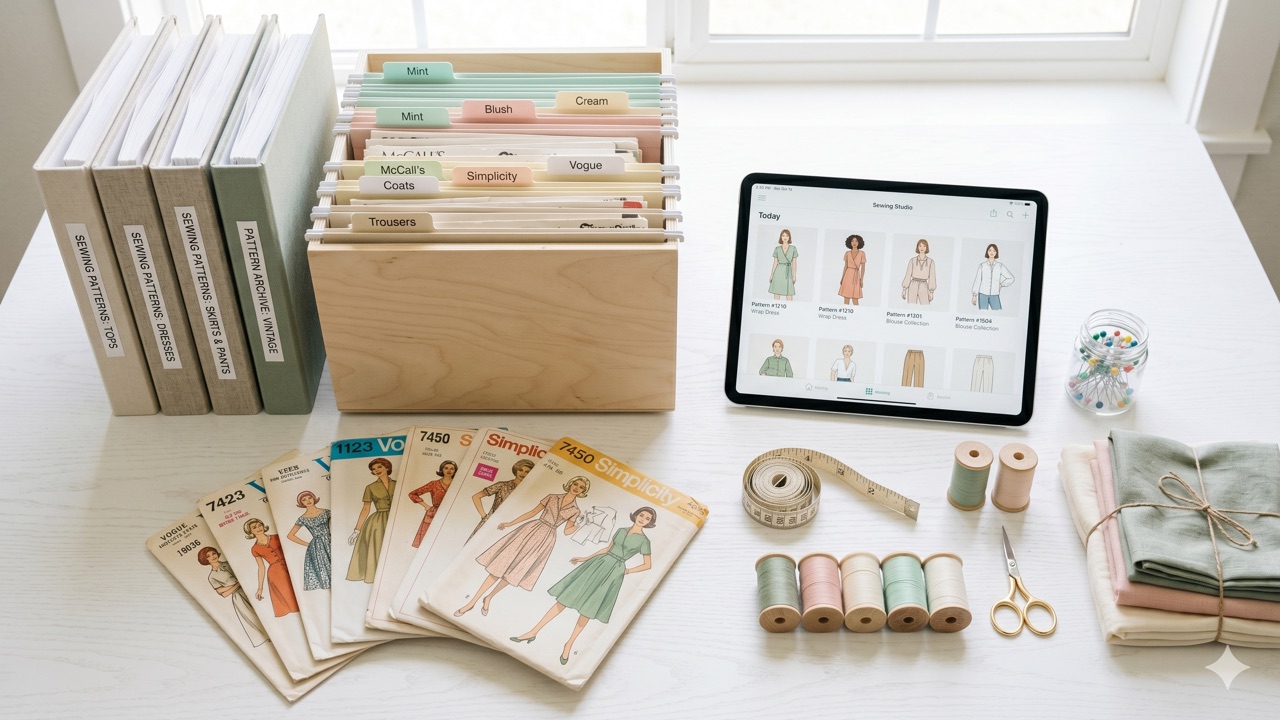
- The pattern from your catalog (with sizes, views, yardage).
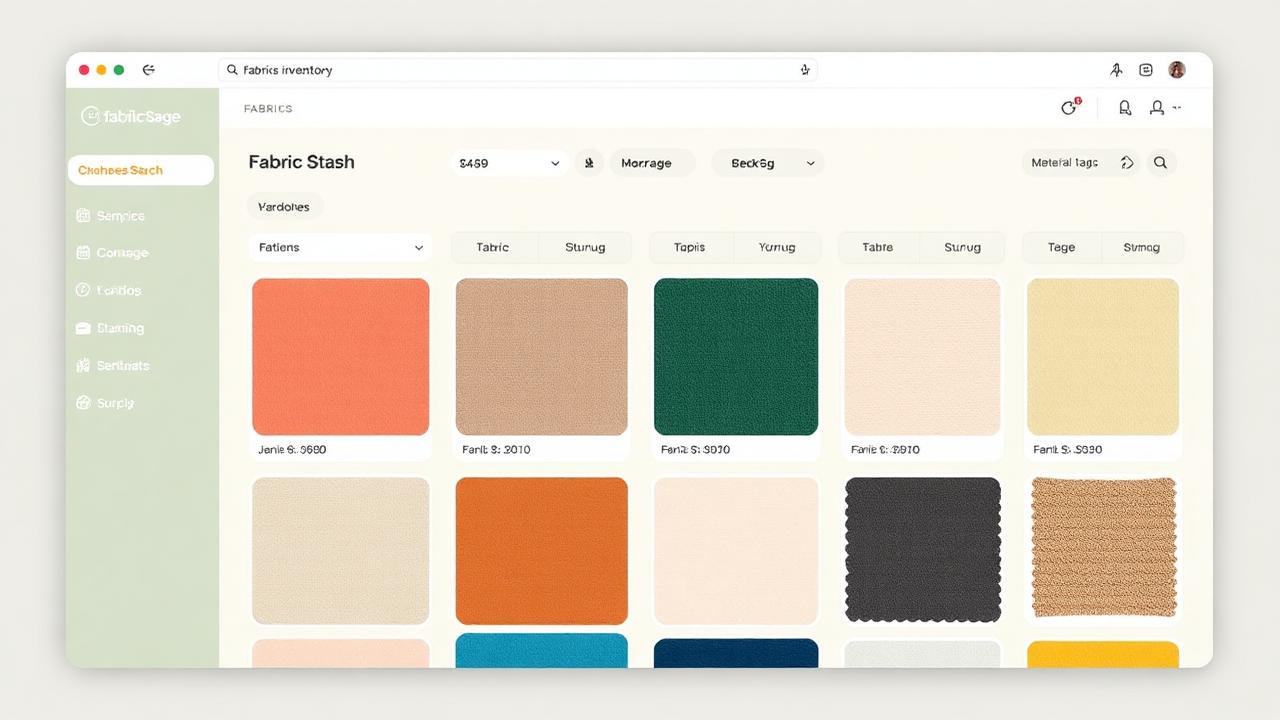
- The fabric cuts you've assigned (yardage debits from your stash automatically).
- The threads you'll need (with color swatches).
- The notions (zippers, buttons, interfacing).
When you open a project card, you see everything in one place — no hunting through tabs, no "wait, what fabric was I going to use?" The card moves through your custom columns, and when it lands in Done, the materials it consumed are already reflected in your stash counts.
You can also add notes per stage ("bust adjusted +1.5\" — keep for next make"), which means future-you opens a similar project and gets the lessons handed to you instead of repeating the mistake.
A weekly review ritual
Five minutes, once a week. Open the board and ask:
1. What moved this week? (Celebrate it, even if it's just one card.)
2. What's been in the same column for 3+ weeks? (Decide: finish, frog, or push to Done as "abandoned.")
3. What's next? (Pick the one card you'll touch this week.)
This is the meta-habit that keeps the system alive. Without it, even a good Kanban board slowly turns into another UFO pile.
Get started
1. Open a free Sewist Studio account.
2. Add your patterns and fabric to inventory (5-10 of each is enough to start).
3. Open the Projects tab and create one card per active project.
4. Cap In Progress at 3. Everything else goes in Planning or back to the stash.
5. Move one card this week. That's the only goal.
UFOs aren't a character flaw. They're what happens when projects don't have a visible home. Give them one and they stop multiplying.
Frequently asked questions
What is a UFO in sewing?
An UnFinished Object — a project started but not completed.
Why do sewists abandon projects mid-way?
Fitting frustration, decision fatigue, lost momentum, and shiny new projects pulling focus.
What is a Kanban board for sewing?
A visual tracker with columns (Planning → Cutting → In Progress → Finishing → Done) and one card per project, moved left to right as you progress.
How do I decide whether to finish or frog a UFO?
If you still love the fabric and the garment fits your wardrobe, finish it. Otherwise frog or donate.