Small Sewing Room Setup Ideas That Actually Work
Layout, storage, and cataloging tricks that turn a closet or corner into a real sewing room.
The 3-step triangle
Every sewing setup needs three stations within three steps of each other: sewing, cutting, pressing. In a small room, that's not a suggestion — it's the difference between finishing projects and abandoning them mid-cut.
Layout options for tight spaces
The 6x8 nook
Sewing machine on a narrow desk against one wall. Wall-mounted ironing board that folds flat. Cutting on a mat placed over the ironing board when needed.
The 8x10 room
L-shape: machine desk on one wall, cutting table (or drop-leaf table) perpendicular. Ironing station on a rolling cart.
The 10x10 studio
U-shape or dedicated cutting island. Add a wall of open shelving for notions.
Vertical is everything
Floor space is finite. Walls aren't.
- Pegboard — thread, scissors, rulers, rotary cutters
- Slat wall or IKEA Skådis — bins, small tools
- Over-door pockets — patterns in progress, WIP kits
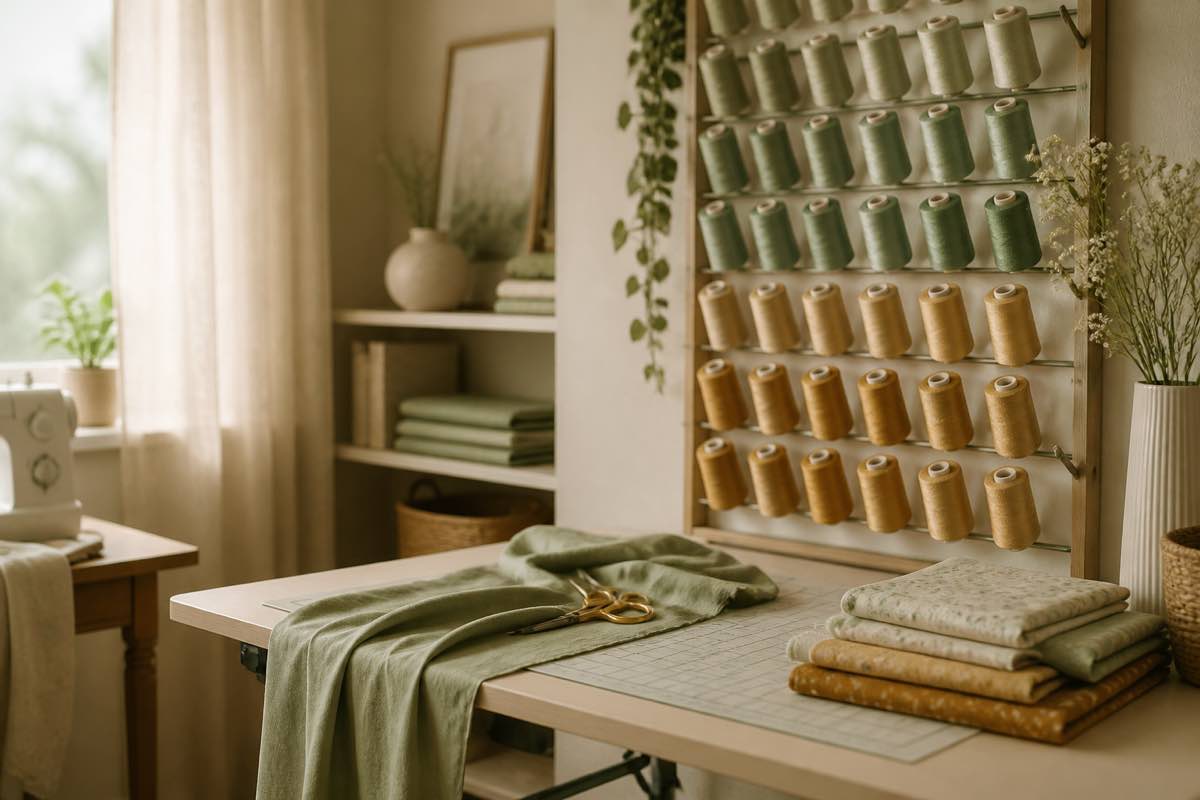
- Wall-mounted spool racks — 100+ threads at eye level
Fabric storage that fits
Fabric is the biggest space eater. Solutions:
- Under-bed bins for bulk yardage (organize by color family; see our color family guide)
- Closet shelves with clear bins
- Rolling drawer units that tuck under the cutting table
- Vacuum bags for out-of-season heavy fabrics
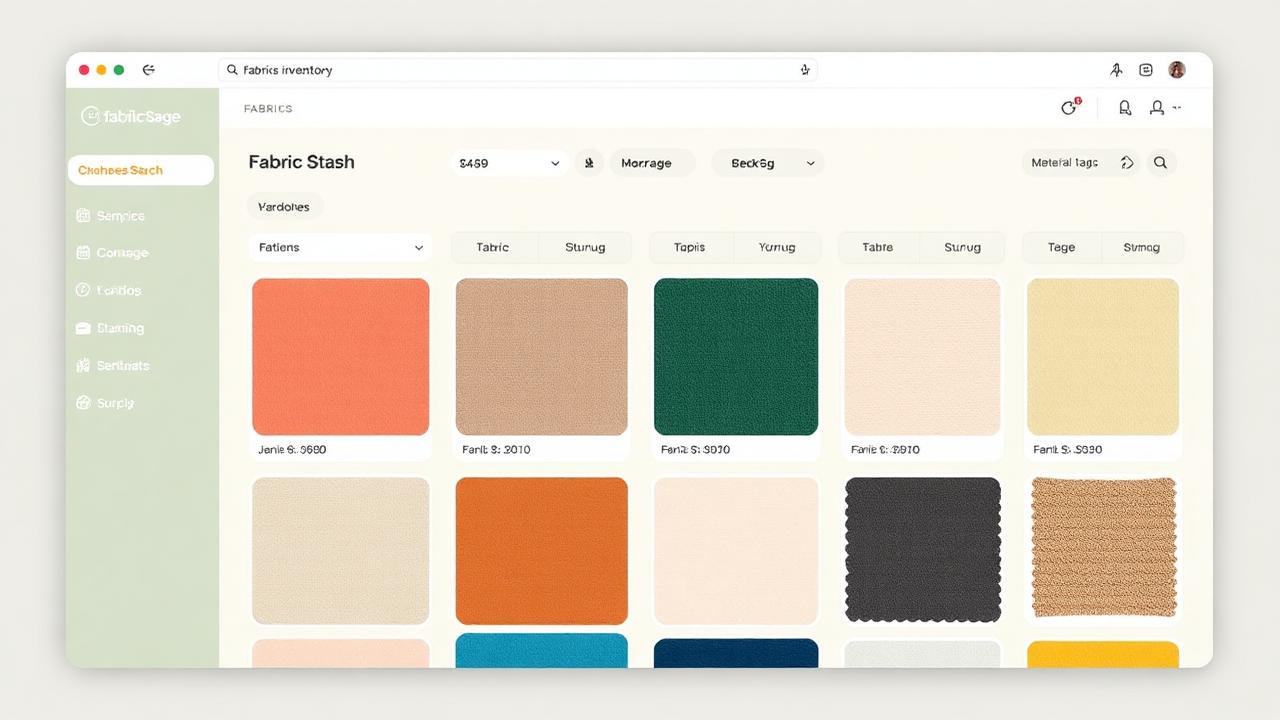
Photo-catalog every piece in Sewist Studio so you don't have to dig through bins to remember what you own.
The rolling cart hack
One three-tier rolling cart (IKEA Råskog or similar) can be:
- Pressing station (top: mini iron + wool pressing mat)
- Notion caddy (middle: scissors, seam gauges, marking tools)
- WIP bin (bottom: current project pieces)
Wheel it beside the machine when sewing, into a corner when cutting.
Kill paper clutter
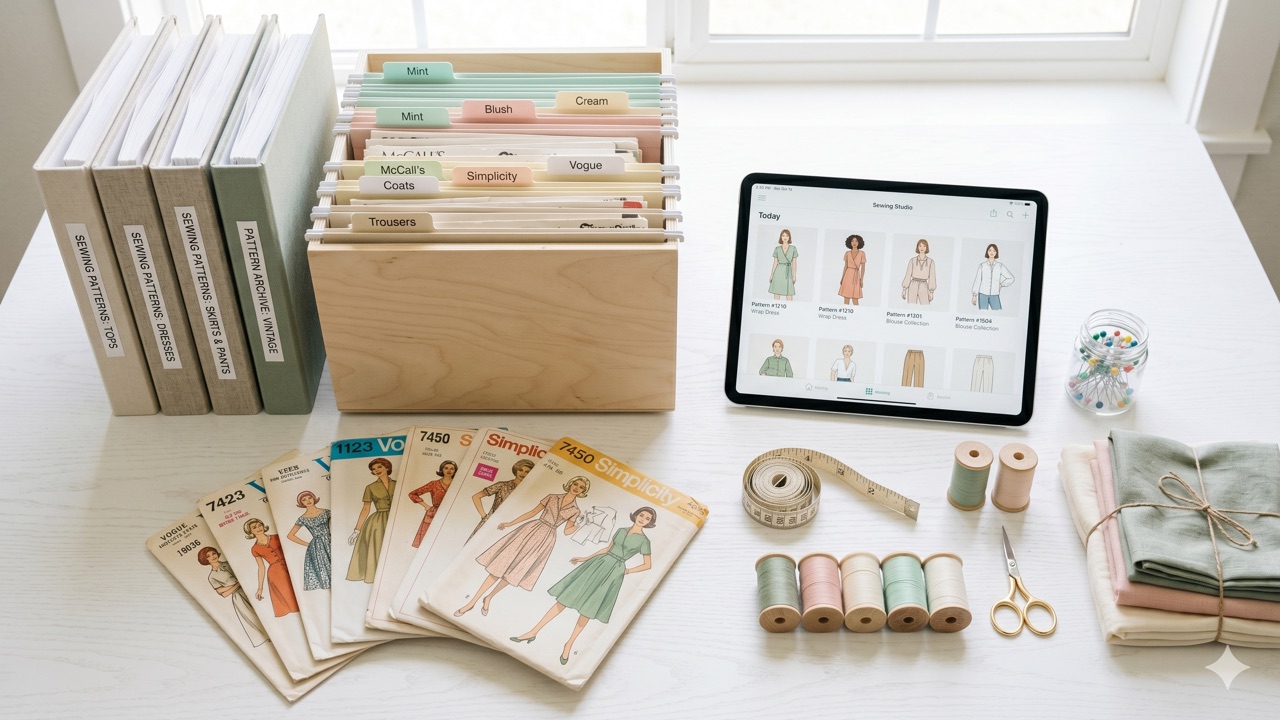
Pattern envelopes, receipts, and printed instructions consume shelf space. Replace with:
- Digital pattern catalog (sewing pattern tracker)
- PDF instructions on a tablet clipped to the machine
- Digital receipts saved to a "sewing" email folder
Lighting matters more in small rooms
Small rooms feel smaller when dark. Add:
- Machine light (LED strip on the sewing head)
- Cutting table task light
- Daylight-temperature bulbs (5000-6500K) throughout
Final small-room rule
If a tool hasn't been used in 12 months, donate or store it elsewhere. Every retained tool costs shelf space you can't afford.