How to Catalog Smocking Plates and Heirloom Patterns
A smocking plate isn't a pattern — it's a design that goes on one. Here's how to categorize plates and heirloom patterns so they find each other.
Plates and patterns are two different things
Heirloom sewists collect two kinds of paper and most organizing systems treat them as one:
- The pattern — the garment: a bishop, a yoke dress, a jon jon, a daygown.
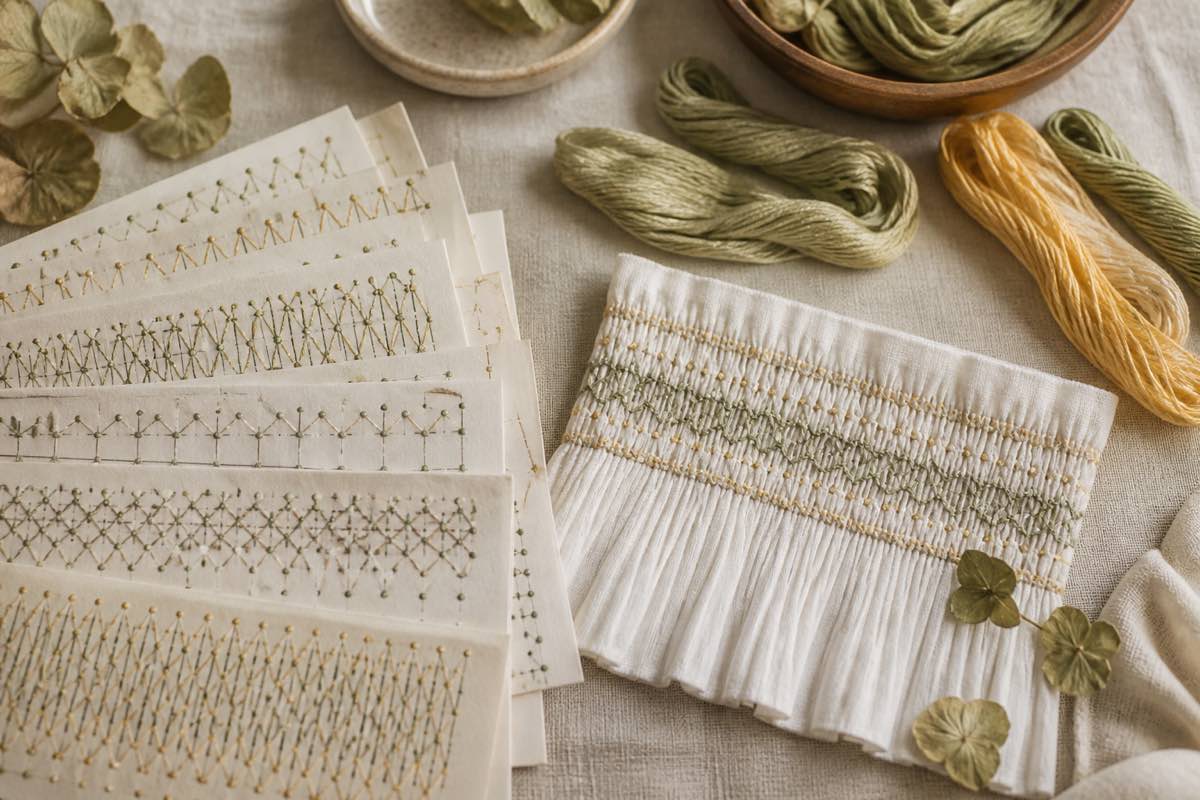
- The plate — the smocking design that gets stitched onto it, with a row count, a pleat repeat, and a floss list.
File them together and you can never answer the question that actually matters at the cutting table: which of my plates fit this garment at this size?
Give smocking plates their own category
In Sewist Studio, "Smocking Plate" is its own garment type, so plates live in the pattern stash but never get confused with garments. For each plate record:
- Designer or publisher — Country Bumpkin, Vaune Pierce, Read My Pleats, Sweetheart Designs, Pleasant Home, Sue Hausmann, or the magazine issue it came from
- Plate name and number
- Row count — how many pleating rows the design consumes
- Pleat repeat — how many pleats one motif takes, the number you need for scaling
- Plate style — geometric, picture smocking, counter-change, bishop plate, insert/band, round yoke, cross-stitch on gingham
- Floss colours used — so you can shop your thread stash instead of the store
- A photo of the worked sample
Row count and pleat repeat are the two fields sewists skip and then regret. They're what let you check a plate against a garment before you pleat.
Tag heirloom patterns by technique, not just silhouette
Heirloom garments are defined by their construction as much as their shape. Tag each pattern with the techniques it actually uses:
Bishop · Yoke dress · Daygown · Christening · Pinafore · Bubble/Romper · Jon Jon · Peter Pan collar · Puffed sleeve · Piping · Entredeux · Lace insertion · Pintucks · French seams · Hand embroidery · Shadow work · Ruffles/Ruching
Now "show me every pattern with entredeux and a Peter Pan collar" is a filter, not an afternoon of searching. And when you're learning a technique, you can pull every pattern that uses it and practise on the simplest one.
Record the designers heirloom sewists actually collect
Generic brand lists don't include the makers that matter here. Keep these as first-class pattern makers rather than dumping them into "Other": Children's Corner, Martha Pullen, Chery Williams, Bonnie Blue, Ellen McCarn, Old Fashioned Baby, Creations by Michie, Wendy Schoen, Petit Poche, Collars Etc., Trotter Country, and Grace Knott — plus magazine publishers like Sew Beautiful and Australian Smocking & Embroidery that sell patterns too.
Match plates to garments before you pleat
Once plates carry row and repeat counts and garments carry a size, matching is arithmetic instead of hope:
1. Pleat count needed for the garment piece at your size
2. Divide by the plate's pleat repeat — is it a whole number of motifs?
3. Check the plate's row count fits inside your pleated depth
4. Adjust by adding or dropping a repeat, or by respacing
The smocking pleater calculator does this arithmetic for you, and the guide to reading a smocking plate explains what the symbols mean if a plate is new to you.
Log what you've stitched
Each time you work a plate, note the garment, the size, the fabric, the floss, and how the repeat landed. After a few makes, your plate library stops being a stack of paper and starts being a record of what worked — the fastest way to plan the next christening gown or Easter bishop.
Cataloging an heirloom collection? Start free with Sewist Studio and give your smocking plates the category they deserve.