Geometric vs Picture Smocking: How to Choose (and Combine) Both Styles
The two big families of smocking — geometric and picture — solve different problems. Here's when to reach for each and how to blend them.
Two families, one craft
Almost every smocked plate falls into one of two categories:
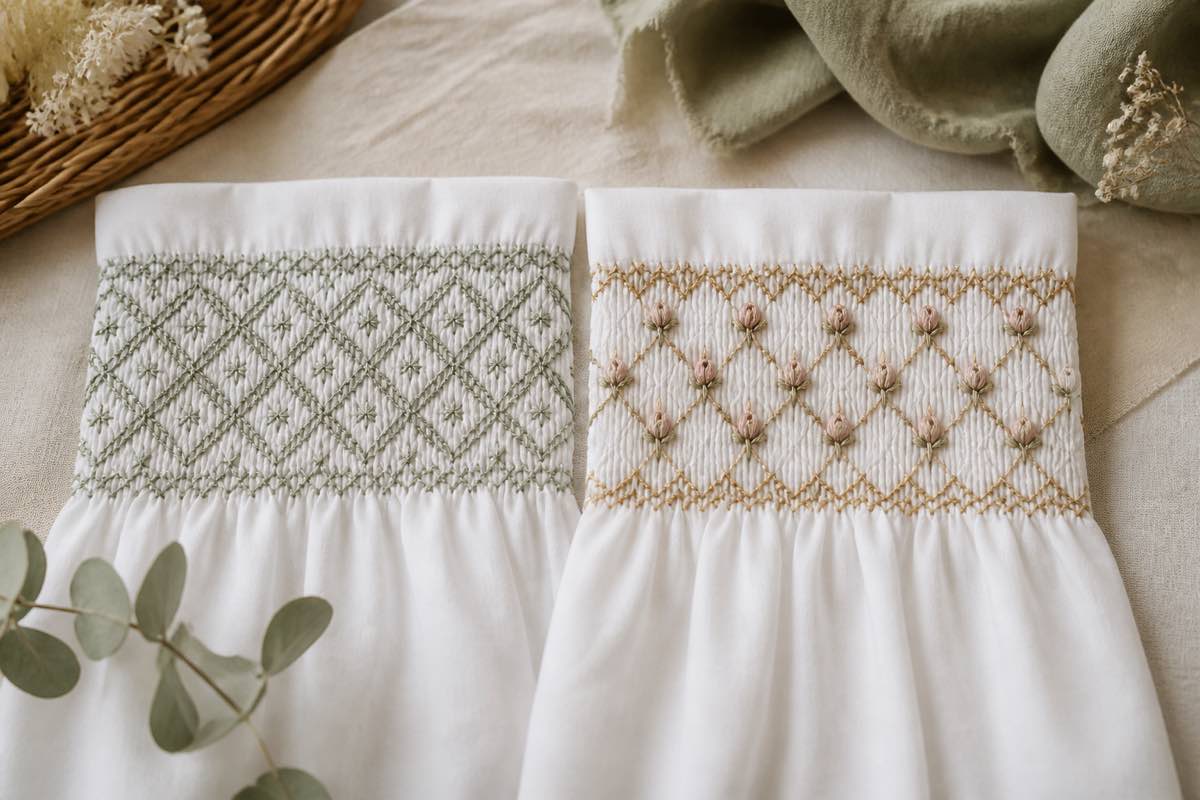
- Geometric smocking — repeating patterns of cable, wave, and trellis stitches that form diamonds, honeycomb cells, chevrons, and bands.
- Picture smocking — recognizable motifs (roses, bunnies, sailboats, hearts) worked in satin stitch over a densely cabled background.
Both are worked on the same pleated fabric with the same needles and floss, but the design approach is very different.
Geometric smocking
Geometric plates are built from a small stitch vocabulary applied in mirrored, repeating rows. Because they're geometric, mistakes tend to blend in and beginners can produce beautiful results quickly.
Strengths:
- Faster to complete (a full yoke in 6–12 hours)
- Forgiving of small tension differences
- Highly customizable with color changes
- Stretches naturally, ideal for bishops and cuffs
Best for:
- First smocking projects
- Everyday clothing (dresses, blouses, cuffs)
- Home goods (pillow panels, curtain valances)
- Modern minimalist heirlooms
Picture smocking
Picture smocking uses satin stitch (worked in coton à broder or DMC) over a solid cabled background. Each stitch is a colored block on a single pleat, and the motifs — rosebuds, bunnies, sailboats — emerge from the placement.
Strengths:
- Artistic and highly personal
- Instantly recognizable heirloom look
- Endless motif possibilities
Trade-offs:
- Takes 2–3x longer than geometric
- Uses more floss
- Tension errors show more clearly
- Doesn't stretch as much (the cabled ground is dense)
Best for:
- Special occasion dresses (Easter, Christmas, baptism)
- Bishop-front panels
- Wall art and framed samplers
Combining both on one garment
The classic bishop layout uses both:
1. Top border — 2–3 rows of cable and geometric wave
2. Center panel — picture-smocked motif (roses, bunnies)
3. Bottom border — mirror image of the top
This is why classic bishop plates look so cohesive: the geometric bands frame the picture motif and give the eye a place to rest.
Choosing your first plate
If you're new to smocking, start geometric. Pick a plate with 6–10 rows of cable, wave, and trellis. Finish it, learn what your tension looks like, and then move to picture smocking with a small rosebud plate.
Save every plate you finish
Both styles reward reference. A photo of a completed geometric plate tells you which color combinations worked. A photo of a completed picture plate shows you the shading and blending — critical for the next one.
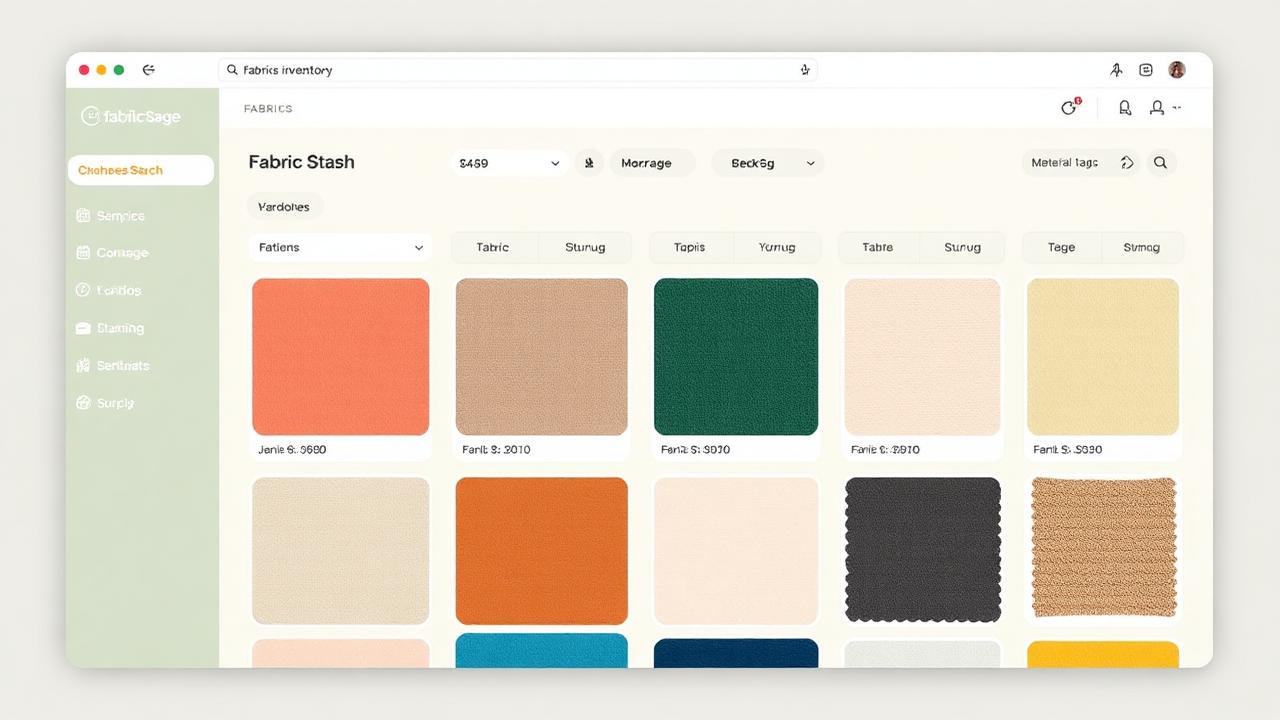
Sewist Studio's camera cataloging lets you tag each finished plate as geometric, picture, or combined, with fabric from the digital stash, floss list, and finished-time notes attached. When you're ready to sew it into a garment, spin up a card on the project kanban — six months later, "that pink rose bishop again" is one search away.
Save your first smocking plate to Sewist Studio and start building your reference library.
Quick comparison
| Feature | Geometric | Picture |
|---|---|---|
| Time to complete | Fast | Slow |
| Beginner friendly | Yes | With practice |
| Stretch | High | Low |
| Floss used | Moderate | Heavy |
| Best for | Everyday, cuffs, bishops | Heirloom, occasion, art |
Both belong in every smocker's repertoire. Learn one at a time and combine them once each feels natural.