Interfacing Explained: What It Is, Which Type to Use, and When You Need It
Interfacing is the invisible layer that makes collars crisp, waistbands sturdy, and buttonholes survive. Here's what it is, which type to use, and how to stop guessing.
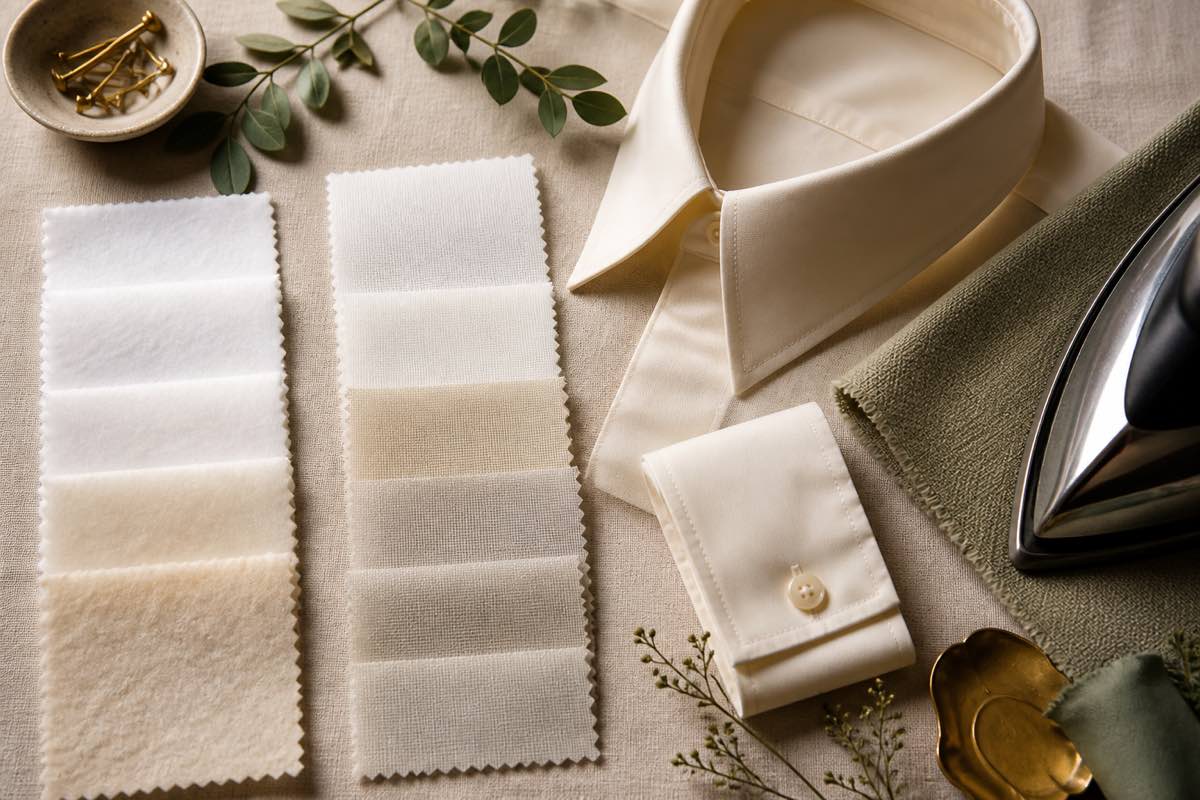
The invisible layer that makes garments look professional
Ever wonder why a handmade collar flops while a ready-to-wear one stands crisp? Why some waistbands hold their shape and others crumple? The usual answer is interfacing — the support layer you never see that's quietly doing the structural work.
It's also one of the most confusing aisles for beginners: fusible or sew-in? Woven, non-woven, or knit? What weight? Let's make it simple.
What interfacing actually does
Interfacing is a material applied to the wrong side of your fabric to add structure, stability, and crispness to specific areas. It keeps high-stress or shape-critical spots from stretching out, sagging, or going limp. Without it, collars wilt, waistbands fold over, and buttonholes tear.
You don't interface a whole garment — just the areas the pattern marks (more on those below).
The two big choices: fusible vs sew-in
Fusible (iron-on) has a heat-activated glue on one side. You press it onto the fabric and it bonds. It's fast, easy, and beginner-friendly — the default for most modern sewing.
Sew-in is stitched into place instead of glued. Use it when:
- The fabric is heat-sensitive (some silks, sequined or coated fabrics) and a hot iron would damage it.
- You want a softer, more separate structure that moves independently of the fabric.
For most beginners and most projects, fusible is the right starting point.
Woven, non-woven, and knit
Interfacing also comes in three constructions — match it to your fabric:
- Woven interfacing has a grain like fabric; drapes naturally and suits wovens and tailored pieces.
- Non-woven is pressed (no grain); cheap, stable, and fine for many general uses — but can feel papery.
- Knit/tricot interfacing stretches; use it on knit fabrics so the garment still moves. (Pair this with which needle for which fabric when sewing knits.)
The one rule for weight: go one step lighter
The most common mistake is interfacing that's too heavy, which makes a collar feel like cardboard. The rule:
> Choose interfacing roughly one weight lighter than your fashion fabric — enough to support it, not overwhelm it.
- Lightweight → shirting, fine cotton, blouses.
- Medium → most apparel, jackets, structured dresses.
- Heavyweight → bags, hats, very structured pieces.
Always test on a scrap first. Fuse a sample, feel the result, and adjust before committing to your real pieces — the same scrap-test instinct as a burn test for fiber.
Where garments need interfacing
The pattern marks it, but the usual suspects are the structural, high-stress areas:
- Collars and collar stands
- Cuffs
- Button plackets and button bands (so buttons/buttonholes don't tear out)
- Waistbands
- Necklines and facings
- Pocket openings
- Buttonhole areas
How to fuse it well
1. Cut the interfacing to match the pattern piece (some patterns include a separate cutting line).
2. Place it glue-side (the slightly bumpy side) against the wrong side of the fabric.
3. Press, don't iron — hold the iron down with steam per the manufacturer's time, then lift and move. Sliding can shift and bubble it.
4. Use a pressing cloth to protect both the fabric and your iron from stray glue.
5. Let it cool flat before handling so the bond sets.
Stop guessing: record what worked
Interfacing is exactly the kind of detail you figure out once and then forget — which weight worked on that shirting, whether the silk needed sew-in. Log it in your project journal tied to the fabric in your stash, so the next time you sew that fabric you reach for the right interfacing immediately.
2. Choose fusible vs sew-in based on heat sensitivity.
3. Match construction (woven/non-woven/knit) and go one weight lighter.
4. Test on a scrap, then fuse the marked pieces.
5. Log the interfacing that worked with the fabric and project.
Frequently asked questions
What is interfacing?
A support layer on the wrong side of fabric that adds structure to collars, cuffs, waistbands, and buttonholes.
Fusible vs sew-in?
Fusible irons on (fast, beginner-friendly); sew-in is stitched, for heat-sensitive fabrics or a softer hand.
How do I choose the weight?
Go roughly one weight lighter than your fabric, and always test on a scrap.
Where does a garment need it?
Collars, cuffs, plackets, waistbands, facings, pocket openings, and buttonhole areas — the pattern marks them.
Can I interface knits?
Yes — use a knit/tricot interfacing that stretches with the fabric.