How to Wash, Press and Store Smocked and Heirloom Garments
Smocking and lace last for generations if they're washed gently, steamed instead of ironed, and stored clean in acid-free tissue. Here's how.
Why heirloom garments need gentler care
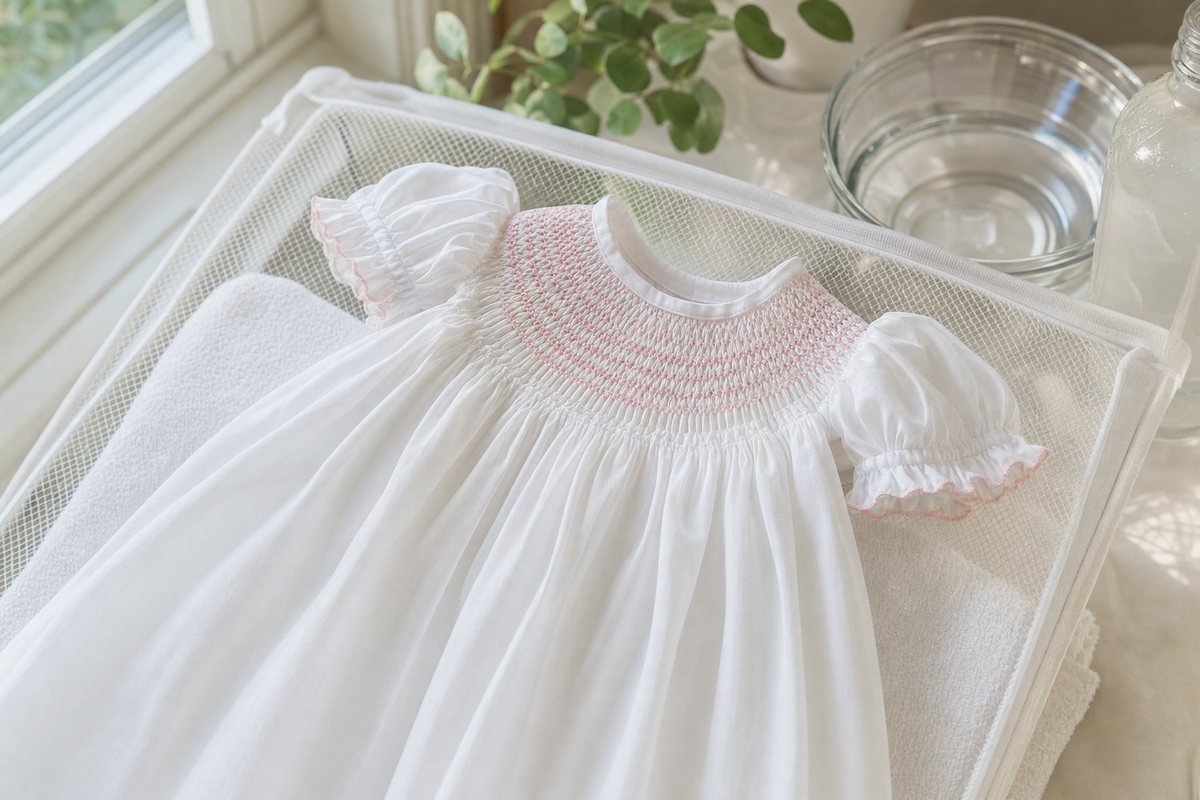
Smocked dresses, bishops and christening gowns are made from fine cottons like batiste and lawn, trimmed with lace and stitched with cotton floss. Machine agitation stretches the pleats, chlorine bleach weakens and yellows cotton, and heat sets stains. Gentle care is what lets a gown made for one baby be worn by the next generation.
Before you wash: test the floss
Most embroidery floss sold today is colorfast, but older floss and hand-dyed threads can bleed onto white fabric.
- Dampen a white cloth and press it on the back of a colored area.
- If any color transfers, don't soak the garment. Spot clean it, or take it to a dry cleaner who handles heirlooms.
Washing
- Hand wash in cool or lukewarm water with a gentle detergent that's free of dyes, brighteners and fragrance.
- Swish, don't scrub. Let the garment soak for 15 to 30 minutes and move it gently through the water. Rubbing the smocking pulls the floss and roughs up the fabric.
- Treat stains early. Food, milk and formula can look invisible when fresh and oxidize to yellow or brown spots months later. Rinse them out in cool water as soon as you can; hot water sets protein stains.
- Rinse until the water runs clear, so no detergent is left in the fibers.
- Never use chlorine bleach. For white cotton, an oxygen bleach soak is the gentler option, after you've tested the floss.
If you must use a machine, put the garment in a mesh laundry bag on the most delicate cycle with cold water. Hand washing is still kinder to the smocking.
Drying
- Roll the garment in a clean white towel and press gently to remove water. Never wring or twist it.
- Dry flat on a towel or a mesh drying rack, reshaping the smocked area with your fingers so the pleats line up.
- Keep it out of direct sun and away from heat. Sun yellows some fibers and fades colored floss, and a dryer can shrink cotton and stretch smocking.
Pressing smocking without flattening it
The smocked area should never be ironed flat.
- Steam the smocking from the right side, with the iron held just above the stitches, the same way you block a smocked panel.
- Or press from the wrong side over a thick folded towel, so the pleats sink into the towel instead of being crushed.
- Press the rest of the garment normally while it's slightly damp, using a press cloth over lace and embroidery.
Removing yellowing from an old gown
White cotton yellows with age, especially where an invisible stain was stored without washing.
- Start gentle: a long soak in cool water with a mild detergent, then an oxygen bleach soak if the floss tested colorfast.
- Rinse thoroughly and dry flat out of the sun.
- For valuable antiques, fragile lace or anything that's lasted several generations, ask a textile conservator. Soaks can weaken old fibers.
Storing heirlooms
- Store it clean. Wash the garment before you put it away, even if it looks clean. Hidden stains are the main cause of yellow spots.
- Skip the starch before storing; it can attract insects.
- Wrap it in acid-free tissue. Pad the bodice and sleeves with crumpled tissue and lay tissue in every fold so the fabric doesn't crease sharply.
- Use an acid-free box or a washed cotton bag. Avoid plastic bags and dry-cleaning covers, which trap moisture, and avoid storing heirlooms in direct contact with wood or cardboard, which give off acids that yellow fabric.
- Choose a cool, dark, dry place. A closet shelf is better than an attic or a basement, where heat and damp swing through the year.
- Refold it once a year along different lines, so the creases don't wear the fabric.
Hanging is fine for a garment that's worn often, on a padded hanger. For long storage, flat is better, because the weight of the skirt pulls on the smocking.
Keep the details for repairs
The garment will need a mend someday: a loose lace edge, a broken smocking stitch. Keep a scrap of the fabric, a length of each floss color and a note of the colors and fabric used. Logging the project with its fabric, floss and photos in a free Sewist Studio account keeps those details with the garment's story, so whoever repairs it knows exactly what to match.
Planning a new heirloom to care for? The christening gown project plan and the heirloom sewing guide cover fabric, lace and construction.