How to Block Smocking (and When to Remove the Pleating Threads)
Blocking sets a smocked panel to the width your pattern needs and evens out the pleats. Here's when to do it, how to steam without flattening, and when the threads come out.
What blocking does
Smocking pulls fabric in. A pleated panel straight off the pleater is a loose bundle of gathers, and a finished panel can come out a little narrower or wider than the yoke it's meant to fill. Blocking sets the width, straightens the pleats and lets the floss settle, so the panel drops into the garment at the size the pattern expects.
You block at two moments: before smocking and after.
Before smocking: set the pleated width
- Find the width the pattern needs for the smocked area. Insert patterns usually give it on the pattern piece or the plate; for a bishop, it's the neckline measurement.
- Pull up the gathering threads until the panel is that width, plus a little ease if the plate says so.
- Even out the pleats. Run a needle tip or fingernail down the pleats so they sit straight and parallel, with the same number of pleats per inch across the panel.
- Tie the threads off in pairs, top row to the row below it and so on, with a firm square knot. Tied threads keep the width while you smock.
- Count and mark the center pleat with a pin or a short thread. Most plates start from the center.
Pro tip: smocking tension matters as much as blocking. If your panel keeps shrinking as you stitch, your stitches are too tight. The pleater tension guide covers the common causes.
After smocking: steam to size
Once the smocking is finished, the panel is blocked to its final width.
- Release the gathering threads slightly by untying the pairs, so the panel can relax.
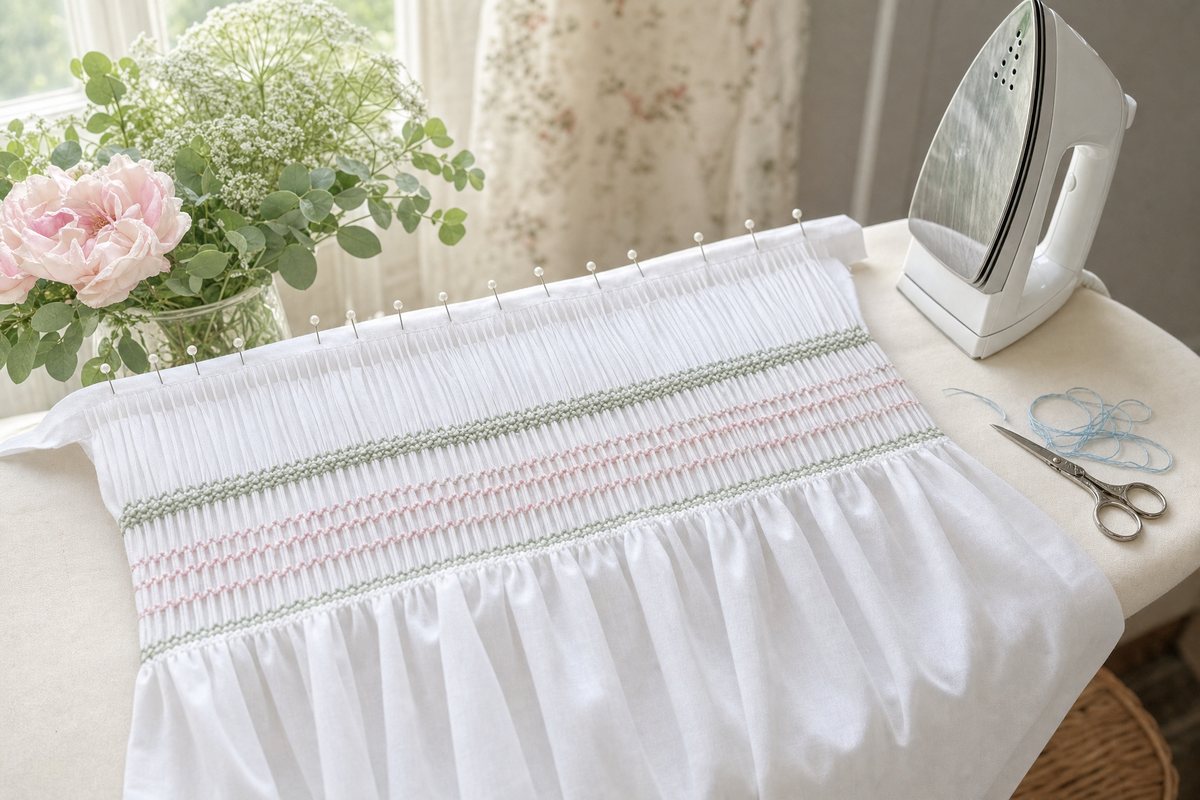
- Pin the panel to a padded surface right side up: an ironing board, a blocking mat or a board marked with a grid. Pin at the target width along the top and bottom holding rows, with the pleats straight up and down.
- Steam without pressing. Hold a steam iron just above the smocking and let the steam soak in. Don't lower the iron onto the stitches. Pressure flattens the pleats and the floss for good.
- Let it dry completely before you unpin it, ideally overnight. Damp fabric moves back toward its old shape.
Never block a panel wider than the stitches allow. Smocking is stretchy, and stretching it past its comfortable width pulls the cables flat and opens gaps.
Blocking a bishop
A bishop dress is smocked around a curve, so it's blocked as a ring rather than a strip. Pull the neckline threads up to the neck measurement, spread the gathers evenly around the neck and steam the smocked yoke over a towel-padded ham or a rolled towel. Check the neckline against the measurement again after it dries.
Removing the pleating threads
After blocking, the pleating threads have done their job.
- Snip the knots at one side and pull each thread out gently from the other side. If a thread catches, cut it every few inches and pull out the pieces.
- Keep the holding rows you still need. Many sewists leave the top holding row in until the panel is stitched into the yoke or bound at the neckline, because it keeps the pleats from spreading during construction.
- Remove all marking before steaming again: dot-transfer ink and some marking pens set with heat.
Backsmocking unsmocked areas
Picture smocking often leaves areas of plain pleats around the motif. Once the pleating threads come out, those pleats spread open. Backsmocking holds them: cable stitches worked on the wrong side, across the pleats, in a thread that matches the fabric. Work it before you remove the threads, row by row, so the pleats stay in place.
Fixing common problems
- Panel too narrow after smocking: re-steam and pin a little wider, a quarter inch at a time. Next time, check that your stitches aren't too tight.
- Pleats slanting: the fabric wasn't on grain when it was pleated. Steam can help a little; a badly slanted panel usually needs repleating.
- Rippled edges: the side seam allowances weren't pleated evenly. Trim and re-gather the edge pleats, or ease them into the seam.
- Floss looks flattened: the iron touched the stitches. A light steam from above can lift it a little; there's no full fix, so steam without pressure next time.
Plan the panel before you pleat
Most blocking problems start with a panel cut too small or too large. The pleater calculator works out how much fabric to cut for the finished width, and the smocking yardage calculator adds up a whole garment.