How to Stop Buying Duplicate Sewing Patterns (5 Simple Strategies)
Pattern sales are irresistible — but buying patterns you already own isn't. Here's how to break the duplicate pattern cycle for good.
It happens to the best of us
Simplicity is having a $2.99 sale. You grab six patterns that look amazing. You get home, and… you already own three of them. If this has happened to you, you're not alone. Duplicate pattern purchases are one of the most common (and frustrating) problems sewists face.
Here are five simple strategies to stop it from happening.
1. Build a searchable digital catalog
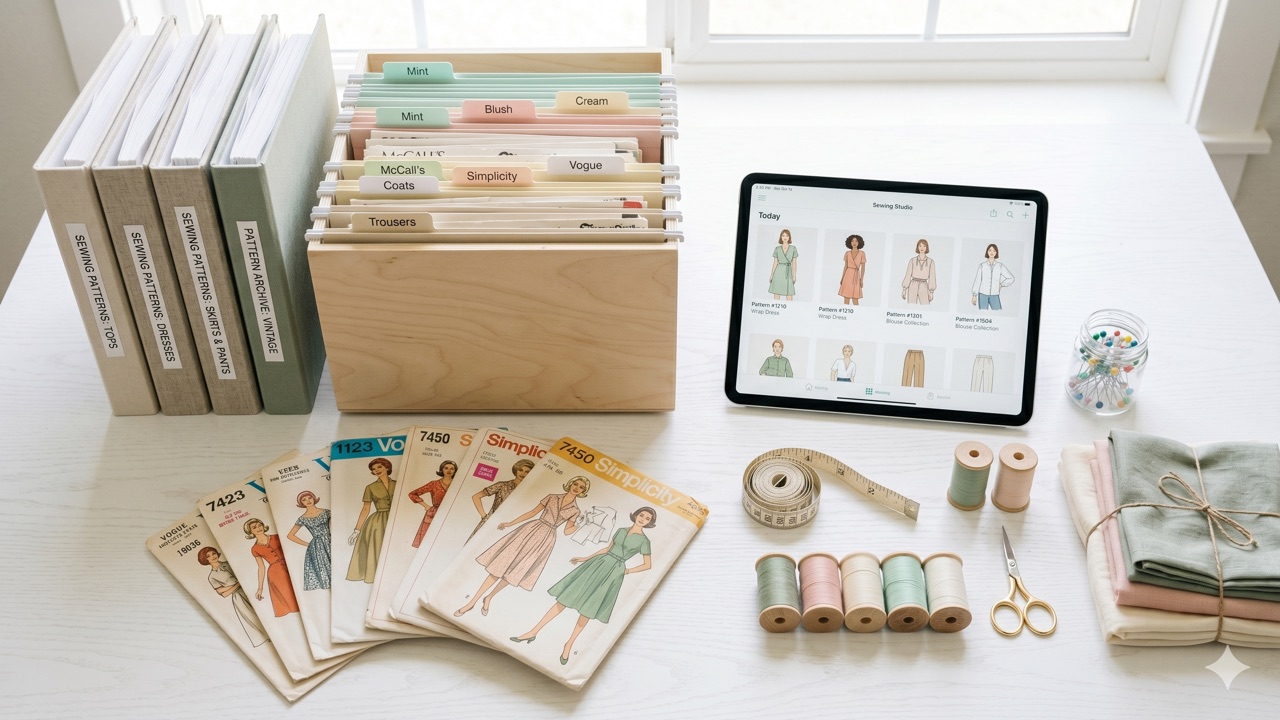
The single most effective way to avoid duplicates is knowing exactly what you own. If you haven't already, start by organizing your sewing pattern collection. A sewing pattern organizer app lets you:
- Search by pattern number — "Do I already have McCall's M7969?"
- Search by garment type — "How many wrap dress patterns do I have?"
- Browse visually — scroll through photos of your pattern envelopes
When you can check your collection in seconds from your phone, you'll never accidentally buy the same pattern twice.
2. Check before every purchase
Make it a habit: before you add a pattern to your cart (online or in-store), do a quick search in your catalog. This takes five seconds and can save you anywhere from $3 to $30 per pattern.
At the store: open Shop Mode and type the pattern number. It matches with or without the brand letter, so "S9234", "9234" and "simplicity 9234" all find the same envelope, and it tells you where you stored it. Add Sewist Studio to your phone's home screen and open Shop Mode once with signal; after that it opens with no signal too, which matters in the back of a big-box store.
3. Track pattern numbers, not just names
Pattern companies reissue and rename patterns constantly. McCall's M7969 might become M8341 with minor changes. Track:
- The exact pattern number
- The garment type and key features (e.g., "fitted bodice, circle skirt, back zip")
- Photos of the envelope front and back
This way, even if a pattern gets reissued under a new number, you'll recognize it by the design.
4. Use a wishlist to separate "want" from "have"
Instead of impulse-buying every pattern that catches your eye, add it to a wishlist first. This creates a buffer between "ooh, that's pretty" and "purchase confirmed."
Before the next pattern sale, review your wishlist and cross-reference it against your existing collection. You might find you already own something very similar.
5. Track your sewing plans and priorities
When you know what projects you actually want to sew next, you're less likely to buy random patterns "just in case." A sewing project tracker helps you keep a short list of your next 3-5 projects, including which patterns you'll use. This focuses your purchases on what you'll actually sew.
Don't forget to track your fabric stash too — knowing what fabrics you already have helps you buy patterns that match your existing materials.
The math adds up
If you buy just 3 duplicate patterns per year at an average of $15 each, that's $45 wasted annually. Over a decade, that's $450 — enough for some seriously beautiful fabric or a coveted indie pattern collection.
A digital sewing pattern organizer pays for itself almost immediately by preventing even one duplicate purchase.
Stop the cycle today
Get your pattern collection organized with Sewist Studio — catalog your patterns with photos, search by number or garment type, and never buy a duplicate again. It's free to start.