How to Read Fabric Content Labels and Identify Mystery Fabric
A fabric's fiber content tells you how it'll sew, drape, and wash. Here's how to read the label — and how to identify that mystery thrifted fabric with no tag at all.
Why fiber content is the most useful thing to know about a fabric
Before a fabric is a color or a print, it's a fiber — and the fiber decides almost everything: how it drapes, whether it shrinks, how it presses, which needle and stitch to use, whether you should pre-wash it, and which garments it suits. Reading the content label (or figuring it out when there isn't one) is the difference between a fabric that behaves and a project that fights you.
This matters double if you sew with thrifted and upcycled fabric, where half your finds have no label at all.
Part 1: Reading the label when you have one
Fabric bolts (and many garments) list two things:
Fiber content — the percentages.
- 100% cotton — breathable, presses crisply, shrinks; easy to sew.
- 100% linen — breathable, wrinkles, softens beautifully; shrinks.
- 95% cotton / 5% elastane — a stretch woven; the elastane means a stretch needle and allowance for recovery.
- 100% polyester — wrinkle-resistant, doesn't breathe well, melts under a hot iron.
- Blends (e.g., poly/cotton, rayon/spandex) — behave like a weighted average of their fibers.
The percentages predict behavior. A high natural-fiber content presses and breathes well; synthetics resist wrinkles but need a cooler iron.
Care symbols. The little tub, triangle, square, and iron icons tell you wash temperature, bleach, drying, and ironing limits. They also hint at fiber: "dry clean only" with a low-iron symbol often signals a delicate or heat-sensitive fiber.
Part 2: Identifying mystery fabric (no label)
Thrifted sheets, destash gifts, and deep-stash remnants often have no tag. Use three tests, from least to most definitive.
Test 1: Feel and look
- Natural fibers (cotton, linen) feel matte and cool, wrinkle, and don't have a plasticky sheen.
- Silk is smooth, lightweight, with a soft luster.
- Wool is warm, often slightly textured, and springs back.
- Synthetics often have an even sheen, feel slick, and resist wrinkling.
Test 2: Stretch
- No stretch, visible grid of threads → likely a woven (cotton, linen, etc.).
- Stretches and recovers, looks like loops → a knit.
- Stretches a lot and snaps back hard → contains elastane/spandex.
Test 3: The burn test (most reliable)
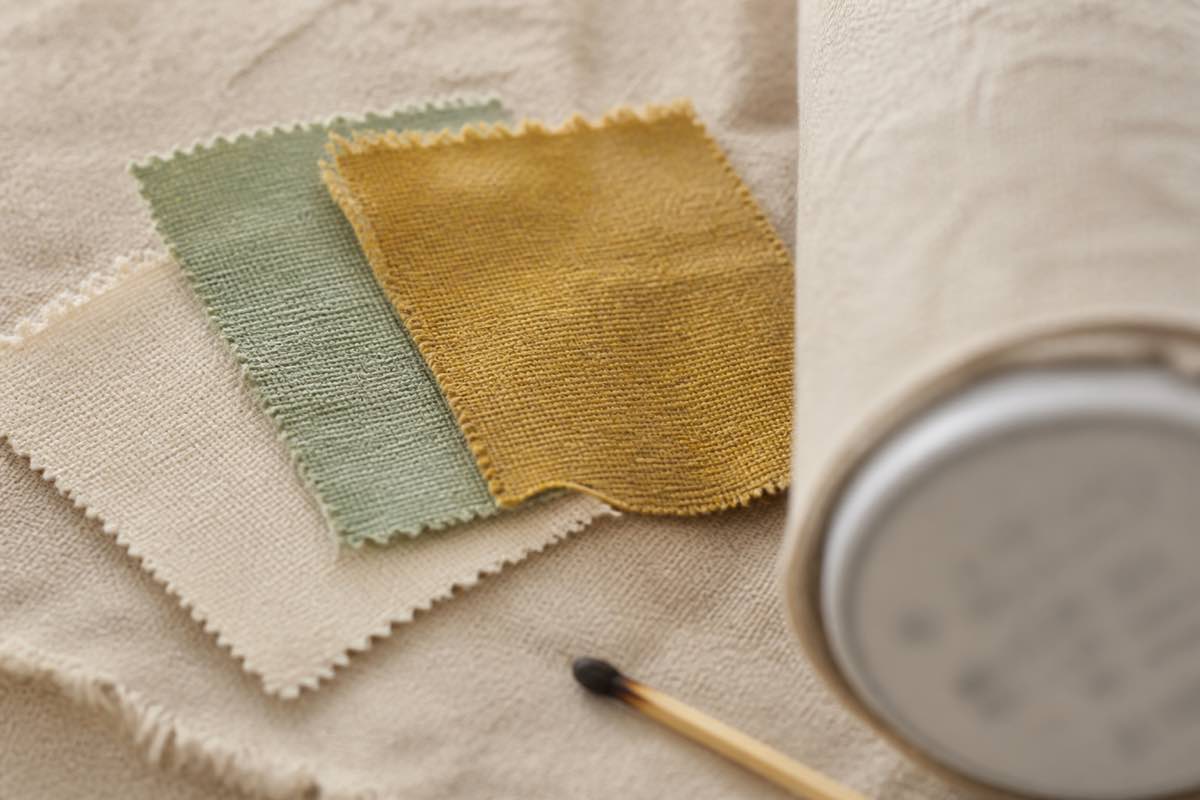
Snip a small piece, hold it to a flame with tweezers over a non-flammable surface (a sink or metal dish), and observe how it burns, what it smells like, and the residue:
| Fiber | Burns like | Smell | Residue |
|---|---|---|---|
| Cotton / linen | Quick, steady flame | Burning paper | Soft grey ash |
| Wool | Slow, sputters, self-extinguishes | Burning hair | Crushable dark ash |
| Silk | Slow, curls away | Burning hair | Crushable ash |
| Polyester | Melts and burns | Chemical / sweet | Hard plastic bead |
| Nylon | Melts | Chemical / celery | Hard bead |
| Rayon (viscose) | Fast, like cotton | Burning paper | Light ash |
Blends show mixed behavior — some ash, some melting bead. (Always burn-test safely: small snippet, ventilated space, water nearby.)
Part 3: Why this changes how you sew it
Once you know the fiber, the right choices fall out:
- Needle and stitch — knits and elastane need a ballpoint/stretch needle.
- Pre-wash — naturals shrink, so pre-wash; many synthetics need only a quick wash.
- Iron heat — cotton/linen take high heat; polyester and nylon melt, so use low.
- Garment fit — a drapey rayon wants a flowing pattern; a crisp cotton wants structure (see matching fabric to a pattern).
Record it once, never re-guess
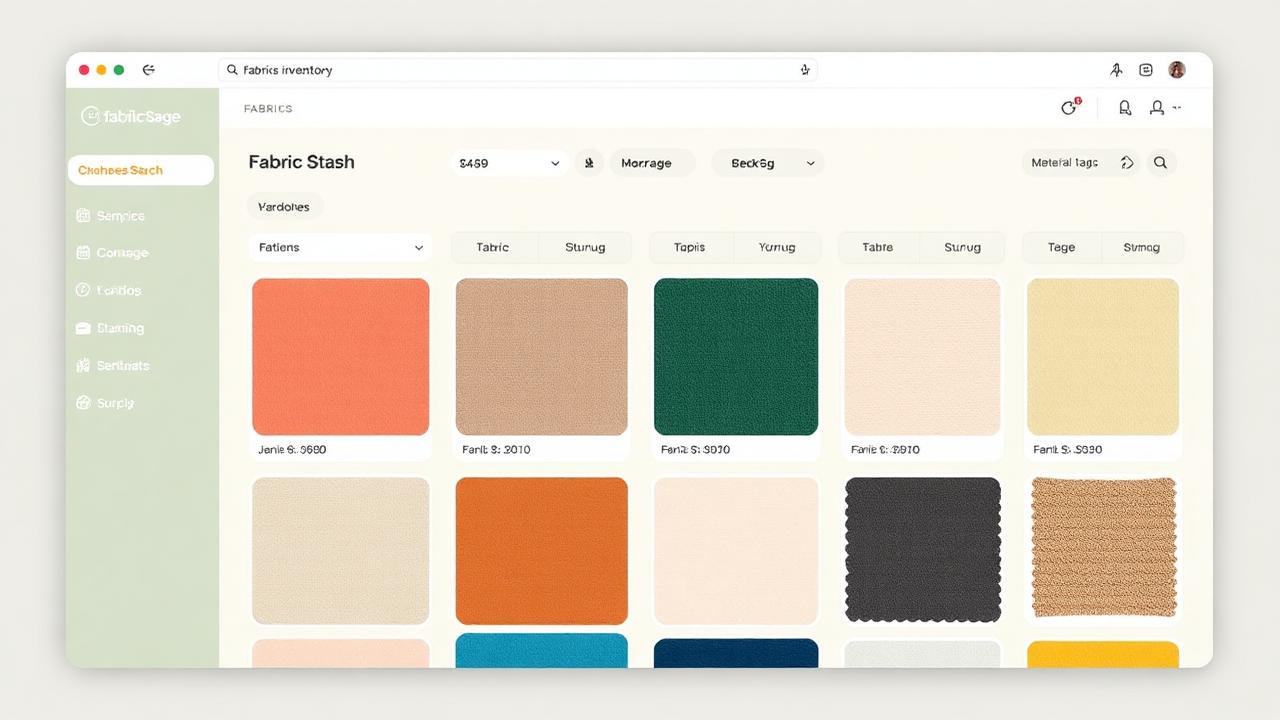
The frustrating part of mystery fabric isn't identifying it — it's identifying it again in six months because you forgot. When you catalog fabric in your digital fabric stash, record the fiber content and care the moment you know it, right on the fabric record. Now "what is this and how do I sew it?" is answered permanently — and the visualizer and pairings can suggest the right garment for that fiber.
2. Read the label — note fiber percentages and care.
3. For unlabeled fabric, run the feel, stretch, and burn tests.
4. Log the fiber and care on the fabric in your stash.
5. Choose needle, pre-wash, and pattern based on the fiber.
Frequently asked questions
How do I read a fabric content label?
By its fiber percentages (e.g., 100% cotton) and care symbols — they tell you how it behaves and how to launder it.
How do I identify fabric with no label?
Feel/visual test, stretch test, and a burn test on a small snippet — the burn test is most reliable.
How does a burn test work?
Burn a snippet safely: cotton/linen smell like paper and leave ash; polyester melts to a hard bead; wool/silk smell like hair.
Why does fiber content matter?
It determines drape, shrinkage, ironing heat, needle and stitch choice, and which garments the fabric suits.
Should I record fabric content?
Yes — log fiber and care in your stash once identified so you never have to re-test.