How to Match Fabric to a Sewing Pattern: A Beginner's Guide
The number one reason beginner garments fail isn't sewing skill — it's fabric choice. Here's how to match fabric to any pattern in under five minutes.
TL;DR. Match fabric to a pattern in three checks: (1) the suggested-fabrics list on the envelope, (2) weight (light / medium / bottomweight), (3) drape (fluid vs. structured). Get those right and a beginner project usually works. Get any of them wrong and even a perfect seam allowance can't save the garment. Sewist Studio's AI Fabric Pairing does this comparison for you in seconds, ranking everything in your stash by compatibility.
Why fabric matching is the #1 beginner trap
Most failed first projects aren't sewing failures. They're fabric failures.
The pattern recommends rayon challis. You use stiff quilting cotton because it's what's in your stash. The finished dress stands away from your body like a paper bag, the gathers refuse to gather, and you blame your skills. Your skills were fine — the fabric was telling a different story than the pattern wanted to tell.
Fabric and pattern are a duet. The pattern is the choreography; the fabric is the dancer. A bias-cut slip dress (choreographed for slink) won't slink in cotton poplin. A boxy shirt jacket (choreographed for structure) won't hold its shape in soft tencel. Once you internalize this, half the mystery of garment sewing disappears.
Understanding fabric drape and weight
Two properties matter more than anything else: weight and drape.
| Fabric type | Weight | Drape | Good for |
|---|---|---|---|
| Quilting cotton | Medium | Stiff | Tote bags, simple aprons, structured kid's clothes |
| Cotton lawn / voile | Light | Soft | Loose blouses, summer dresses, lined skirts |
| Linen (mid) | Medium | Medium | Shirts, A-line skirts, pull-on pants, button-downs |
| Rayon / viscose | Light | Fluid | Bias dresses, drapey blouses, wide-leg pants |
| Denim / canvas | Bottomweight | Stiff | Jeans, jackets, structured bags, work aprons |
| Cotton/Lycra jersey | Light | Stretchy | T-shirts, leggings, fitted dresses (knit patterns only) |
| Ponte knit | Medium | Stable + stretch | Pencil skirts, jackets, fitted dresses (knit patterns) |
| Silk crepe / charmeuse | Light | Very fluid | Slip dresses, blouses, lined trousers |
A pattern that asks for "lightweight rayon or viscose with fluid drape" is asking for things from row 4. Substituting row 1 (quilting cotton) gives you a totally different garment — sometimes a fun one, often not the one on the envelope.
Pro tip: When in doubt, do the "shoulder drape test" in the fabric store. Drape the cut over your shoulder for thirty seconds. If it falls in soft folds, it has fluid drape. If it stands away from your body like a poster, it has stiff drape. That single test prevents most beginner mismatches.
How to read a sewing pattern envelope
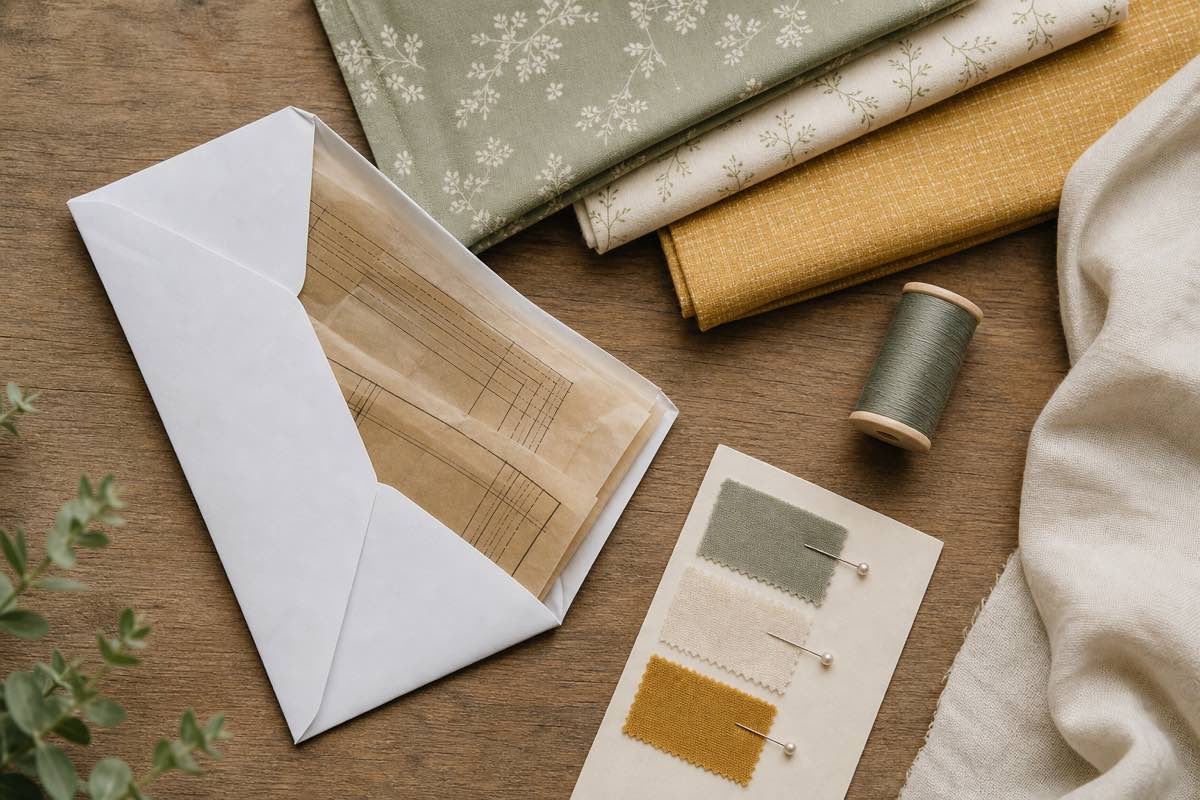
Every pattern envelope (and PDF instruction page) has a section called suggested fabrics. It's the shortest, most ignored, and most important paragraph on the entire pattern. Read it before you buy anything.
A typical line looks like:
> Suggested fabrics: lightweight wovens with soft drape — rayon challis, cotton lawn, silk crepe de chine, lightweight linen, double gauze. Not recommended for stiff wovens or stretch fabrics.
That sentence tells you three things:
1. Weight bracket — "lightweight wovens"
2. Drape requirement — "soft drape"
3. Disqualifications — "not recommended for stiff wovens or stretch fabrics"
If the fabric you're considering doesn't fit all three, find another fabric or find another pattern. Don't fight the recommendation on project number two.
The envelope also lists notions (zippers, buttons, interfacing, elastic) and ease (how much wearing room the pattern adds to body measurements). Ease tells you whether the garment is fitted (0–2 inches), semi-fitted (3–4), loose (5–8), or oversized (8+). Stiff fabrics need more ease than soft fabrics, so a "semi-fitted" pattern in stiff quilting cotton will feel snugger than the line drawing implies. If you've never read a pattern envelope cover to cover, see How to read a sewing pattern for a full walkthrough.
The 5-minute compatibility check
Before you cut into any fabric, run this check. It takes longer to read than to do.
1. Open the suggested-fabrics list. Write down the weight, drape, and any disqualifications.
2. Look at the line drawing, not the styled photo. Photos lie — the line drawing shows actual silhouette.
3. Match silhouette to drape. Fitted bodice, structured collar, A-line skirt → medium body. Bias dress, dolman sleeve, gathered tier → fluid drape. Boxy oversized shirt → can go either way.
4. Hold the fabric up. Bunch a corner in your hand and let go. If it springs back stiffly, it's structured. If it falls into soft folds, it's fluid.
5. Check fiber for the right season. Linen breathes in summer, wool warms in winter, polyester does neither well.
If steps 3 and 4 disagree (you want a bias dress but the fabric is stiff quilting cotton), put the fabric back and pick a different pattern, or pick a different fabric.
The AI shortcut: fabric and pattern pairing in Sewist Studio
Running that check manually for one project takes five minutes. Running it across every pattern and every fabric in a 200-piece stash takes a week. That's what the AI Fabric Pairing tool is for.
Here's how it works:
- Pick a pattern from your library. Sewist Studio already has the suggested fabrics, garment type, ease, and notions on file (either entered manually or auto-filled by AI photo scanning).
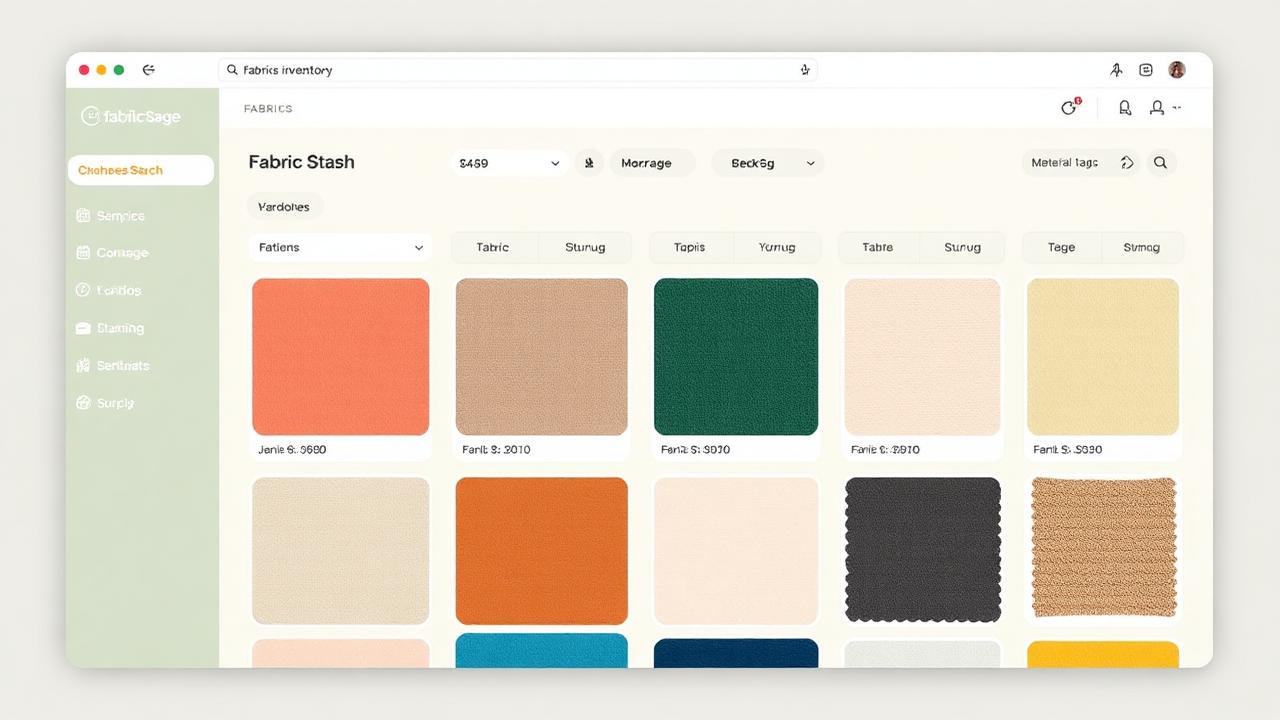
- Hit Pair Fabric. The AI reads the pattern requirements and scans every fabric in your stash inventory: fiber, weight, drape category, color, yardage, and width.
- Get a ranked list with scores. Each fabric gets a 0–100 compatibility score and a one-line reason: "Perfect drape and weight, 0.5 yards short of pattern yardage" or "Drape too stiff for bias skirt — better for a structured A-line".
- Add coordinating thread suggestions. The AI also surfaces matching threads from your inventory by color family and fiber.
The win isn't the AI doing something you can't. It's the AI doing it across 200 fabrics in three seconds instead of you running the shoulder-drape test on every cut you own.
When to break the rules
After the first ten projects, you'll start to see when you can ignore the suggested-fabrics list. Some examples that work:
- A bias-cut slip dress pattern in a soft cotton lawn instead of silk (less slink, still fluid).
- A boxy quilting-cotton apron pattern in mid-weight linen (less stiff, equally functional).
- A knit T-shirt pattern in a stable ponte instead of cotton/Lycra jersey (more structured, still wears).
What rarely works:
- Wovens in patterns drafted for knits, or vice versa.
- Quilting cotton in any pattern that mentions "drape", "gathered", "bias", or "flowing".
- Heavy bottomweight in any pattern that mentions "blouse", "shirt", or "tee".
Rules of thumb beat rules. Develop the rules of thumb by reading the envelope every time, even when you think you know better.
Get started
1. Create your free Sewist Studio account.
2. Add 5–10 patterns and 10–20 fabrics to your library (the AI scanner speeds this up).
3. Open any pattern → Pair Fabric. See which stash cuts score highest before you ever go shopping.
4. Save the top match to a project so you don't lose track.
Beginner sewing isn't about cutting straighter. It's about choosing better. The pairing happens before you ever pick up the scissors.
Frequently asked questions
How do I know what fabric works with a sewing pattern?
Read the suggested-fabrics list on the envelope and match weight and drape before buying.
What's the best fabric for a beginner dress pattern?
Medium-weight cotton lawn, linen blend, or shirting — they're forgiving and easy to press.
Can I use a knit fabric for a woven pattern (or vice versa)?
Almost never. Wovens and knits use different ease calculations; the garment will be the wrong size.
What does 'drape' mean on a fabric?
How the fabric falls. Fluid drape puddles and skims; structured drape holds shape and stands away from the body.
How does Sewist Studio's fabric pairing work?
The AI reads your pattern's requirements and ranks every fabric in your stash by compatibility, with scores and reasons.