Shadow Work Embroidery: The Reverse Side That Shines Through
Shadow work is heirloom embroidery's secret weapon — worked on the back, showing through the front. Here's how to do it.
What shadow work is
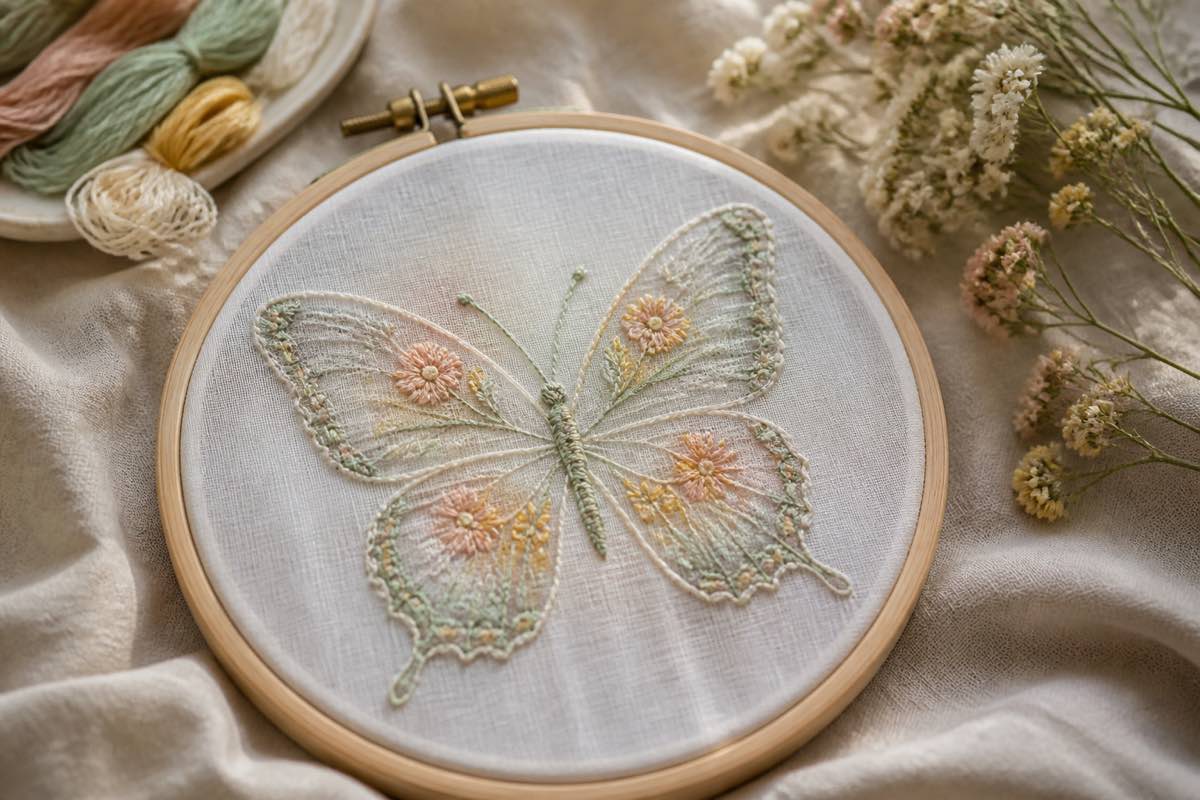
Shadow work is a form of embroidery worked on the wrong side of a transparent fabric. The stitches on the back are a tight herringbone; on the front, the color shows through the batiste as a soft shape bordered by two neat outline rows on either side. The effect is delicate, almost printed — impossible to replicate with surface embroidery.
Fabric requirements
Shadow work only works on truly transparent fabric:
- Swiss batiste (the classic choice)
- Silk organza
- Fine cotton lawn (edge of transparency)
- Cotton voile
Opaque fabrics kill the effect — you need light to pass through.
Thread choice
- 1–2 strands of DMC 6-strand floss for standard shadow work
- Pastels shadow best (pink, blue, mint, peach, lavender)
- Test each color on your fabric — some threads show darker than the skein suggests
Stitching technique
1. Trace the design on the right side of the fabric with a water-soluble marker.
2. Turn the fabric wrong-side up.
3. Work a closed herringbone (double back stitch) between the two design lines.
- Take a small stitch on the top line, then a small stitch on the bottom line, alternating.
- Stitches should touch but not overlap.
4. When you flip to the right side, you'll see two rows of tiny back stitches with the shadow color glowing between them.
Keep tension medium — too tight puckers the batiste, too loose blurs the shadow edge.
Common motifs
- Butterflies
- Hearts
- Baby animals (ducks, bunnies, lambs)
- Letters and monograms
- Small floral sprays
Simple silhouettes work best. Detail is lost — the eye reads shape, not line.
Finishing
Never press directly on shadow work. Use a padded pressing surface and a press cloth, work from the wrong side, and lift-and-press rather than sliding the iron.
Save every finished sample
Shadow work is highly reusable. A rosebud silhouette shadowed once can appear on a bib, a daygown yoke, and a christening gown collar. Camera cataloging in Sewist Studio saves each finished motif with its floss color and fabric noted, so you're never guessing what shade of pink you used two years ago.