Smocking Pleater Guide: Read Pleaters, Amanda Jane, and When to Use One
A pleater turns hours of gathering into minutes. Here's how the main models compare and when it's actually worth buying one.
What a pleater does
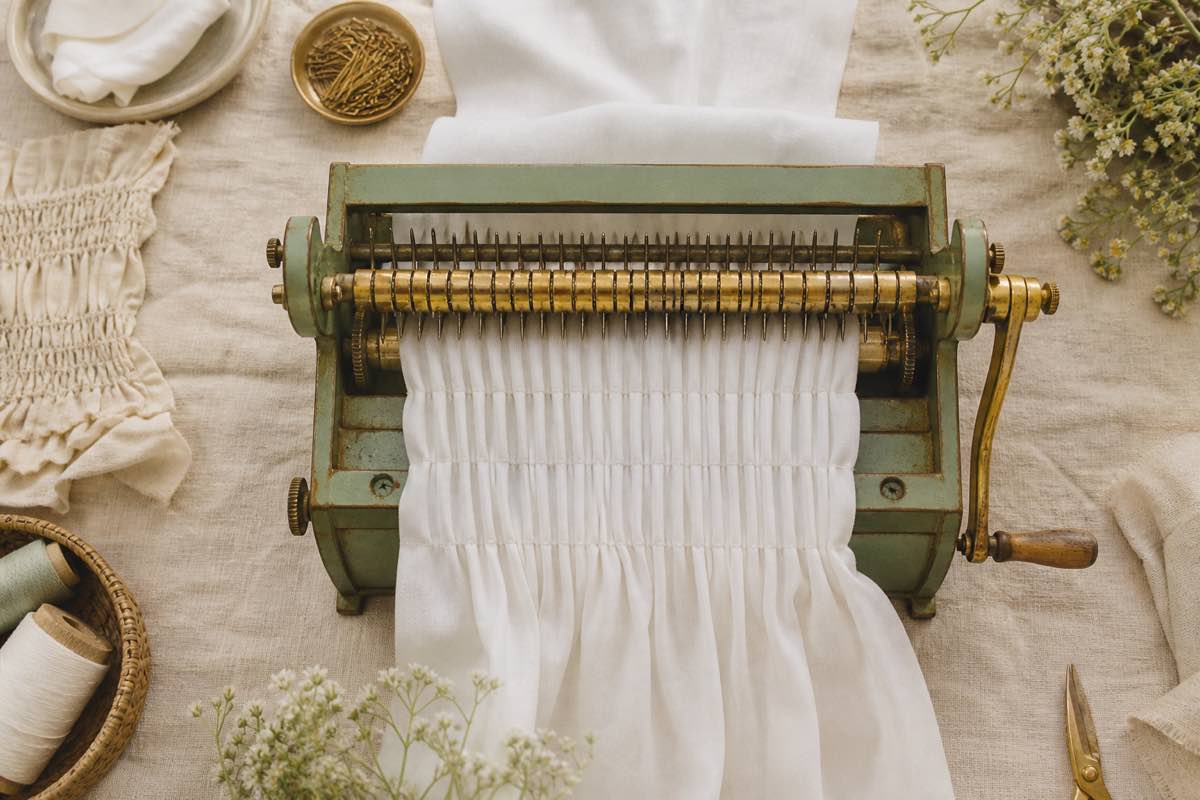
A smocking pleater is a hand-cranked machine that pushes fabric through multiple rows of curved needles at once. As you turn the handle, each needle picks up an evenly spaced tuck of fabric, gathering the piece into perfectly parallel pleats — the same process an experienced smocker would otherwise do by hand with hours of gathering thread.
Without a pleater, you either transfer smocking dots to the fabric with an iron-on grid and hand-gather each row, or you use a fabric with a built-in grid like fine gingham.
The two main home models
Read pleater
The most popular model in the US and UK. Made in Australia, comes in 16-row, 24-row, and 32-row versions. Sturdy, reliable, and holds resale value well.
Amanda Jane pleater
British-made, similar mechanism, often available in the UK and Europe. Some smockers prefer the feed roller design for slippery fabrics.
Both work the same way: thread each needle with a long length of gathering thread, feed the fabric in straight, and turn the handle. When the piece is fully through, you tie off each thread pair and adjust the pleats to the finished width.
How many rows do you need?
| Rows | Best for |
|---|---|
| 16 rows | Cuffs, pockets, insertions, small samples |
| 24 rows | Yokes, bodices, bishop necklines |
| 32 rows | Full bishop dresses, large decorative panels |
Most smockers land on the 24-row as a good all-purpose choice. Serious bishop-dress makers upgrade to 32.
When a pleater is worth the money
Pleaters cost several hundred dollars, so it's a real decision. It's worth it if:
- You smock more than 4–6 projects a year
- You make bishop dresses, which are painful to hand-gather
- You sell smocked items or take custom orders
If you smock two or three insertions a year, iron-on dots are fine and the money is better spent on fabric and floss.
Caring for pleater needles
Pleater needles bend and break with heavy fabric. Protect them by:
- Only pleating lightweight, tightly woven cotton
- Feeding fabric on grain and straight
- Removing needles carefully — never yank
- Keeping spares on hand (they're cheap individually)
Track your pleater setups
Between projects it's easy to forget which needle rows you threaded and how many pleats you got from a given yardage. Log each pleater run as a card on the project kanban — fabric pulled from your digital stash, cut size, row count, finished pleat count — so your next project starts from your actual measurements, not a guess.
Start logging pleater runs in Sewist Studio and build a personal reference of what works.
Buying used
Pleaters hold value, so a used Read from a smocking guild sale or estate is often 60–70% of retail and in perfect shape. Check that all needles are present and the crank turns smoothly. Missing needles are replaceable but drive the price down.