How to Sew a Capsule Wardrobe From the Fabric You Already Own
A closet full of handmade clothes that don't go together is its own kind of frustration. A capsule wardrobe fixes that — and you can sew most of it from your stash.
The problem a capsule solves
Plenty of sewists end up with a closet full of handmade clothes that somehow don't go together: a bold print dress, three single tops in clashing colors, trousers that match nothing. Each was fun to make. None of them combine.
A capsule wardrobe fixes this. It's a small, deliberately cohesive set of garments — a few tops, a couple of bottoms, a layer or two — chosen in one palette so everything mixes. And the best part for a sewist: you can build most of one from the fabric you already own.
Step 1: Shop your stash first
Before buying anything, pull out your fabric and group it by color. You're looking for pieces that already share a palette — three cuts in earth tones, a pile of blues and creams. Most sewists discover they're sitting on enough coordinated fabric for several garments without spending a cent.
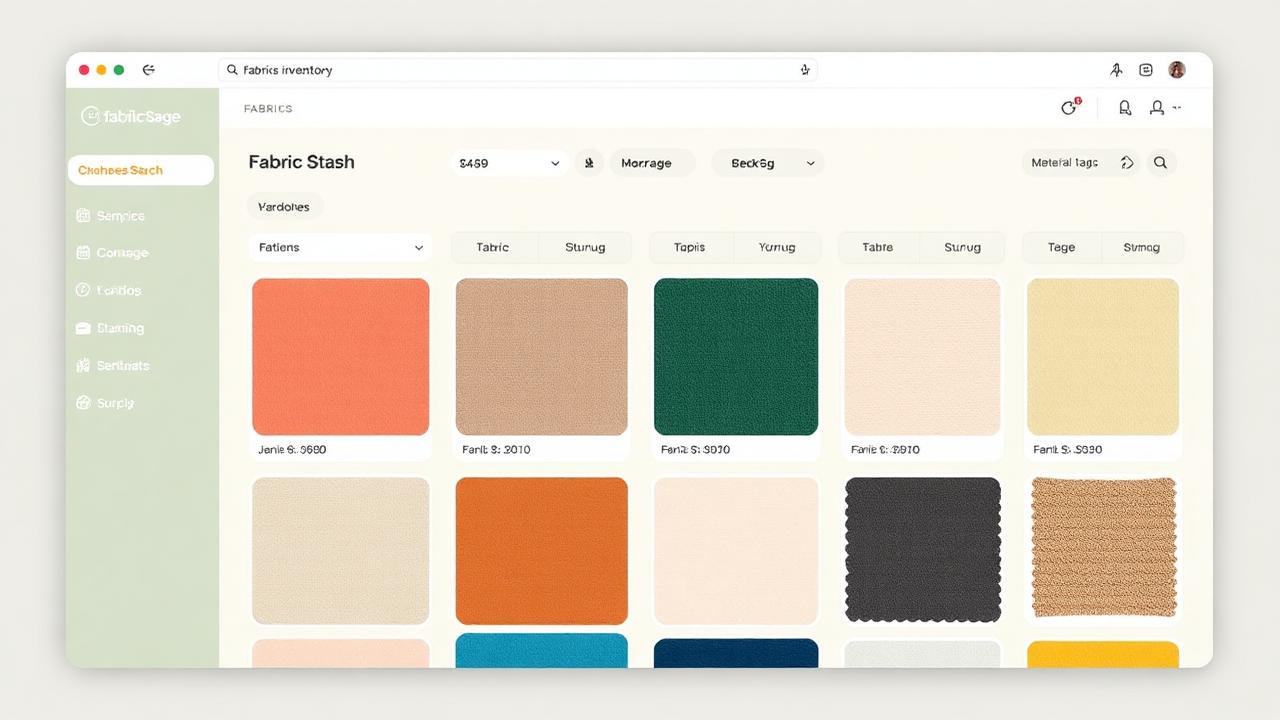
This is "shop your stash first" applied to a whole wardrobe, and it's where a digital fabric stash earns its keep — you can sort and filter your fabric by color to spot a palette you didn't know you had.
Step 2: Choose a tight palette
A capsule lives or dies on its colors. Keep it disciplined:
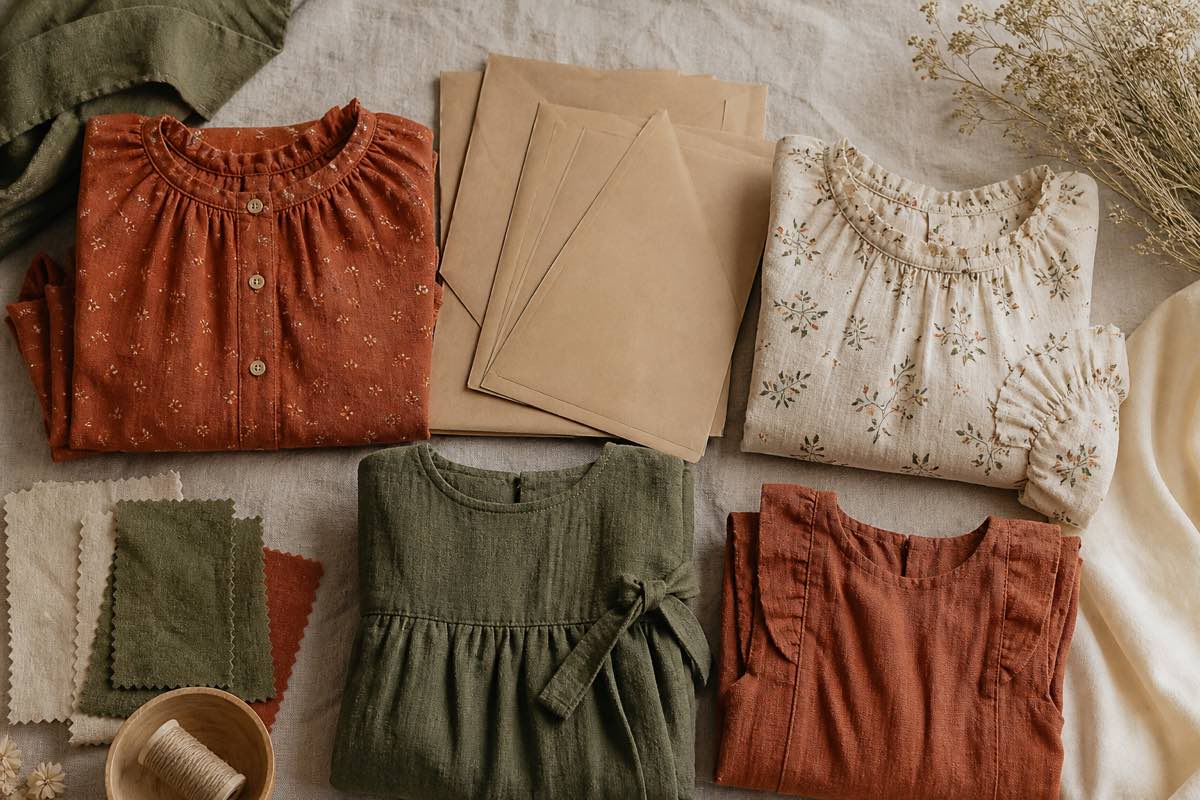
- 2–3 neutrals you actually wear — cream, navy, olive, charcoal, black.
- 1–2 accent colors for interest — a rust, a mustard, a soft pink.
Every top should work with every bottom. If a fabric doesn't play with the palette, it belongs in a different project, not this capsule.
Step 3: Pick mix-and-match patterns
You want a few simple, repeatable patterns rather than a dozen one-off showstoppers:
- A great tee or knit top (make it 2–3 times in different colors).
- A button-up or woven blouse.
- A versatile bottom — trousers or a skirt.
- A layer — a cardigan, overshirt, or jacket.
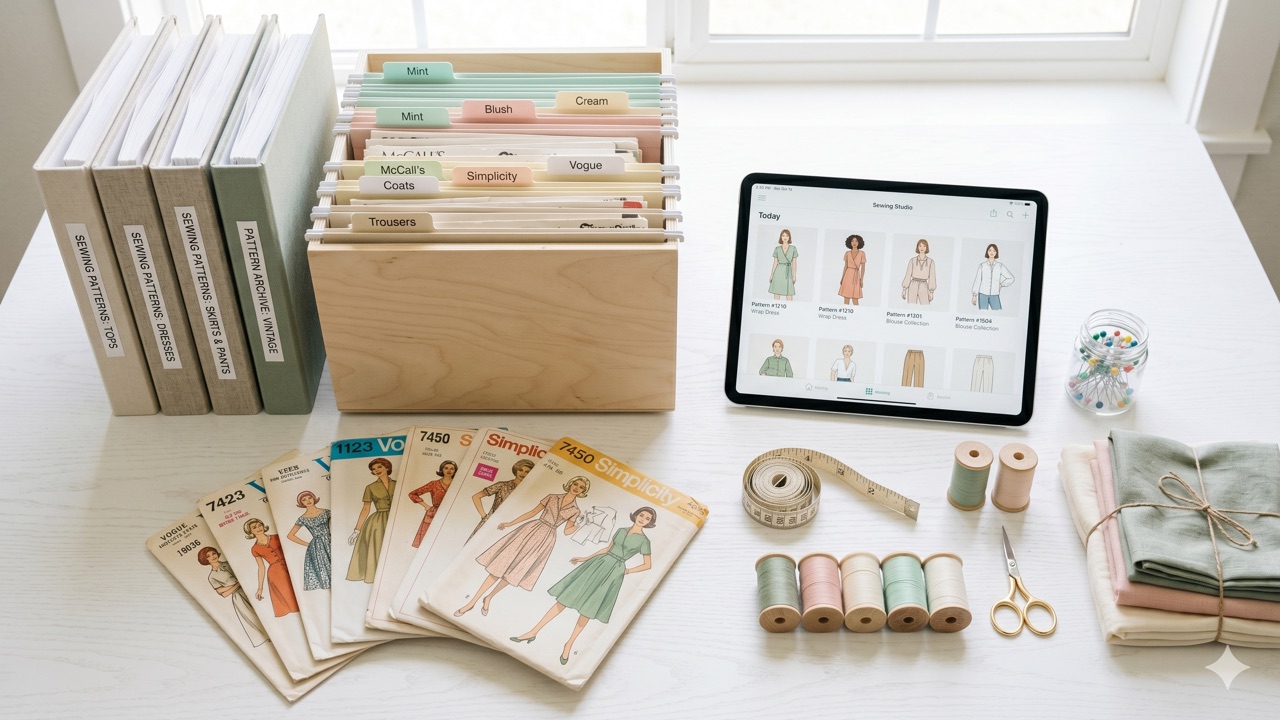
The real time-saver is using tried-and-true patterns you've already fitted. If you've recorded your adjustments (your bust adjustment, your size and grading) on a pattern, you can sew it again in a new fabric with zero re-fitting. That's how a capsule comes together fast.
Step 4: Plan the combinations before you cut
The whole point is outfits, so plan for them. Sketch or list the garments and check: does each top pair with each bottom? Does the layer go over everything? A capsule of 8 well-chosen pieces can yield 20+ outfits — but only if you plan the grid, not just the garments.
Use your project planner to queue the capsule as a set: pair each pattern with a specific fabric from your stash, sequence the makes, and see the whole wardrobe as a plan before you start cutting. This is also the natural companion to planning projects from the fabric you already own.
Step 5: Sew, log, and let it grow
Make the pieces one at a time, logging each in your project journal with a photo. As the capsule fills in, you'll see the outfits multiply — and you'll know exactly which fabric and pattern produced each piece when you want to make more.
2. Filter your stash by color to find a palette you already own.
3. Pick 4–6 mix-and-match patterns (favor ones you've already fitted).
4. Queue them in your planner, each paired to a fabric.
5. Sew, photograph, and log each piece as the capsule grows.
Frequently asked questions
What is a me-made capsule wardrobe?
A small set of coordinating handmade garments in one palette, designed to mix and match.
How many garments?
No fixed number — many aim for 8–12, but start with 4–5 coordinating makes.
How do I choose a palette?
2–3 neutrals you wear plus 1–2 accents; pull it from fabric you already own.
Can I sew it from my stash?
Yes — the most sustainable, affordable way. Group stash fabric by palette first.
Which patterns work best?
Simple, repeatable patterns — especially tried-and-true ones you've already fitted.