Shop Your Stash First: How to Save Money on Sewing Supplies
You probably already own enough fabric to make a new wardrobe. Here's how to stop accidental $50 zipper runs and use what's in your stash before buying anything new.
TL;DR. Sewing isn't expensive because fabric costs money. It's expensive because we keep buying fabric we already own. The fix is a searchable inventory plus low-stock alerts on staples (thread, interfacing, zippers), so quick-runs to the craft store stop turning into $50 splurges. Sewist Studio's Smart Shopping List and stash-aware AI project planner make it possible to plan an entire season of garments without buying a yard.
The real cost of "just running to the craft store"
Be honest. You went in for one zipper. You came out with:
- The one zipper ($3)
- A fat quarter bundle on sale ($18) you didn't need
- Two patterns at 60% off ($14) because they were the price of one
- Interfacing because you're "always running out" ($8)
- A coffee on the way home ($6)
That's $49 on top of the $3 you actually needed. Multiply by twelve craft-store runs a year and you've spent $588 on stash you already had — usually duplicating fabric and notions still sitting on a shelf at home.
The math is sneakier than it sounds. Most stash sewists own enough fabric to make 20+ garments. The constraint on finishing more projects isn't money or supplies — it's organization and overwhelm.
Why we overbuy (and how to stop)
Three patterns explain most overbuying:
1. Out of sight, out of mind. Fabric folded in a bin in the closet doesn't get pulled out when you're planning. The fabric on the rack at the store does. So you "discover" something you already own — at full price.
2. Sale-driven planning. Spotting a 40% off coupon means you plan around the coupon, not around what you'll actually sew. Coupons are designed to make sub-optimal purchases feel like wins.
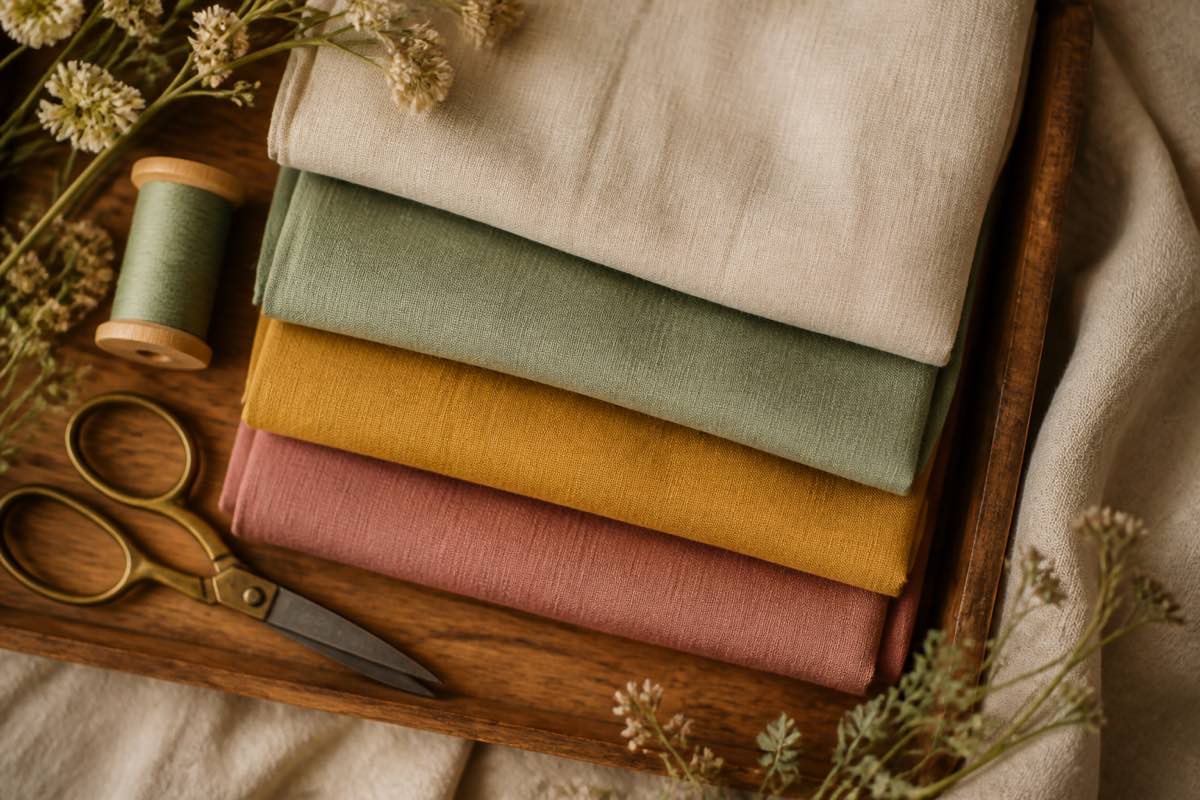
3. Project amnesia. You bought 3 yards of mustard linen for "a Cleo dress someday". Six months later you have no memory of why mustard linen is in the bin, and a new coupon convinces you to buy mustard linen again.
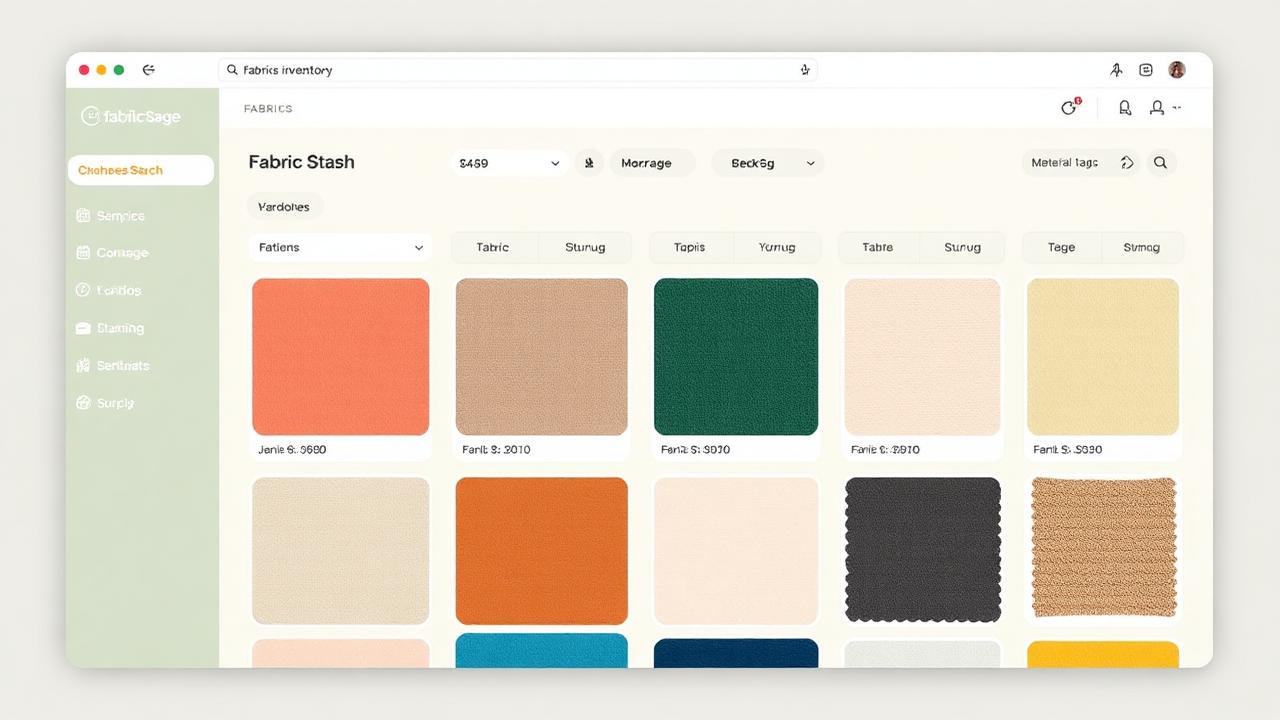
The fix to all three is the same: make your stash as visible and searchable as the store rack. Once you can see what you own in 10 seconds, the store loses most of its pull.
Building a searchable inventory
A useful stash inventory tracks five fields per piece:
| Field | Why it matters |
|---|---|
| Fiber | "Show me all cottons" / "show me all linens" — drives pattern matching |
| Weight | Light / medium / bottomweight — drives which patterns it suits |
| Color | Search "navy" when planning to coordinate with an existing top |
| Yardage | Filter "at least 3 yards" when a pattern needs 3 yards |
| Width | Some patterns require 60" goods; 44" yardage requires more linear yards |
If that sounds like a chore, it is — for the first session. Block off 90 minutes, photograph and tag everything in one go, and you'll never start from zero again. Or use AI photo scanning: snap a stack of cuts, the AI reads fiber, weight, color, and rough yardage and pre-fills the entry for you to confirm. See How to organize your fabric stash in an afternoon for the step-by-step.
The staples that deserve low-stock alerts
These aren't sexy purchases, but they're the ones whose absence forces emergency store runs. Set a low-stock threshold on each so you reorder during a single planned trip, not five panicked ones.
- All-purpose polyester thread: black, white, cream, navy, grey
- Universal needles 70/10, 80/12, 90/14 (and stretch / jersey if you sew knits)
- Lightweight and medium fusible interfacing (at least 1 yard of each on hand)
- Invisible zippers in basic colors and standard lengths (7", 9", 22")
- Standard elastic 1/4", 1/2", 1" (1 yard minimum on hand)
- Bobbins (cheap, but you'll always wish you had three more)
Tag each as a "staple" in your inventory, set a quantity threshold, and the system reminds you when it's time to restock. One trip per quarter beats five trips per month.
The Sewist Studio Smart Shopping List + Notions Tracker
Two features work together to stop the spiral.
Smart Shopping List auto-populates from three sources:
- Low-stock alerts on staples you've flagged (thread, interfacing, elastic).
- Pattern requirements — open any pattern in your library and the notions you don't currently own appear on the list.
- Project plans — fabric, thread, and notions for projects in your Kanban that you haven't yet sourced.
Each item shows whether you might already own it (a fuzzy match against your stash) so duplicates stop sneaking in. Items also surface affiliate-tagged Amazon search links so you can place one consolidated order instead of running to the store.
Notions & Tools Tracker keeps everything that isn't fabric or thread organized: zippers (by length and color), elastic, buttons, bias tape, snaps, interfacing yardage, hook and eye sets, and so on. When the Smart Shopping List asks "do you already own this?", it's the Notions Tracker that answers.
The Pro upsell that pays for itself: stash-aware AI project planning
The hardest part of stash sewing isn't owning the fabric — it's deciding what to make with it. That's where the AI stash-aware project planner earns its keep.
How it works:
- The AI reads your fabric inventory (fiber, weight, color, yardage), your pattern library, your thread inventory, and your notions tracker.
- It generates project ideas you can start today without buying anything new — matching patterns whose fabric and notion requirements are already satisfied by what you own.
- Each suggestion shows the exact stash items it would use, an estimated finish time, and a Save to Project Kanban button that pre-fills the project card with the linked fabric, pattern, threads, and notions.
For Pro users ($4.99/mo), this turns a stash from a liability ("so much fabric, no idea what to do with it") into a queue of free projects. One garment saved from impulse fabric buying covers the subscription for a year.
For more on the stash-aware planning workflow, see How to use AI to plan a sewing project from your fabric stash.
A 30-day shop-your-stash challenge
Try this once and you'll never go back.
1. Week 1: Inventory everything. Block out one Saturday and one Sunday afternoon. Use AI photo scanning on patterns and notions, manual entry or batch scan on fabric.
2. Week 2: Set low-stock alerts on staples. Add 8–10 patterns from your library to the AI planner.
3. Week 3: Pick three suggested projects with zero shopping needed. Add to your project Kanban.
4. Week 4: Sew one of them. Don't enter a craft store.
By the end of the month, your stash will feel like a wardrobe instead of a hoard, and you'll have spent zero on supplies you didn't actually need.
Frequently asked questions
What does 'shop your stash' mean in sewing?
Using fabric, thread, and notions you already own before buying anything new.
How do I keep track of what's in my fabric stash?
Catalog each piece with fiber, weight, color, yardage, and width in one searchable inventory.
What sewing supplies should I always have on hand?
Thread in basics (black, white, cream, navy), universal needles, lightweight and medium interfacing, invisible zippers, and standard elastic.
How can AI help me use my stash?
By cross-referencing what you own against pattern requirements and suggesting only projects you can start without shopping.
Does Sewist Studio do low-stock alerts?
Yes — flag staples like thread or interfacing and the Smart Shopping List reminds you to reorder before you run out.
Open the Smart Shopping List → · Organize your notions & tools → · Plan a project from your stash — free →