Natural Dyeing for Beginners: Give Thrifted Fabric a New Life
That dingy thrifted sheet or coffee-stained tablecloth isn't ruined — it's a blank canvas. Natural dyeing with avocado pits and onion skins gives upcycled fabric a whole new life.
Your stained thrifted fabric isn't ruined
You found a beautiful linen tablecloth at the thrift store — with a coffee stain in one corner. Or a soft old cotton sheet that's gone dull and grey. Don't pass it up. Natural dyeing can give dingy, stained, or boring upcycled fabric a completely new life, using nothing more exotic than avocado pits and onion skins from your kitchen.
It's having a real moment with a new generation of makers, and for good reason: it's cheap, low-waste, deeply satisfying, and it pairs perfectly with sewing your own clothes from thrifted linens.
First, the fiber rules
Natural dye binds to natural fibers — and not equally:
- Silk and wool (protein fibers) take color easily and richly.
- Cotton and linen (cellulose fibers) take color too, but need more prep.
- Polyester and most synthetics mostly reject natural dye — they'll come out pale or unchanged.
So check your fiber first (the same instinct you use when buying fabric to upcycle). Thrifted cotton and linen sheets are perfect candidates.
The kitchen dye palette
You can start with what's in your kitchen and compost bin:
| Material | Color (approx.) |
|---|---|
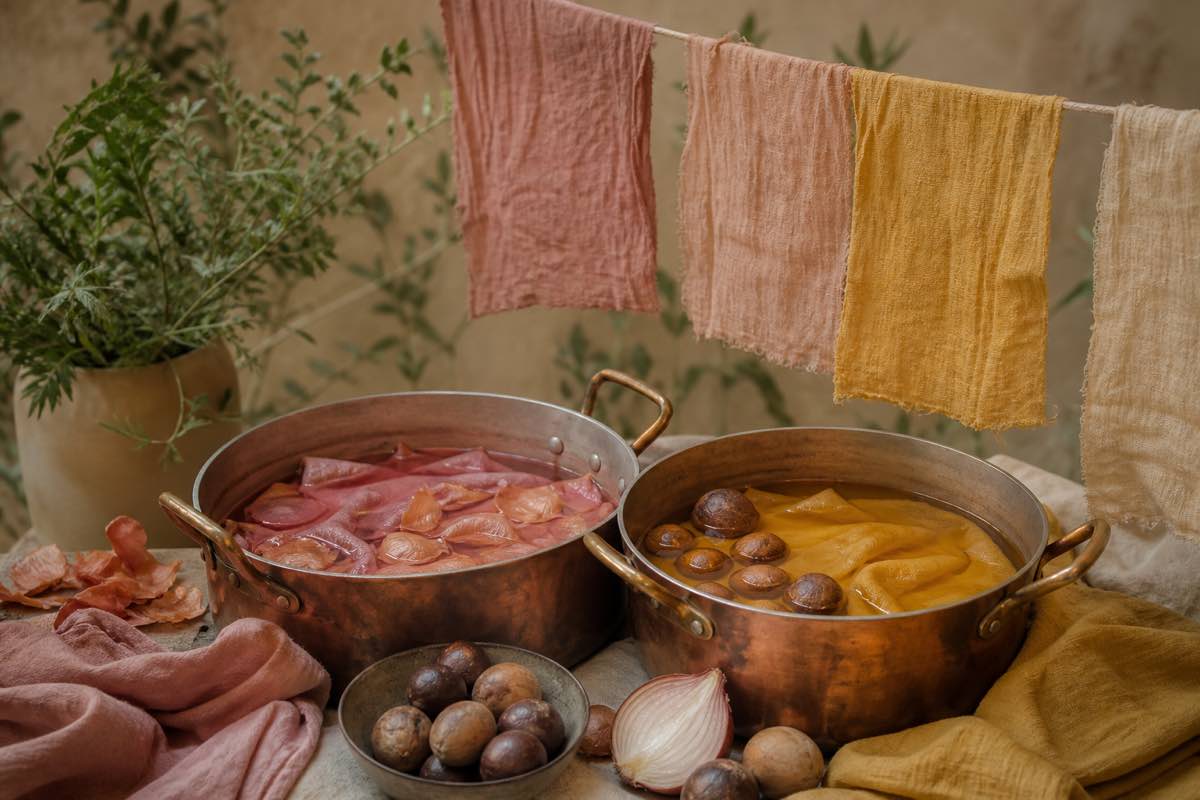
| Avocado pits & skins | Soft pink / dusty rose |
| Yellow onion skins | Gold / warm orange |
| Black beans (soaking water) | Blue-grey |
| Turmeric | Bright yellow |
| Coffee / black tea | Warm tan / brown |
| Red cabbage | Blue to purple (shifts with pH) |
Colors vary with your fiber, water minerals, and quantities — unpredictability is part of the fun.
The three steps: scour, mordant, dye
1. Scour (clean). Wash the fabric thoroughly to remove oils, finishes, and dirt so dye absorbs evenly. For thrifted fabric this doubles as the pre-wash you'd do anyway.
2. Mordant (bond). A mordant — most commonly alum — helps the dye fix to cotton and linen so it doesn't rinse away. Simmer the fabric in a mordant bath, then move it to the dye. (Beginner shortcut: avocado and tea have natural tannins that bond reasonably without a separate mordant, which makes them forgiving first projects.)
3. Dye. Simmer your dye material (e.g., a pot of onion skins) to extract color, strain out the solids, add your damp fabric, and let it steep — longer for deeper color. Rinse in cool water and dry out of direct sun.
Using dye to rescue thrifted fabric
This is where dyeing earns its place in an upcycler's kit:
- Hide a stain by dyeing the whole piece a deeper tone.
- Refresh a dull, greyed sheet into a rich, intentional color.
- Unify mismatched thrifted pieces by dyeing them in the same bath so they coordinate for a capsule wardrobe.
- Overdye a faded print for a moody, tonal effect.
Dye before you cut and sew, so the color is set and any shrinkage from the hot bath has already happened.
Log the new color in your stash
A freshly dyed length of fabric is effectively a new material — different color, sometimes different hand. Record it in your digital fabric stash with its new color, fiber, and yardage, and snap a photo. Then the visualizer and fabric pairings can help you choose the right garment for your new dusty-rose linen.
2. Pick a natural-fiber thrifted piece to revive.
3. Scour, mordant, and dye with kitchen materials.
4. Log the new color and yardage in your stash with a photo.
5. Plan a garment that suits the new color and sew it.
Frequently asked questions
What fabrics take natural dye?
Natural fibers — silk and wool easily, cotton and linen with more prep. Synthetics mostly won't.
What household items dye fabric?
Avocado pits (pink), onion skins (gold), black beans (blue-grey), turmeric (yellow), coffee/tea (brown), red cabbage (blue/purple).
Do I need a mordant?
Usually, for lasting color on cotton/linen. Avocado and tea bond reasonably without one — good for beginners.
Can dyeing cover stains?
Often yes — dyeing a deeper color hides discoloration and refreshes dull thrifted fabric.
Is it colorfast?
Reasonably, with proper scouring, mordanting, and gentle cold washing. Colors are soft and may shift over time.