Looking for a "Ravelry for Sewing"? Here's What Actually Works in 2026
Knitters have Ravelry. Sewists have… a Pinterest board, a Trello card, and a drawer of forgotten patterns. Here's the platform that finally fixes it.
Why "Ravelry for sewing" keeps trending — and why nobody's built it
Every few months a thread pops up on Reddit's r/sewing: "is there a Ravelry for sewing?" The answers are always the same — Pattern Review, Kollabora (closed), Sewing Pattern Tree, Threads & Stitches, and a chorus of "I just use a Pinterest board."
None of those are Ravelry. Ravelry works because it ties four things together: a pattern library, a yarn stash, an in-progress project tracker, and a community feed. When you start a project, Ravelry already knows what yarn you have, which needles match the pattern, and what other knitters changed in their version.
Sewing has been waiting on that for fifteen years. The reason it didn't happen sooner is that sewing patterns are harder — paper envelopes, PDFs, indie PDFs, magazine inserts, scanned vintage. Cataloging them by hand is brutal. Until AI could read pattern envelopes, no startup was willing to ask sewists to type all that in manually.
That changed. Here's what a real sewist platform actually needs in 2026 — and what's finally delivering it.
What sewists actually need (the four things)
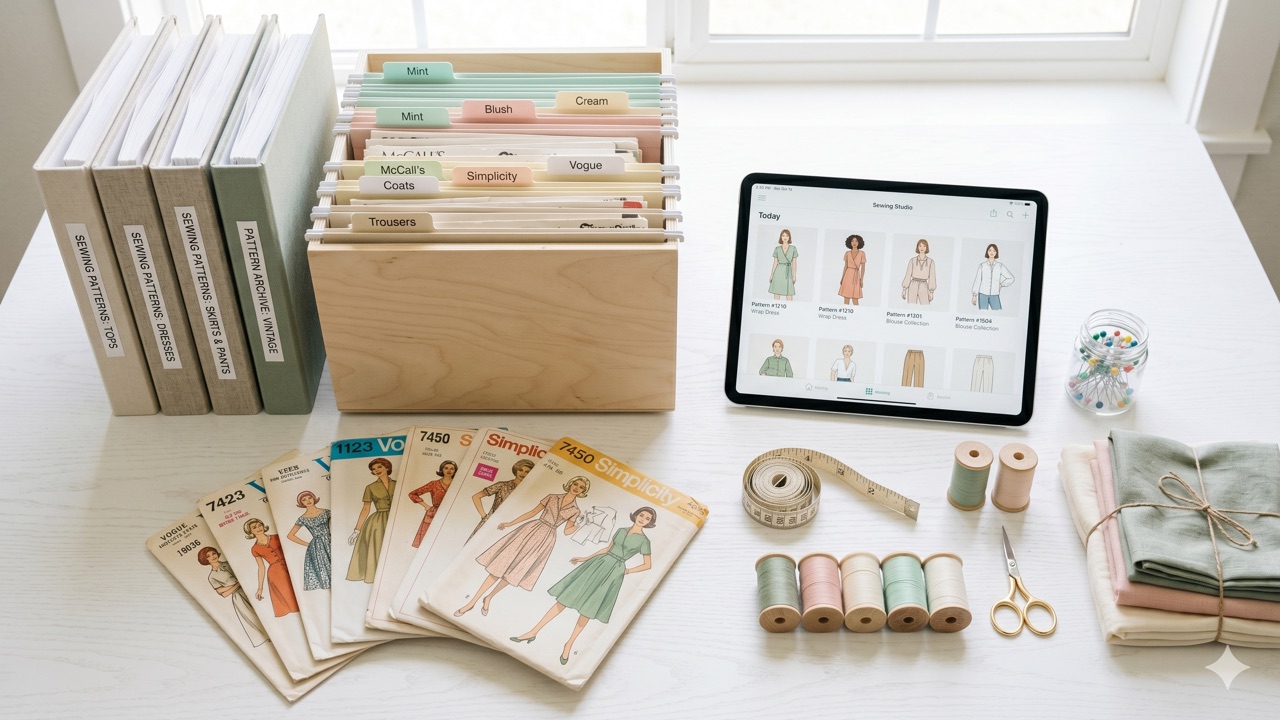
1. A real, searchable pattern library
Not a Pinterest board. Not a Notion table you maintain by hand. A library where every pattern has:
- Brand and pattern number
- Sizes included
- Recommended fabrics
- Yardage chart
- Notions list
- A thumbnail of the envelope or PDF cover
Searchable by any of those. "Show me every dress pattern I own that takes under 2 yards of stretch knit." That's the kind of query that makes a library worth having.
The blocker has always been data entry. Typing 80 patterns into a spreadsheet takes a Saturday and a glass of wine, and nobody does it twice. Sewist Studio's AI pattern scanner snaps a photo of the envelope front and back and extracts every field automatically — brand, number, sizes, yardage, notions. A real library, built in an evening.
2. A digital fabric stash
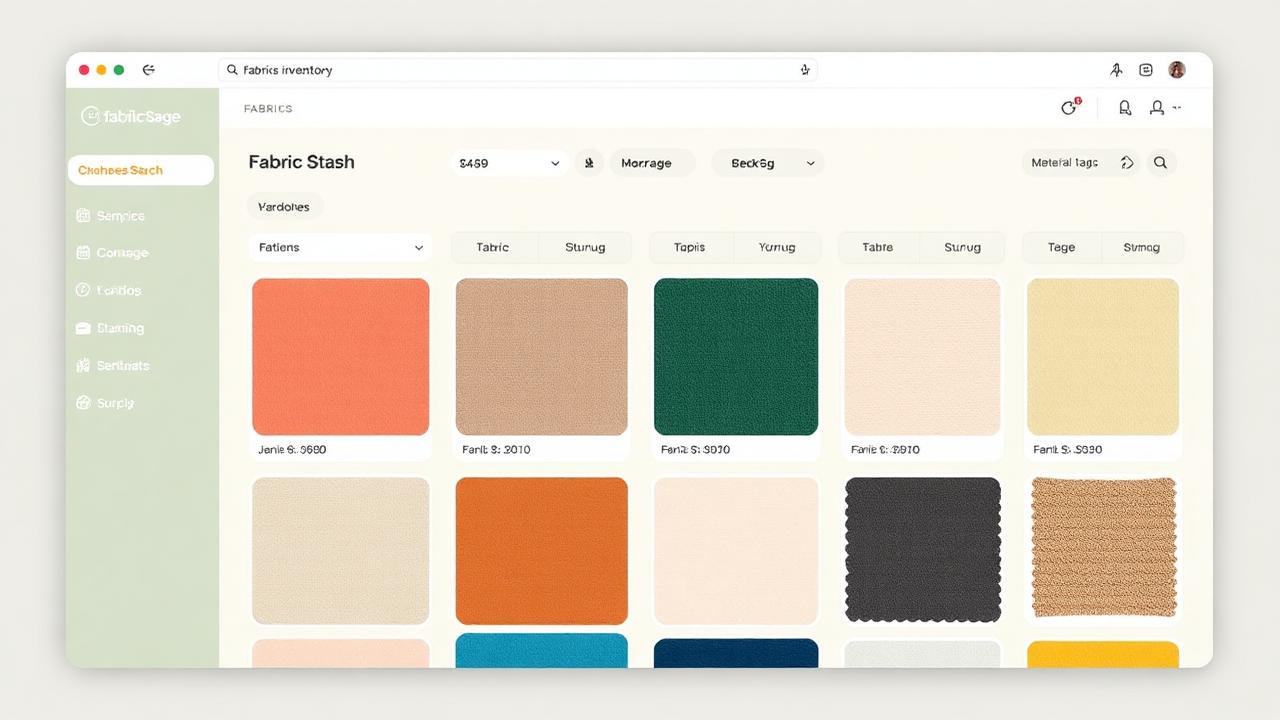
Same logic, applied to fabric. Every cut needs length, width, fiber content, weight, and a photo. The Ravelry equivalent for sewists has to know what fabric you've got before it can suggest projects.
Most "fabric trackers" stop at a notes field and a photo. That's not enough — the planner needs structured dimensions to answer "do I have enough yardage for this pattern?" Sewist Studio's stash organizer records L × W on every cut, plus fiber and intended use.
3. A planner that knows what's in your stash
This is the killer feature Ravelry's project queue gets right. When a knitter favorites a pattern, Ravelry can immediately tell them which yarn in their stash matches. The sewing equivalent has been impossible because matching is harder — pattern yardage charts depend on fabric width, fabric weight requirements depend on drape, and most sewists' stash data is too messy to query.
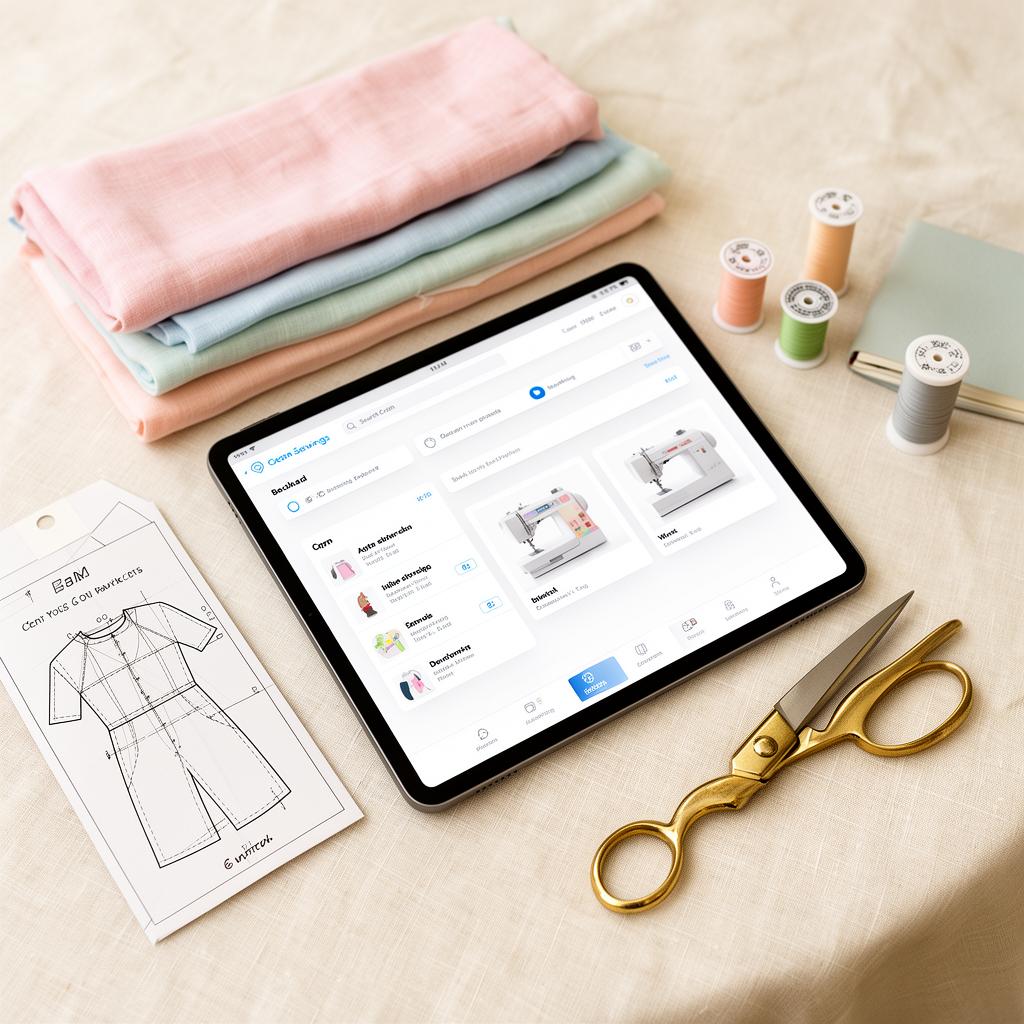
The breakthrough is AI. Sewist Studio's stash-aware project planner reads the pattern's fabric and yardage requirements, checks them against your cataloged stash, and only suggests projects you can actually cut today. No "do I have enough?" math. No "what fabric would work?" decision paralysis.
4. An in-progress project tracker (a real one)
Trello can do this. Notion can do this. They both do it badly, because they don't know about patterns or fabric. A real sewing project tracker has Kanban-style status (queued / cutting / sewing / fitting / done), a fabric link, a pattern link, photos at each stage, and a place to record fit notes for next time you use that pattern.
Sewist Studio's project tracker does exactly this, with the linkage built in. A WIP card knows which pattern and fabric it's tied to, which means finishing a project automatically subtracts that yardage from your stash.
What about the community part?
Ravelry's community is its true moat — and a community can't be built overnight. The honest answer for 2026: a great working tool comes first, community follows. Pattern Review and Instagram cover the public "I made this!" need today. A library + stash + planner that actually works is the missing piece — once sewists are organized, sharing what they made becomes easy.
Why Trello, Notion, and spreadsheets aren't the answer
Generic tools force you to design the schema, do all the data entry, and maintain it forever. That works for the 5% of sewists who love systems. The other 95% bounce off in a month, because:
- There's no AI to scan patterns — every field is typed by hand.
- There's no link between fabric yardage and pattern requirements — you do the math yourself.
- There's no fabric weight / drape matching — you have to remember which fabrics work for which patterns.
- There's no in-app affiliate-aware shopping list — you can't tap a notion and buy what you're missing.
A purpose-built tool replaces all of that with one tap.
The honest 2026 answer
If you're asking "is there a Ravelry for sewing yet?" — the answer is closer to yes than it's ever been. The pattern-library piece, the stash piece, and the planner piece all exist in one platform now, and they talk to each other. The community piece is still developing. But the working tool that knitters have had for two decades — that part is here.
Want to see what your sewing life looks like when the library, stash, and planner all talk to each other? Start a free Sewist Studio account. Scan ten patterns, log a few cuts of fabric, and watch the project suggestions roll in.