Looking for the "Ravelry of Sewing"? Here's How to Track Your Makes Online
Why does knitting have Ravelry, and sewing doesn't? Here's the gap, and what the modern alternative looks like.

TL;DR. Knitters have Ravelry — a unified platform for stash, patterns, projects, and community. Sewing has been fragmented across PatternReview, Instagram, Bobbin (defunct), Kollabora (defunct), and various standalone apps. The modern answer is a stash-and-pattern manager built for sewing's specific complexity (fabric yardage, multi-format pattern files, notions, machines, embroidery) with community features layered on top. Sewist Studio's Digital Sewing Room is the modern attempt.
The elephant in the crafting room
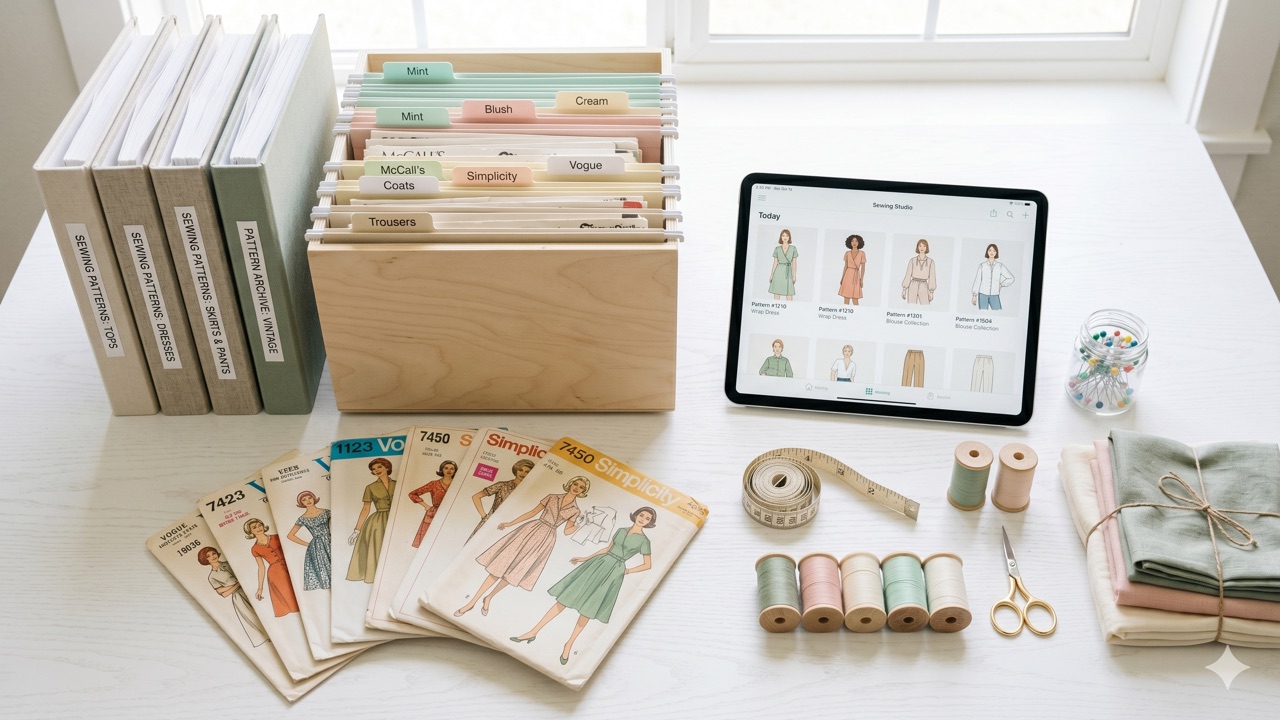
Every sewist who has ever talked to a knitter has had this conversation. The knitter pulls up Ravelry — their stash of yarn, every pattern they've ever favorited, projects in progress with row counts and notes, a feed of finished objects from the knitters they follow — and asks, "wait, you don't have this?"
We don't. Sewists have built and abandoned multiple attempts at the same platform. The need is real. The execution has been hard.
The fragmented sewing landscape
Here's what currently exists and what each tool actually does well:
| Platform | Good for | Falls short on |
|---|---|---|
| **PatternReview** | Searching pattern reviews | UI from 2003, no stash, no project tracking, paid for most features |
| **Instagram** | Visual inspiration, community vibes | Not searchable, no structure, algorithm-driven feed |
| **Pinterest** | Saving inspiration to boards | Not sewing-specific, no stash or pattern data |
| **Notion / Airtable templates** | Power users who build their own | Setup is hours; no shared community layer |
| **Bobbin (closed)** | Was promising | Shut down 2018 |
| **Kollabora (closed)** | Was promising | Shut down 2017 |
| **The Foldline** | UK-based community, some pattern reviews | Limited stash/project tooling |
| **Stash Builder / Cora / various apps** | Specific niches | None covers everything |
The result: most active sewists use 3–5 tools simultaneously. Instagram for inspiration, PatternReview for pattern research, a phone notes app for stash, a paper notebook for measurements, and email folders for PDF patterns. No single source of truth.
Why has sewing struggled to build the "Ravelry of sewing"?
Three reasons.
1. Sewing is more multi-dimensional than knitting. A knitting project needs yarn, needles, and a pattern. A sewing project needs a pattern (in two file formats), fabric (with width and yardage), thread (color + weight), notions (buttons, zippers, interfacing), specialty machine settings, and often a fitting muslin. The data model is heavier, which historically made apps either too complex or too narrow.
2. The community is more fragmented. Garment sewists, quilters, bag makers, embroiderers, costumers, and home decor sewists all have different priorities. Ravelry's two main user groups (knitters and crocheters) overlap heavily in terminology and tools. Sewing's subcommunities barely share vocabulary.
3. The early attempts launched before mobile was solved. Bobbin and Kollabora launched in the 2010s when "sewist on a phone at a fabric store" wasn't yet the common use case. The successful tool needs to work on a phone in a craft store as the primary interface.
What sewists actually need
The shopping list for a real "Ravelry of sewing":
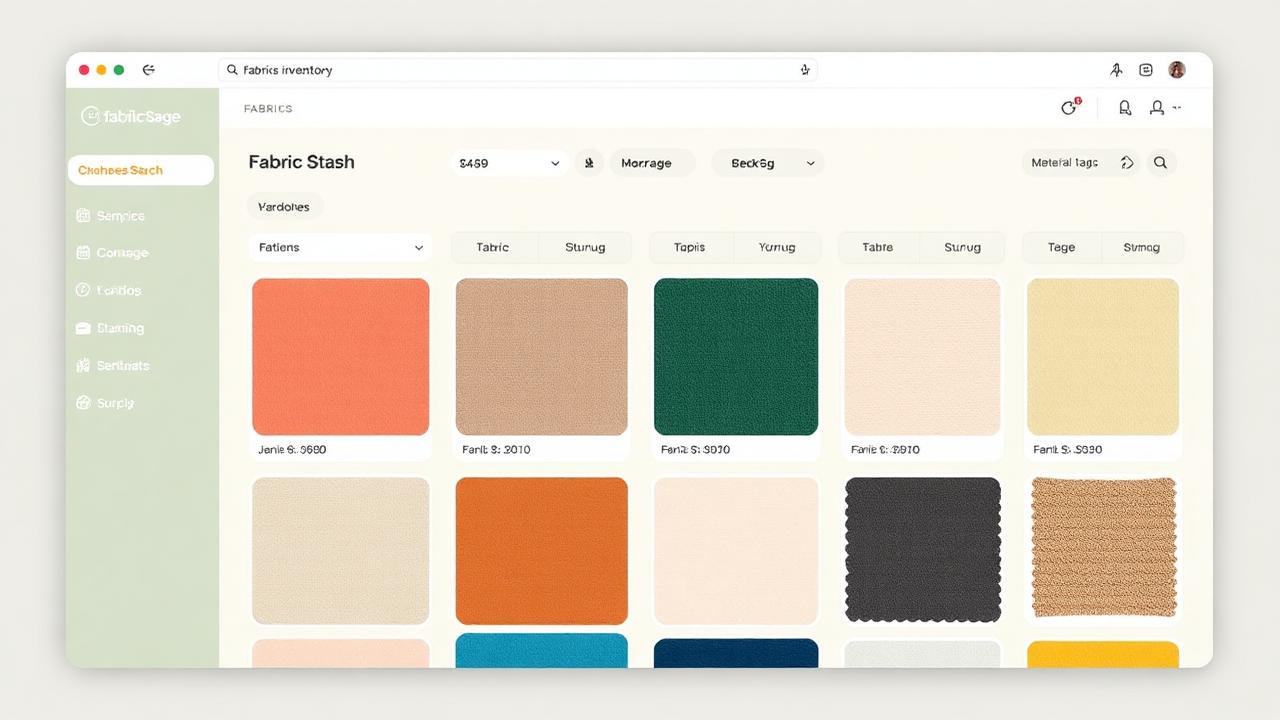
- Private stash management — fabric with photos and yardage, patterns with files and metadata, notions with quantities. Searchable from a phone.
- Project tracking — Kanban or list, linked to the stash items used, with notes and finished photos.
- Pattern review and discovery — see what others have sewn from a pattern before buying.
- Community and feed — follow makers, share finished objects, comment.
- Modern UX — works on a phone, syncs across devices, doesn't look like a forum from 2003.
- Affordable — free for the core tracking, paid for power features.
Most existing tools cover 1–2 of these. The gap is wide open for a tool that covers all six.
Where Sewist Studio fits
Sewist Studio is positioned as a modern, mobile-first stash-and-pattern manager that takes sewing's complexity seriously:
Stash and inventory — fabric (with length × width, fiber, pre-wash status), patterns (PDF + A0 file storage, tagged metadata, print status tracking), threads (40wt vs. 50wt distinction for dual sewing/embroidery setups), notions, machines with maintenance logs, embroidery designs with .PES/.DST previews.
Project tracking — Kanban board linking patterns to fabric to notions, with a journal-style notes section for fit adjustments and machine settings.
Measurement profiles — secure multi-person profiles for yourself, family, and clients.
AI tools (Pro) — pattern matching from a fabric photo, project ideas from your stash, look recreation from an inspiration image. The AI tools acknowledge that sewing has more variables than knitting and use them.
Modern UX — works on phone, tablet, and desktop. Mobile-first design for the fabric-store use case. No 2003 forum aesthetics.
Roadmap toward community — current focus is the private utility side (the part previous attempts under-invested in). Community features are on the roadmap. The bet is that sewists need the stash tool to work first, then will join a community built on top of it.
It's not Ravelry. It's an answer shaped by what Ravelry's success and previous sewing-platform failures taught.
A starter setup for a "digital sewing room"
1. Create your free Sewist Studio account.
2. Spend a Saturday afternoon logging your 30 most-used items: patterns, fabric, threads.
3. Open a project card for whatever you're currently sewing. Link the pattern and fabric you're using.
4. Add a measurement profile for yourself.
5. After one month, you have a working private digital sewing room. After three months, you can search across it faster than you can find anything in your physical sewing room.
That's the bet: utility first, community later. The same order Ravelry got right.
Frequently asked questions
Why does knitting have Ravelry but sewing doesn't?
Knitting's data model is simpler and the community is less fragmented. Sewing's historical attempts launched before mobile was solved.
What's the closest current alternative to Ravelry for sewing?
PatternReview for reviews, Instagram for inspiration, modern stash managers (including Sewist Studio) for inventory. No single winner yet.
Can I track my sewing makes online for free?
Yes — Sewist Studio's free tier covers patterns, fabric, threads, notions, and projects.
What's the difference between a pattern review site and a stash manager?
Review sites are community-first; stash managers are utility-first. The "Ravelry of sewing" would be both.
What does Sewist Studio offer compared to Ravelry?
Sewing-specific data model (fabric yardage, multi-format patterns, embroidery), modern mobile-first UI, AI tools, and a community roadmap.
Claim your username and build your digital sewing room — free →