Thrift Flip 101: How to Refashion Secondhand Clothes You'll Actually Wear
That $4 thrifted dress is three sizes too big — and the perfect raw material. Refashioning is the most sustainable, beginner-friendly way to build a wardrobe you love.
Why refashioning is the smartest place to start
A brand-new sewist often reaches for crisp yardage and a pattern. But some of the most satisfying, lowest-stakes sewing starts in a thrift store. A $4 dress that's three sizes too big isn't a failure — it's a generous supply of fabric that's already been cut into a wearable shape. Your job is just to refine it.
This is refashioning (the "thrift flip"), and it's surging — partly because it looks great on camera, but mostly because it's genuinely sustainable. Reusing a garment keeps it out of landfill and skips the resources of making new cloth. It's the practical heart of slow fashion and the "underconsumption" movement: build a wardrobe you love from what already exists.
Thrift smart: buy fabric and size, not style
The garment on the rack is raw material, so judge it as material:
- Fiber first. Natural fibers — cotton, linen, wool, silk — press well, take a dye, and are forgiving to sew. Check the care label.
- Buy big. A garment larger than you need gives you fabric to recut and reshape. You can always remove fabric; you can't add it.
- Check the seams. Generous seam allowances mean room to take in or let out.
- Inspect for damage. Stains and worn patches aren't dealbreakers — they're either areas to cut around or candidates for visible mending — but know what you're taking on.
The easiest first flips
Start by changing one thing:
- Take it in. Bring in the side seams of a too-big dress or shirt for a fitted shape. Straight seams, big payoff.
- Shorten it. Hem a maxi to a midi, crop a long shirt, or turn wide-leg trousers into a cleaner line.
- Remove, don't add. Cut off dated sleeves, ditch shoulder pads, drop a collar. Subtraction is low-risk.
- Redye. A tired or stained light garment in natural fiber can be transformed by dye with no sewing at all.
Once you're comfortable, advance to recombining — two thrifted shirts into one, a dress into a two-piece — which is really just pattern mashup applied to existing garments.
A simple take-in, step by step
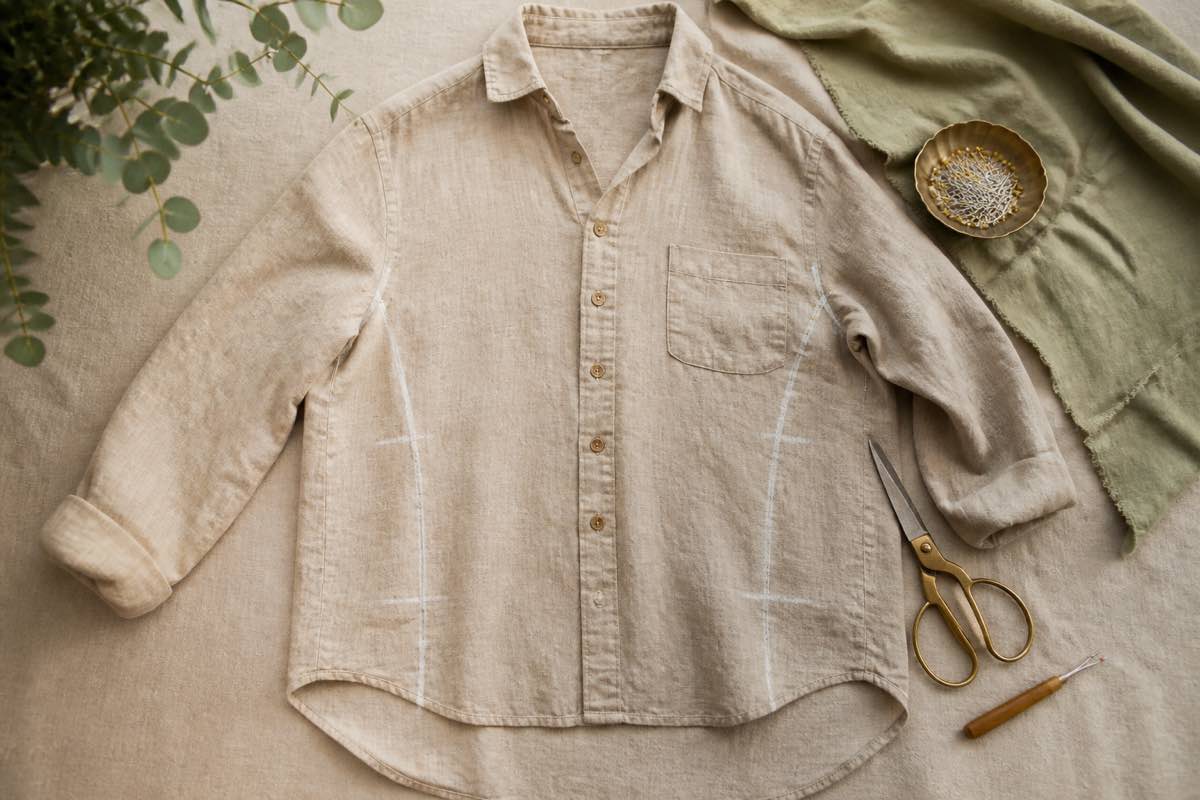
1. Try it on inside out and pin along your sides where you want the new seam to sit.
2. Mark the pin line with chalk, then take it off and true the line with a ruler so both sides match.
3. Sew the new seam, taper smoothly to the original seam at the hem and armhole.
4. Try it on again before cutting anything away.
5. Trim the excess and finish the raw edge.
Measure twice, sew once — and keep your body measurements handy so you know your target dimensions before you pin.
Plan flips from what you already own
Refashioning isn't only for thrift hauls — your own closet is full of candidates. The trick is remembering them when inspiration strikes.
Use your project planner to keep a running list of garments to flip, what you intend to do to each, and a before photo. Then log the finished result in your project journal with an after photo. A year of flips becomes a visible record of a wardrobe you rebuilt instead of rebought.
2. Photograph each "before" garment and add it to your planner.
3. Note the one change you'll make to each.
4. Log the finished flip with an after photo.
Frequently asked questions
What is a thrift flip?
Refashioning a secondhand garment into something more wearable — taking in, cropping, recombining, or redyeing.
What should I thrift for?
Fabric and size over style: natural fibers, generous seams, and garments larger than you need.
Easiest first refashion?
Taking in or shortening — simple straight seams, big change in proportion.
Do I need a machine?
Not always; hemming, take-ins, patches, and redyeing can be hand- or no-sew.
Why is it sustainable?
It reuses existing fabric, keeping clothes out of landfill — core to slow fashion.
Plan your next thrift flip from clothes you already own — free →