Virtual Sewing Coach vs Sewing Class vs YouTube: Which Fits You?
An honest comparison of four ways to get sewing help, what each one is actually good at, and the combinations that work best.
There is no single best way to get sewing help. A virtual sewing coach answers quick, specific questions about your own project. An in-person class gives you a teacher who can take the fabric out of your hands and fix your technique. YouTube shows you a technique being done. A sewing friend keeps you company and keeps you going.
Each one is good at something different, so the honest answer is usually a combination. This guide compares all four on cost, availability, personalization, hands-on correction and community, then suggests combinations that fit different kinds of sewists.
What is a virtual sewing coach?
A virtual sewing coach is a live helper you talk to on a video call, usually powered by AI. You ask questions out loud and get answers out loud, while you sit at your own table with your own fabric.
In Sewist Studio, the coach is called Wren. It is a talking video-call avatar built with Runway Characters. A few details matter for this comparison:
- It knows your current project. Wren knows the pattern, the size and the fabrics you assigned, in your units (imperial or metric).
- It can look up your stash during the call. Fabric, patterns, thread and notions, so you can ask "what else do I have that would work?"
- It can see what you hold up. Choose "Show Wren your fabric" to turn on your camera.
- Calls are short. Each call ends after 5 minutes. Free accounts get 1 call. Pro includes unlimited calls.
- You need to sign in. That is how it knows your project and stash.
For a full tour, read our guide to the AI sewing coach on a live video call.
How do the four options compare?
The biggest difference is between help that knows your project and help that can touch your work. No single option does both well.
| Virtual coach (Wren) | In-person class | YouTube tutorials | Sewing friend | |
|---|---|---|---|---|
| Cost | 1 free call; unlimited on Pro ($4.99/month) | Paid per class or course, varies by area | Free | Free |
| Availability | Whenever you start a call | Set times and places | Any time | When they are free |
| Length | 5 minutes per call | Usually a few hours | Any length | Open-ended |
| Knows your project and stash | Yes, from your records | Only what you bring | No | If you tell them |
| Answers in your units | Yes | Depends on the teacher | Depends on the video | Depends on the friend |
| Sees your work | Through your camera | In person | No | In person or by photo |
| Hands-on correction | No | Yes | No | Sometimes |
| Can adjust your machine | No | Yes | No | Sometimes |
| Community | No | Yes | Comments only | Yes |
When is a virtual sewing coach the better choice?
A virtual coach is the better choice for small, specific decisions in the middle of a project. These are the moments when you would otherwise stop, search, and lose an hour.
Good fits:
1. "Do I have enough fabric?" Wren knows your pattern and size and can check your stash record for that fabric.
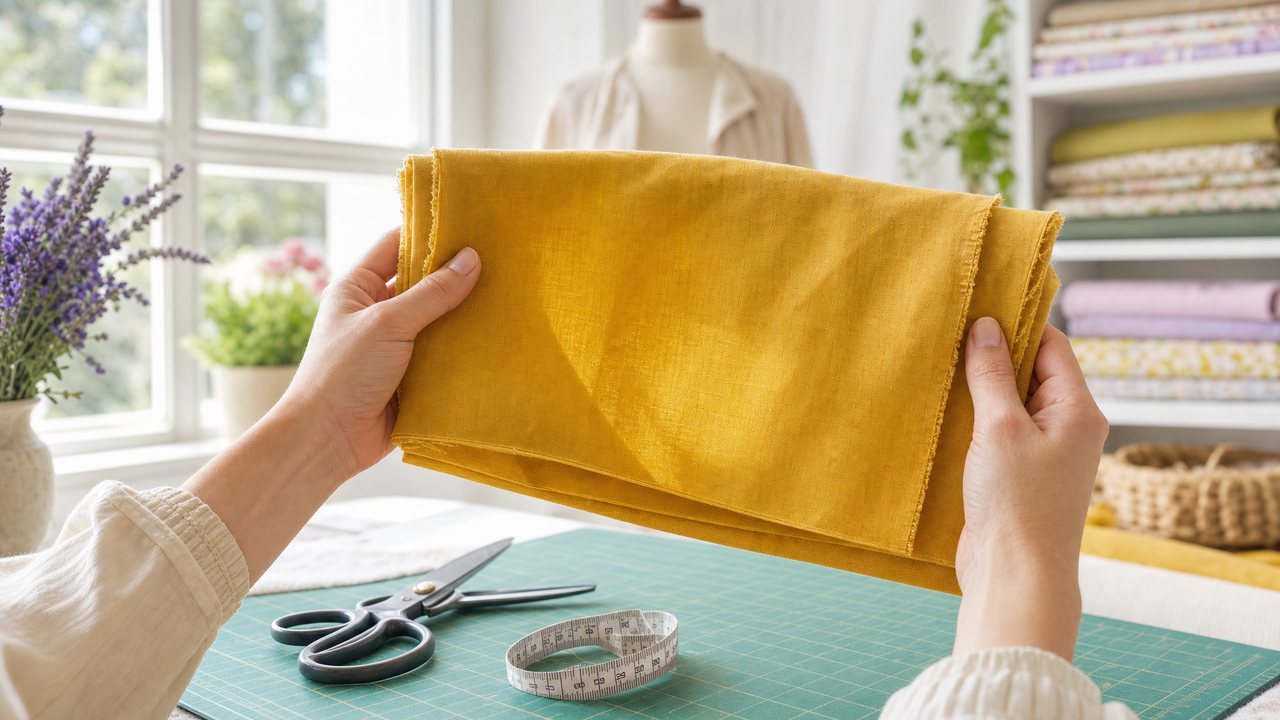
2. "Which side is the right side?" Hold up both faces on camera.
3. "What interfacing should I use for this collar?" Ask about weight and type, then fuse a sample.
4. "Is there a better fabric in my stash for this pattern?" The live stash lookup answers this without you scrolling through every fabric.
5. "What should I test on a scrap before I cut?" A short checklist before you commit.
The camera is useful here. For a list of good questions to ask while holding fabric up, see 12 questions to ask an AI sewing coach about your fabric.
Where it falls short: Wren cannot feel your fabric, cannot see inside your machine, and cannot change your machine's settings. It gives you advice, and you test it. If your problem is in your hands (how you guide fabric, how you pivot at a corner), a teacher standing next to you will spot it faster.
When is an in-person sewing class the better choice?
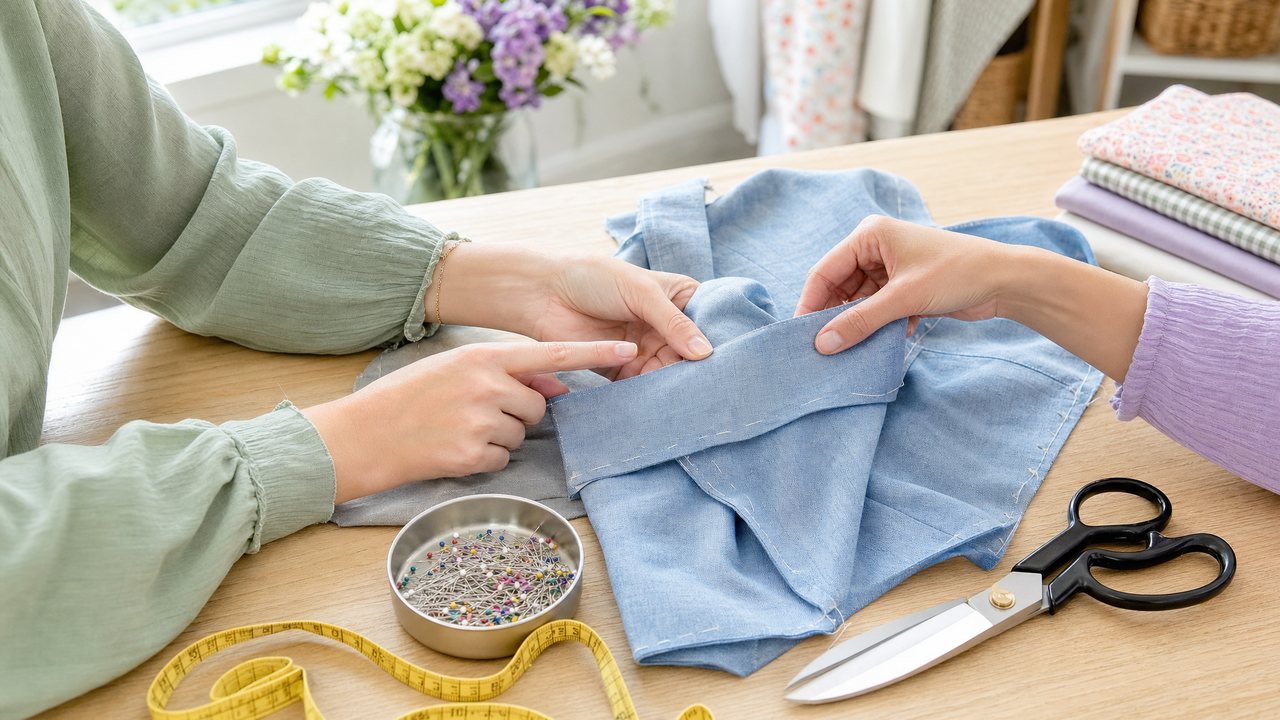
A class is the better choice when you need someone to watch you sew and correct you on the spot. No camera replaces a teacher who can put their hands on your fabric.
Classes are strongest for:
- Your very first machine lessons. Threading, winding a bobbin, and keeping a straight seam are easier to learn with someone beside you.
- Fitting. Pinning out a muslin on your body needs a second person who knows what they are looking at.
- Machine trouble. A teacher can open the bobbin area, look at the tension, and adjust it with you.
- Motivation. A scheduled class is a deadline, and deadlines finish projects.
The trade-offs are cost, travel and timing. A class happens when it happens, and your question at 10pm on a Tuesday has to wait.
What are YouTube tutorials good for?
YouTube is best for watching a technique from start to finish. Seeing a zipper go in, at full speed and then slowly, is often clearer than any written instruction.
It is free and covers almost every technique. The limit is that a video does not know your pattern, your size, your fabric, or your stash. You have to translate the presenter's choices into yours, and if they work in inches and you work in centimeters, you convert as you go. Videos also cannot answer a follow-up question.
A practical habit: watch the video first, then use a short coach call for the part that does not match your project.
Why does a sewing friend still matter?
A sewing friend gives you what no tool does: company, honest opinions on your finished make, and a reason to keep sewing. They also tend to know your taste.
A friend can try your garment on, swap fabric with you, and tell you when a print really is too loud. The limits are their time and their knowledge. Not every friend knows how to fix tunneling on a knit hem, and you may not want to message them for every small question.
Which combination should you choose?
Pick the combination that covers your weakest spot. Here are four that work.
1. Brand new to sewing: an in-person beginner class for machine basics, plus coach calls for project decisions between classes. Start with how to sew your first garment with online sewing help.
2. Self-taught and sewing alone: YouTube for techniques, a virtual coach for project-specific questions, and a scrap test before every big cut.
3. Fixing recurring problems: show the problem to a coach on camera for a first read, then test fixes on scraps. If it keeps happening, take it to a class or a repair shop. The steps are in how to fix common sewing mistakes with live help.
4. Experienced and busy: a coach for quick checks against your stash, and a sewing friend or group for the fun part.
Whatever you choose, help is better when your records are good. A stash with yardage makes a coach far more useful, so the best way to track your fabric stash is worth an evening. For how the coach fits with the other tools, see the complete guide to AI sewing tools, and for the wider picture of keeping everything in one place, the digital sewing room guide.
Try it
Write down the one question you have been stuck on this week. Then start a call with Wren, the virtual sewing coach and ask it. Your first call is free with a free account. Sewist Studio Pro includes unlimited calls for $4.99 a month or $47.88 a year, with a 14-day free trial.