How to Dupe a Designer Dress With Fabric You Already Own
The dress costs more than your machine. Here is how to sew your own version from patterns and fabric you already have.
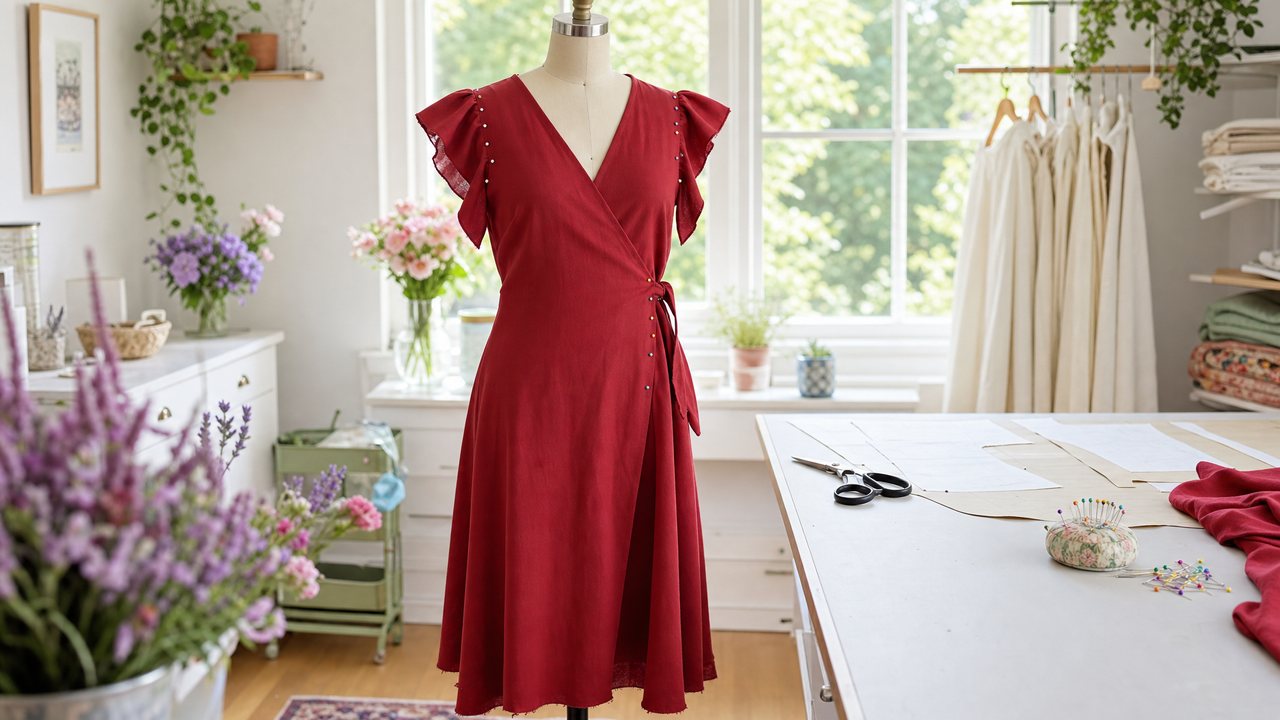
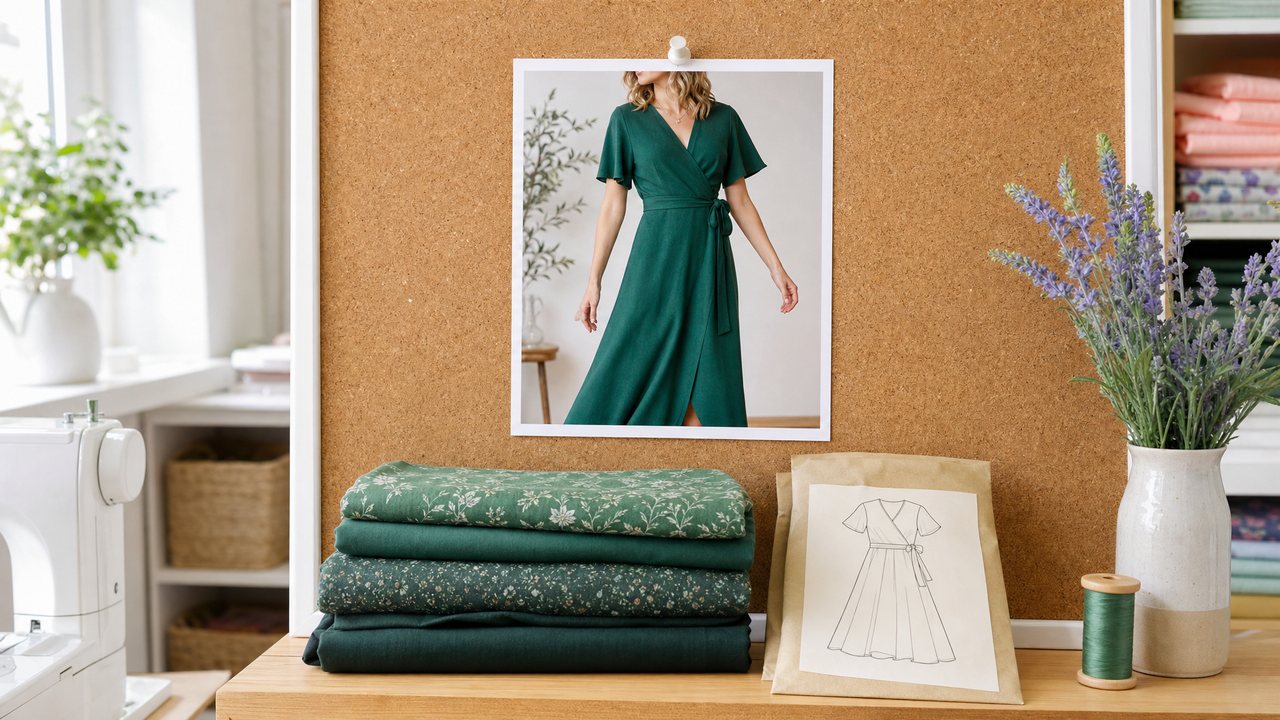
You can sew your own version of almost any designer dress without finding the exact pattern or the exact fabric. The method is the same every time: study the dress, break it into parts, cover those parts with a pattern you own or can get, choose a stash fabric that behaves the same way, and check you have enough of it.
This guide walks through each step for a typical example, a midi wrap dress with flutter sleeves, and shows where an AI tool can save you time. You can do every step by hand. The tool just makes the breakdown and the matching faster.
Step 1: Collect good inspiration photos
Good photos make every later step easier. Aim for several angles of the same dress, not several different dresses.
Look for:
- A full front view to see the overall silhouette and length
- A back view to see closures, darts and back neckline
- A close-up of the sleeve, neckline or any detail you want to copy
- The dress on a moving body if you can find it, to judge drape
Shop listings often have all four. Save them in one folder so you are working from a single set.
Step 2: Break the dress into parts
Every dress is a combination of common parts. Write a one-line description covering each part, and you have a build list.
For the example wrap dress: "V wrap neckline, fitted bodice with waist ties, short flutter sleeve, bias-cut midi skirt, no zip." That sentence tells you what pattern pieces to look for.
The parts to name:
| Part | Example options |
|---|---|
| Neckline | V, scoop, square, wrap, cowl, collar |
| Bodice | Darted, princess seams, wrap, gathered, boxy |
| Sleeves | Sleeveless, set-in, flutter, puff, bishop |
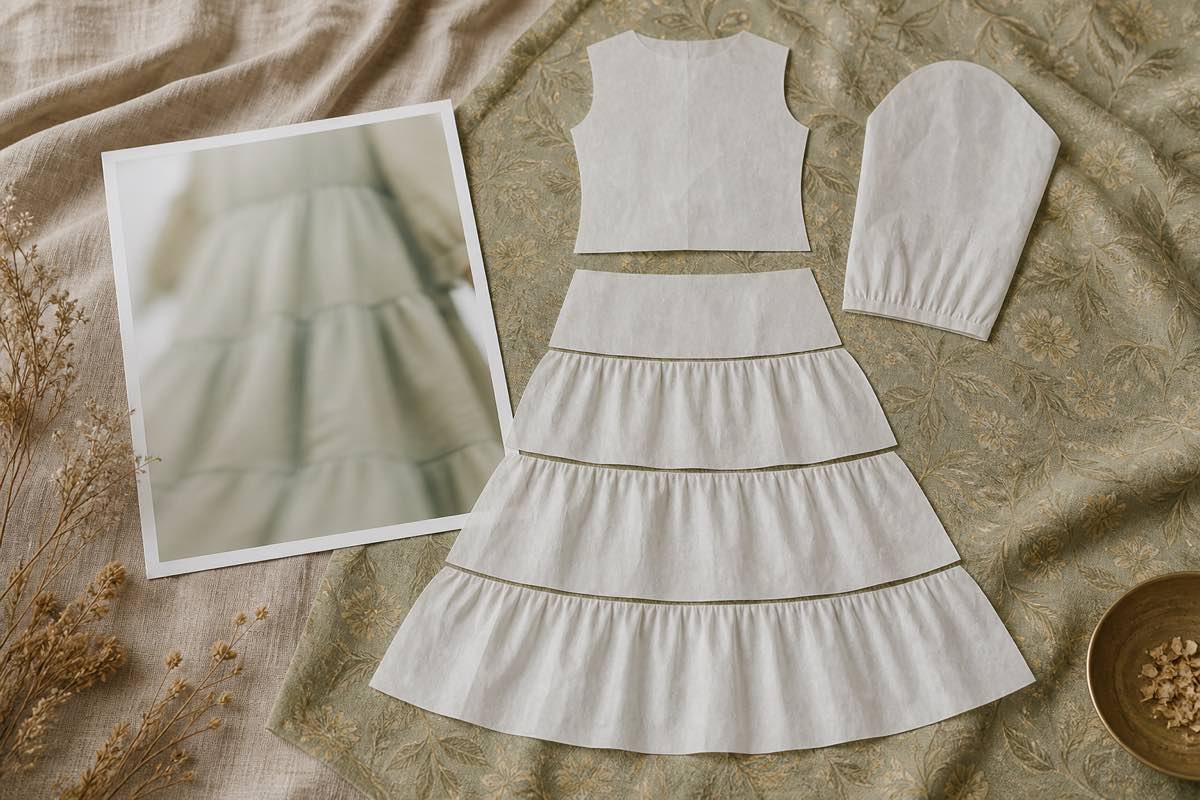
| Skirt | A-line, bias, gathered, tiered, pencil |
| Closures and details | Zip, buttons, ties, pockets, pleats |
If you would rather not do this by eye, upload the photos to Recreate This Look. It takes up to 8 photos and breaks the garment into parts for you. Your first 3 analyses are free.
Step 3: Choose a pattern (or two)
Look for a single pattern that covers most of the parts, then change one element if needed. If none comes close, take pieces from two or three patterns and combine them.
Start in your own collection. A wrap dress pattern with a different sleeve is a far smaller job than drafting from scratch. If your patterns are catalogued in Sewist Studio, Pro includes search by meaning, so you can type "wrap dress flutter sleeve" instead of scrolling.
Recreate This Look also matches each part to patterns in your stash, so you see which of your patterns covers the bodice, sleeve and skirt. If you own nothing close, the AI pattern finder approach searches the web for commercial patterns that match the photos.
When you need parts from more than one pattern, that is a mashup. Keep the same size across pieces and check that seam lengths match where pieces join. Pattern hacking 101 covers the rules.
Step 4: Match a fabric from your stash
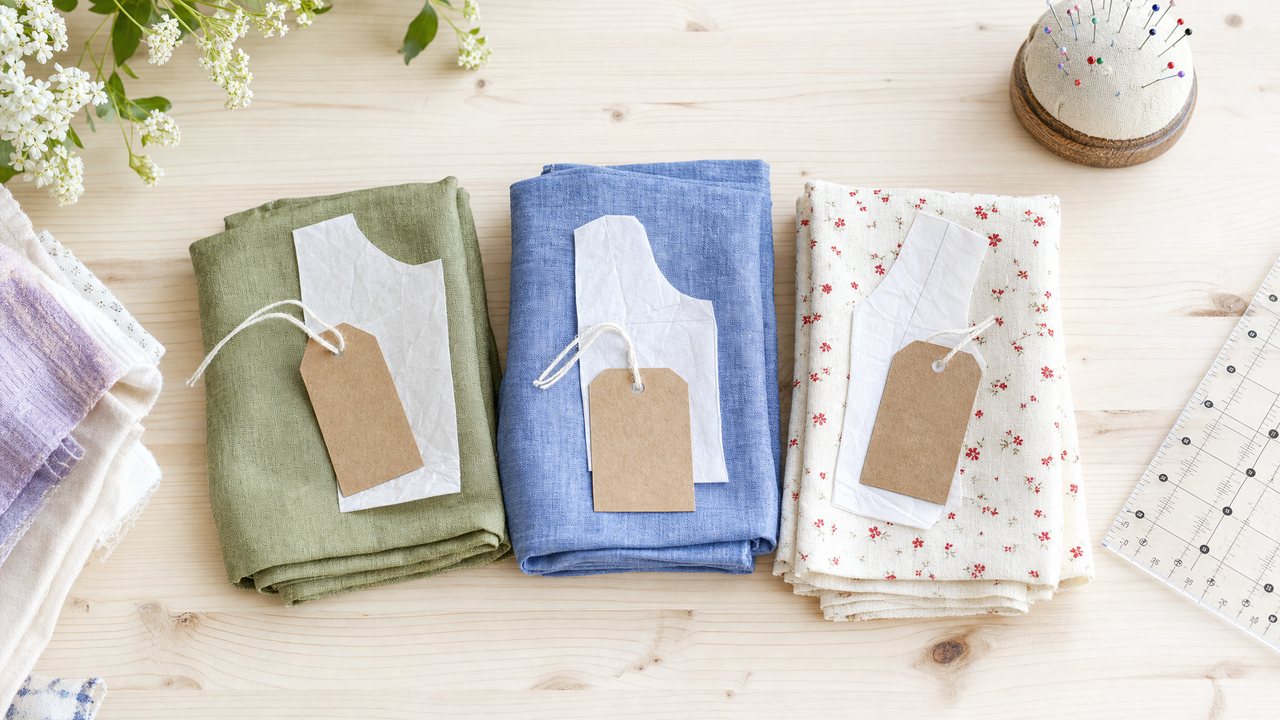
Match the fabric's behavior first and its color second. A designer dress usually gets its look from drape and weight, so a fabric that moves the same way gets you closer than one that matches the color but hangs differently.
Some general pairings for dresses:
- Bias-cut or flowing skirts: rayon challis, crepe, viscose twill, silk-like polyester
- Structured, fitted bodices: cotton sateen, poplin, linen blends, light suiting
- Gathered or tiered dresses: cotton lawn, voile, double gauze, lightweight linen
- Knit wrap dresses: jersey or ponte, matched to the stretch the pattern asks for
Then check print scale. A large floral that looks generous on a long skirt can crowd a small bodice. If you are starting from the fabric instead, what pattern to use for a given fabric goes deeper on drape, weight and stretch.
Recreate This Look suggests stash fabrics for each part as part of its match. With Pro, Render My Stash Version shows your version side by side with the inspiration photo. That process is covered in detail in how to recreate a look with fabric you already own.
Step 5: Confirm yardage before you cut
Check the yardage chart on your pattern envelope for your size and your fabric's width, then compare it against what you actually have. Bias-cut skirts and directional prints both need more fabric than the chart's basic layout suggests, so add a margin.
If you combined pieces from several patterns, lay the actual pieces out on a measured area of floor or table to estimate. How to measure fabric yardage covers measuring what is in your stash, including odd-shaped remnants.
If you are short, decide now: shorten the skirt, use a contrast fabric for the bodice lining or ties, or pick a different fabric. Finding out halfway through cutting is the expensive version of this decision.
The whole process, as a checklist
- Save 3 to 8 photos of the same dress from different angles
- Write a one-line description of each part
- Find a pattern that covers most parts, or combine two or three
- Pick a stash fabric that matches the original's drape and weight
- Check print scale against the size of each piece
- Confirm yardage for your size and fabric width, with a margin
- Make a toile of the bodice if fit matters
What the tool does, and does not do
Recreate This Look breaks the dress into parts, matches each to your patterns and fabric, and can render your stash version side by side with the original. You need to be signed in, and the first 3 analyses are free. After that it is part of Pro, which costs $4.99 a month or $47.88 a year with a 14-day free trial.
It does not draft a pattern for you, and it does not check fit. It works with what is in your stash, so a well-catalogued stash gives better matches.
Try it
Pick the dress you have saved the longest, gather a few angles, and run the breakdown. Break down a designer dress with Recreate This Look, or create a free account for your 3 free analyses. To see every AI feature and what each one is for, read the complete guide to AI sewing tools.