What Pattern Should I Use for This Fabric?
Drape, weight and stretch decide which patterns a fabric can carry. Here is how to read your fabric and pick a pattern that suits it.
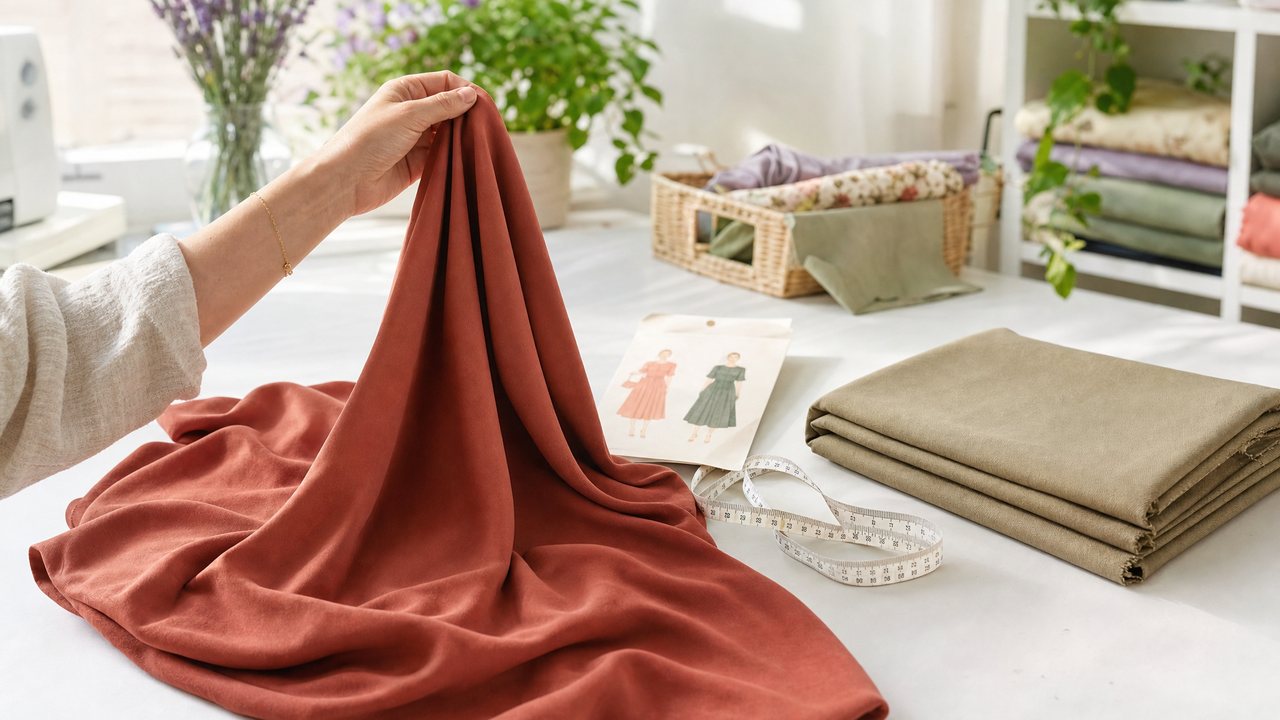
Pick a pattern by matching what the fabric does to what the design needs. A fabric that pools and flows wants gathers, bias cuts and wrap styles. A fabric that holds its shape wants pleats, darts and structure. A fabric that stretches needs a pattern drafted for knits.
Once you know those three things (drape, weight, stretch), most of the decision is made for you. This post shows how to read your fabric in a few minutes, gives you a reference table, and explains how AI Ideas in Sewist Studio can suggest and sketch a match from your stash.
How do I tell what kind of fabric I have?
Run three quick tests: drape, weight and stretch. You need your hands, a window and about two minutes.
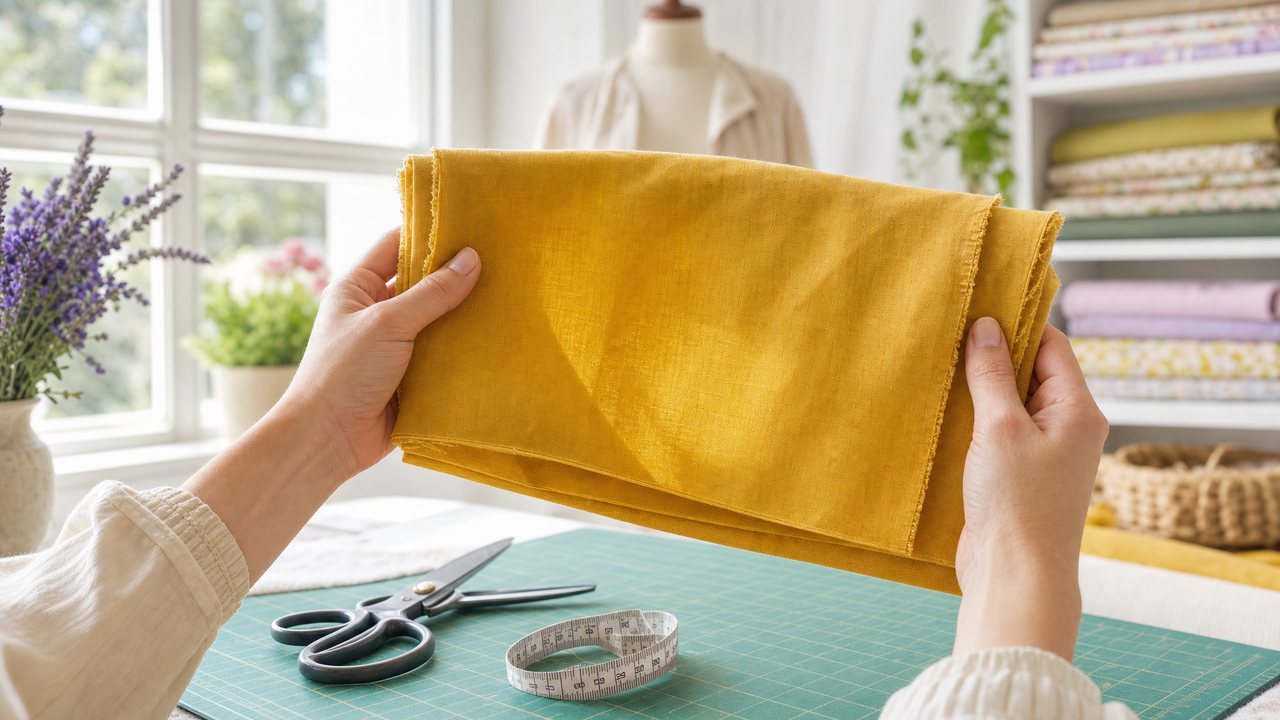
1. Drape test. Hold the fabric by one corner and let it hang. Does it fall in soft folds close to your hand (high drape) or stand away in stiff folds (low drape)?
2. Weight test. Hold it to the light. Can you see your hand through it (light), a shadow (medium) or nothing (heavy)?
3. Stretch test. Pull a 4 inch (10 cm) section gently across the width, then along the length. Does it grow and spring back? By how much?
Write the results down: "high drape, light, no stretch" is a rayon challis. "Low drape, medium, no stretch" is a cotton poplin or a mid-weight linen. "Medium drape, medium, stretches across" is likely a jersey.
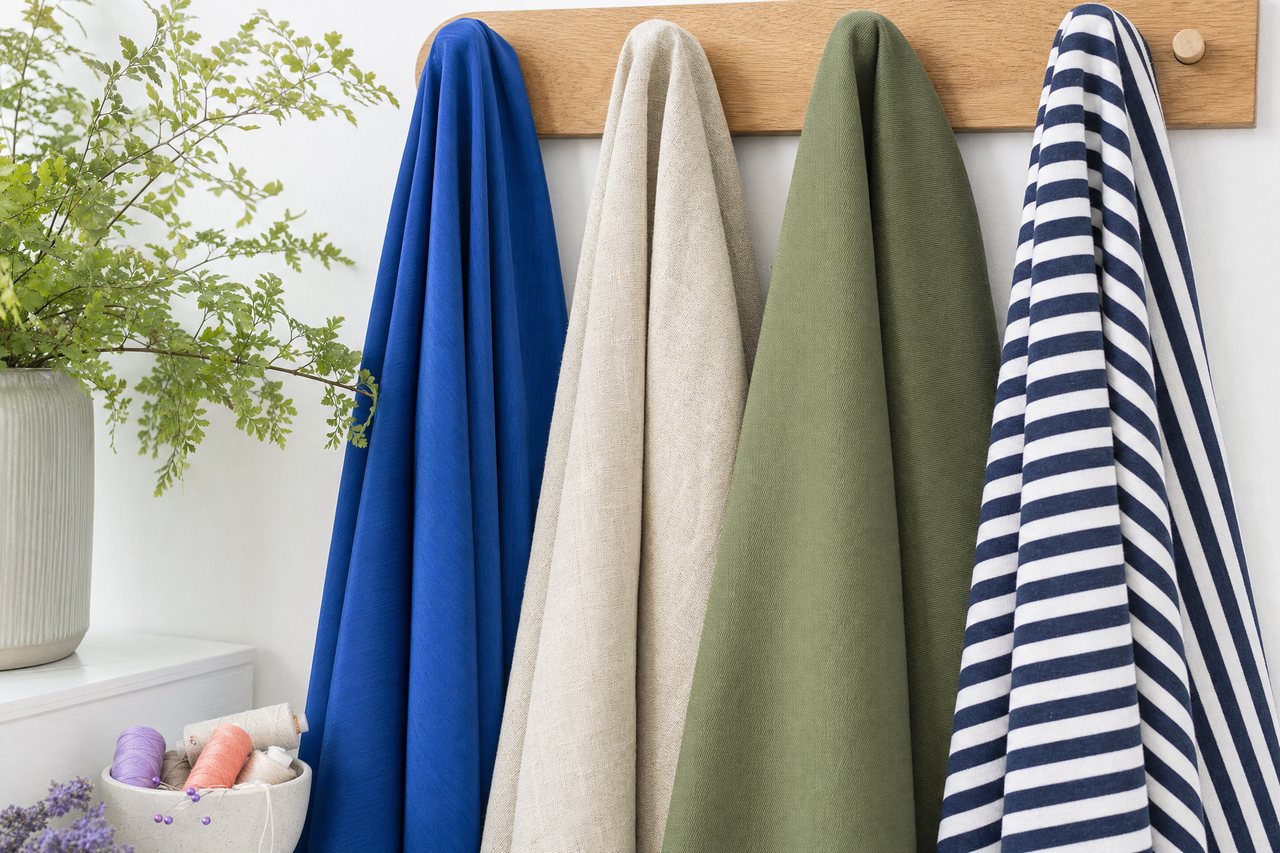
What patterns suit drapey fabric?
Drapey fabrics suit designs with gathers, flow and movement. Think rayon, viscose, crepe, silk and lightweight Tencel.
Good choices include tiered skirts, wrap dresses, bias-cut slip skirts, gathered blouses, wide-leg trousers with an elastic waist, and anything with flutter or bishop sleeves.
Avoid patterns that rely on crisp edges: tailored collars, structured pleats and boxy jackets will collapse in a drapey fabric.
What patterns suit crisp or structured fabric?
Crisp fabrics hold shape, so they suit designs with structure. Think cotton poplin, linen, chambray, twill and denim.
Good choices include button-up shirts, A-line skirts, pleated shorts, shirt dresses, fitted bodices with darts, boxy tops, and jackets.
Avoid heavy gathers in heavier crisp fabrics. A gathered skirt in mid-weight denim adds bulk at the waist that no pressing will flatten.
What patterns work for knit fabric?
Use patterns drafted for knits, and check the stretch percentage the pattern asks for. Most knit patterns state a minimum stretch, such as 25% or 50%.
Measure yours: if 4 inches stretches to 5 inches, that is 25% stretch. Then match. Tees, leggings, wrap tops, sweatshirts and knit dresses all need the stretch the pattern was drafted for. A woven pattern can sometimes be sewn in a stable knit, but a knit pattern sewn in a woven will often be too small.
Quick reference: fabric to pattern
Start with this table, then check the fabric suggestions on the pattern envelope. The envelope is the designer's own advice and usually the best single guide.
| Fabric | Drape | Good patterns | Think twice about |
|---|---|---|---|
| Rayon challis | High | Wrap dress, tiered skirt, gathered blouse | Tailored collars, structured pleats |
| Cotton lawn | Medium, light | Blouses, gathered sundresses, lined summer pieces | Heavy outerwear |
| Cotton poplin | Low | Button-up shirt, shirt dress, A-line skirt | Bias-cut slip skirt |
| Mid-weight linen | Low to medium | Wide-leg trousers, boxy top, shirt dress | Tight fits (linen creases at stress points) |
| Denim | Low, heavy | Jeans, jacket, A-line skirt, overalls | Heavy gathers |
| Cotton jersey | Medium, stretch | Tee, knit dress, wrap top | Woven-only patterns |
| Double gauze | Medium, soft | Loose tops, relaxed shirts, simple dresses | Fine detail, small facings |
Print scale matters too. A big floral suits large, simple pieces (a skirt, a wide-leg trouser). A small print or solid suits patterns with many small pieces. For more on this, see how to match fabric to a sewing pattern.
Can AI tell me what pattern to use for my fabric?
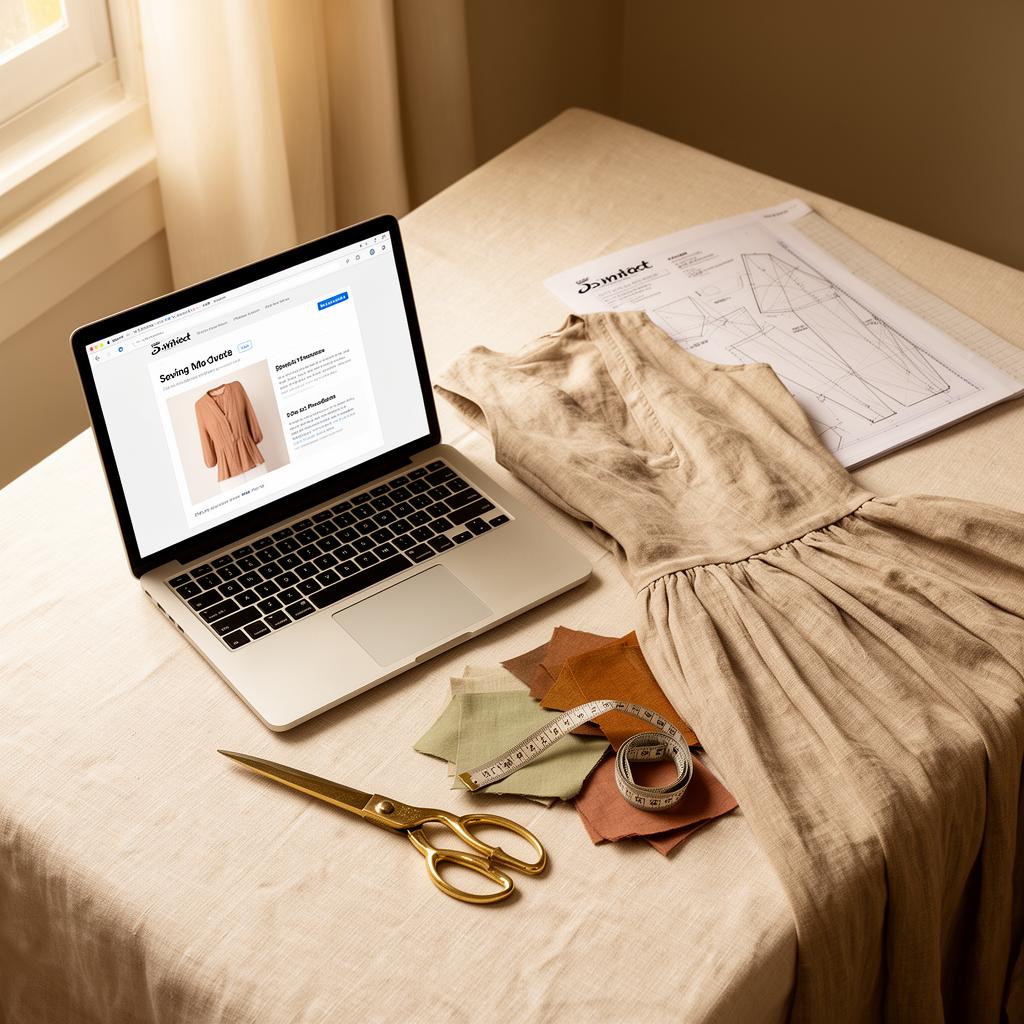
Yes. Sewist Studio's AI Ideas has a pattern-for-fabric mode that recommends which patterns suit a fabric, writes the reasoning, and draws the top match. You pick the fabric from your stash. It answers in your units.
How it works:
1. Add the fabric to your stash with a photo and its details (fiber, weight, yardage). The more you record, the better the match.
2. Open AI Ideas and choose pattern-for-fabric.
3. Pick the fabric.
4. Read the recommendation, then look at the drawing of the top match, in a mood-board or sketch style.
There is also the reverse mode, fabric-to-pattern, for when you have the pattern and need to choose which stash fabric to use. And a thread mode, covered in what color thread to use for your fabric.
Limits, stated plainly: AI Ideas needs a Pro account or trial. The drawing shows the idea, not an exact preview of your fabric on the garment. When you want that, use the Visualizer, explained in how to see fabric on a pattern before cutting. And the AI only knows what your stash records say. It cannot feel the drape, so do the three tests above too.
What if I want to combine patterns for one fabric?
Combine pieces from two or three patterns when no single pattern suits the fabric and the look you want. A drapey rayon might want one pattern's wrap bodice and another's tiered skirt.
That is a pattern mashup. Our guide to visualizing a pattern mashup before you sew shows how to preview the combined design in your fabric. If you are starting from a whole stash rather than one fabric, what to sew with your fabric stash is a good next read, and the complete guide to AI sewing tools lists every tool that can help.
Try it
Take one fabric you have been saving. Run the drape, weight and stretch tests, then check the table. If you want a second opinion with a drawing of the top match, ask AI Ideas which pattern suits your fabric. Create a free account to start your stash, and see Pro for the AI tools: $4.99 a month or $47.88 a year, with a 14-day free trial.