What Color Thread Should I Use for My Fabric?
The simple rules for picking thread color, plus a faster way to choose from the spools you already own.
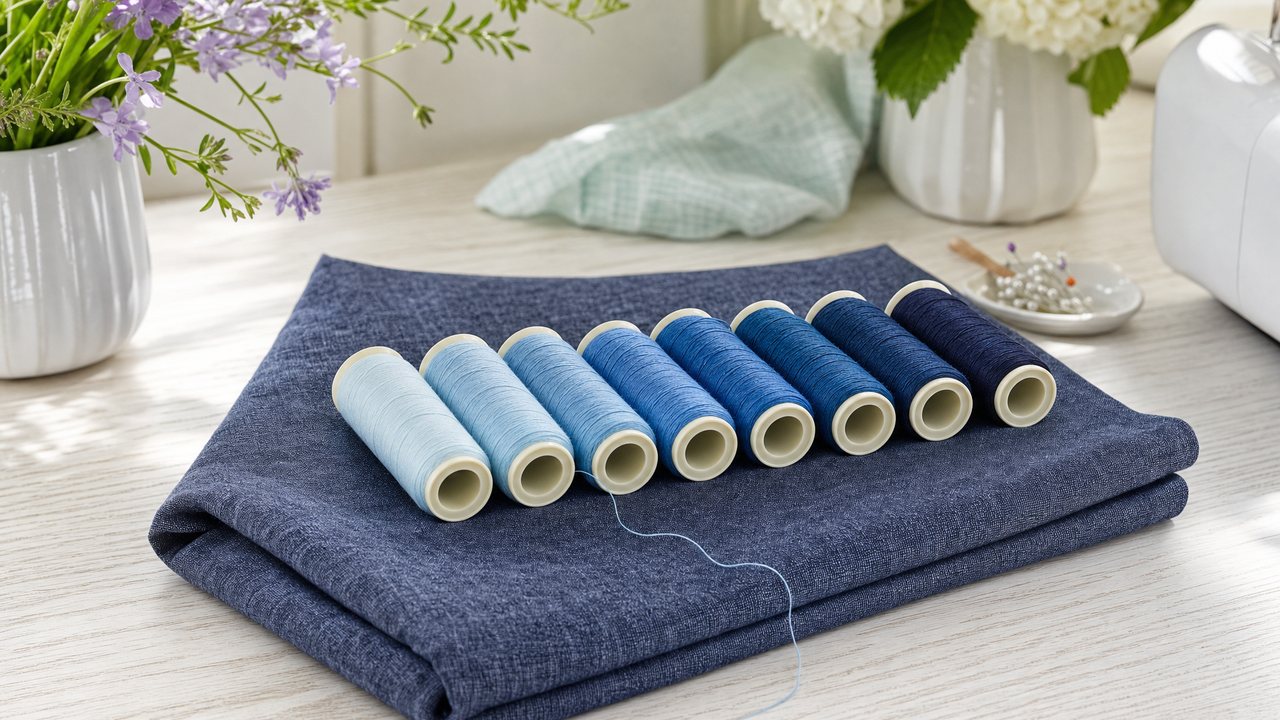
Use thread that matches your fabric's main color. If you cannot find an exact match, go one shade darker rather than lighter. For a print, match the background or the color that covers the most area. Save contrasting thread for seams you want people to see, like topstitching on denim.
That covers most projects. The rest of this post explains the exceptions, gives you a quick reference table, and shows how Sewist Studio's thread palettes can pick from spools you already own.
Should thread match the fabric or contrast with it?
Match it for construction seams, contrast it only when the stitching is part of the design. Matching thread hides small wobbles. Contrast thread puts every stitch on display.
Ask one question: do you want this line of stitching to be seen?
- No: side seams, hems on a dress, darts, invisible-ish topstitching on a blouse facing. Match.
- Yes: jeans topstitching, a decorative edge stitch on a linen jacket, visible mending, sashiko-style quilting. Contrast, on purpose.
Contrast thread is less forgiving. If your topstitching is still uneven, practice on scraps before you commit to gold thread on dark denim.
Should thread be lighter or darker than the fabric?
Darker. When thread sinks into a seam, it sits in shadow and reads lighter than it looks on the spool. One shade darker usually disappears. One shade lighter usually shows.
The test that works:
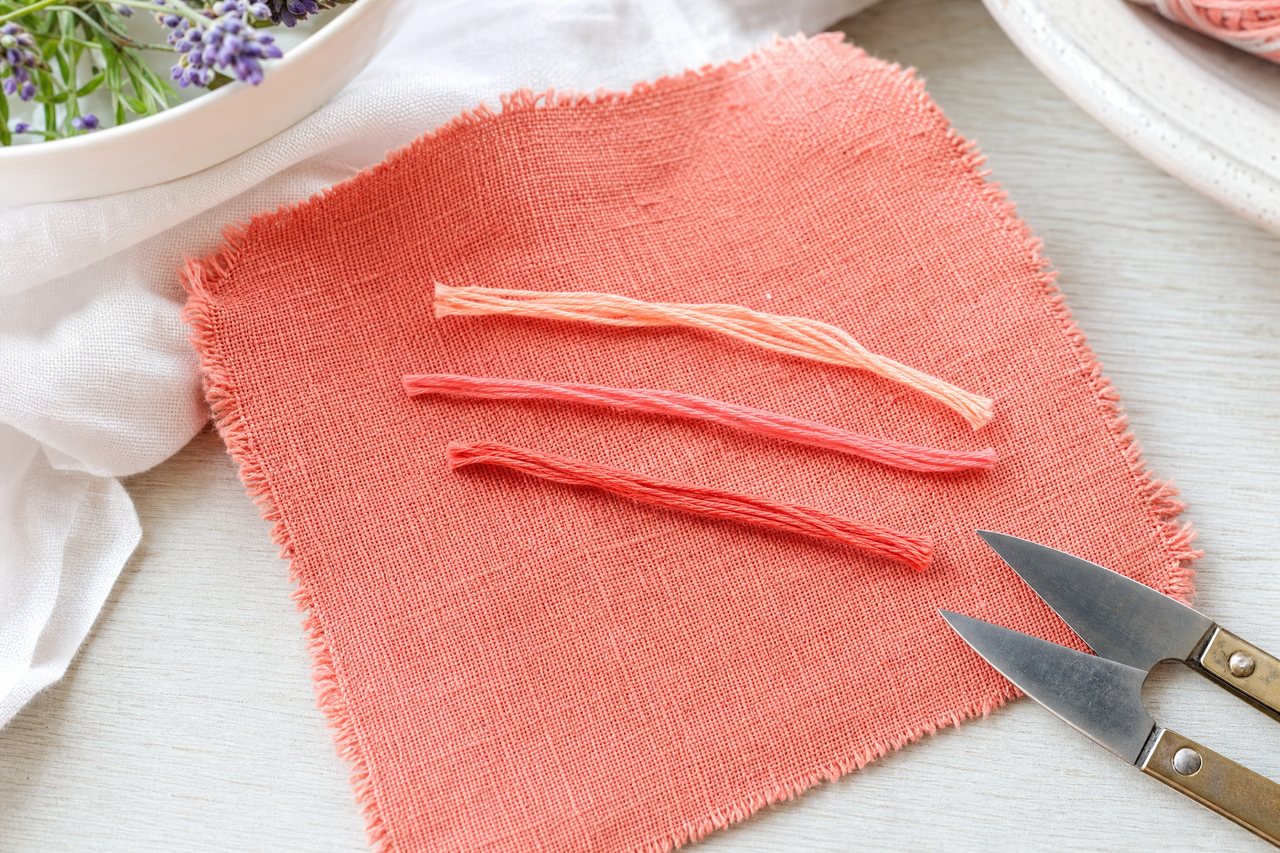
1. Pull a single strand off the spool. A full spool always looks darker than one strand.
2. Lay the strand across the fabric in daylight.
3. Squint. The strand that vanishes is your thread.
If two options both vanish, choose the darker one. This rule holds for solids in most colors, from navy to coral to olive.
What color thread do I use for printed fabric?
Match the background color, or the color that takes up the most space. For busy multicolor prints, a mid-tone gray or beige often blends better than any single color in the print.
A few cases:
- Small florals on a cream ground: match the cream.
- Dark prints with bright accents: match the dark ground, not the accents.
- Large-scale prints with no dominant color: try a medium gray. It reads as "shadow" against most colors.
- Stripes and plaids: match the color the seam will mostly cross. If you are matching stripes at the seam (see what to sew with your fabric stash for picking projects that suit them), thread matters less than alignment.
Quick reference: thread color by fabric
Use this table as a starting point, then do the single-strand test.
| Fabric | Construction seams | Topstitching | Notes |
|---|---|---|---|
| Solid cotton or linen | Match or one shade darker | Match, or contrast on purpose | Single-strand test in daylight |
| Small print on light ground | Match the ground | Match the ground | Gray if the ground is white and busy |
| Dark multicolor print | Match the darkest large area | Match | Lighter threads tend to show |
| Indigo denim | Navy or dark gray | Gold, rust or tan for the classic look | Use heavier thread for topstitching |
| Sheer voile or chiffon | Exact match | Exact match | Seams show through, so be precise |
| Black or near-black | Black | Black or charcoal | True black looks best on true black |
| White | White, or off-white on cream | White | Bright white looks blue on cream fabric |
Your bobbin thread can match the fabric's underside. On a print with a pale back, a lighter bobbin thread can make sense.
How can AI suggest thread colors from my own stash?
Sewist Studio's AI Ideas has a thread mode that returns 2 to 3 thread palettes with hex colors, and it prefers threads you already own. It does not draw an image. It gives you color choices you can check against your spools.
Here is how it works:
1. Add your fabrics and threads to your stash. If you have not started, the digital sewing room guide covers setup.
2. Open AI Ideas and choose thread mode.
3. Pick the fabric you plan to sew.
4. Get back 2 to 3 palettes, each with hex colors. Threads you already own are favored, so you can often skip the shop trip.
What it is good for: narrowing a drawer of 40 spools down to a handful, planning matching and contrast threads for one project, and checking whether you need to buy anything.
Limits, stated plainly: AI Ideas requires Pro (or a trial), and each thread palette costs 1 credit. Hex colors are approximations of how a thread looks, and screens vary. Always do the single-strand test before you sew. The AI suggests. Your fabric and daylight decide.
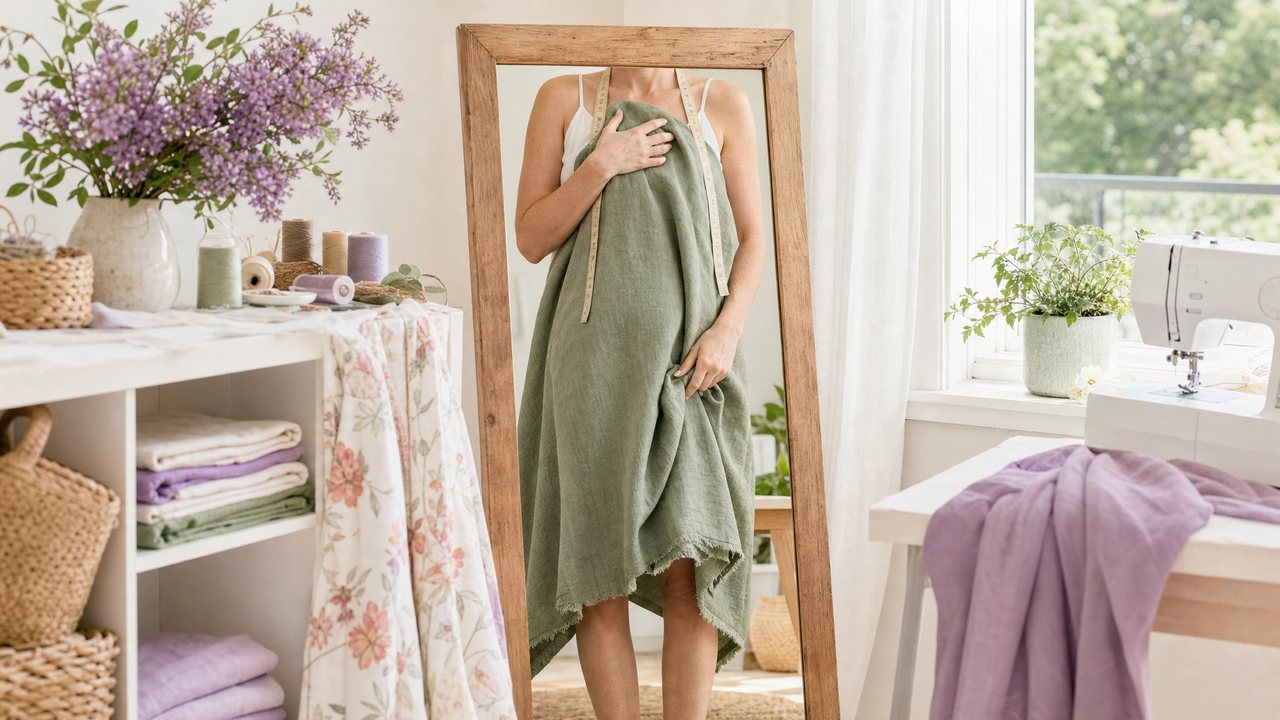
If you also want to know which pattern suits the fabric in the first place, the same tool has a pairing mode, covered in what pattern to use for this fabric. And if you want a second opinion on camera, you can hold your fabric up to the AI sewing coach and ask which of your threads to use.
Do I need a different thread for serging?
Usually not a different color. Overlock seams are inside the garment, so many sewists keep a few neutral cones (white, black, gray, beige) and only buy a matched color for sheer or unlined pieces where the serging might show.
Match closely on fabrics where the seam allowance shows through, like voile, lawn and light jersey.
Keep your thread colors where you can find them
Track your threads in the same place as your fabric so you can check what you own before you buy. A thread palette is only useful if you know whether you already have that spool.
Sewist Studio keeps fabric, threads, notions and patterns together, and tracking your fabric stash explains how to set up a list you will keep using. For a full overview of the AI tools that read from it, see the complete guide to AI sewing tools. To see the fabric and thread together on a finished garment, try seeing fabric on a pattern before you cut.
Try it
Pull out the fabric for your next project and do the single-strand test with your two closest spools. If you want help narrowing the field, get a thread palette from your own stash in AI Ideas. Start with a free account, and see Pro pricing: $4.99 a month or $47.88 a year, with a 14-day free trial.